




Art Deco Enamel Bracelet
An art deco enamel bracelet brings geometric colour and striking machine-age design directly to the wrist.
Art Deco Enamel Bracelet
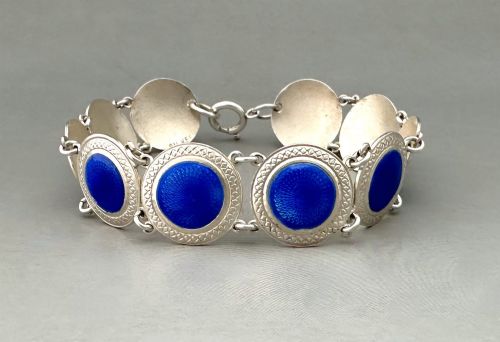
An art deco enamel bracelet captures the bold geometric aesthetic of the interwar years, appearing frequently in silver and chrome settings. These pieces date predominantly from the 1920 and 1930 periods, showcasing the characteristic clean lines of the era.
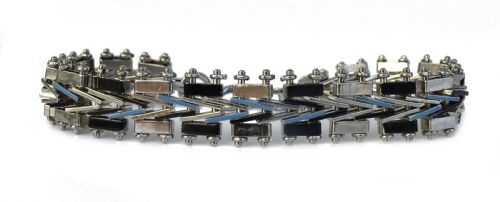
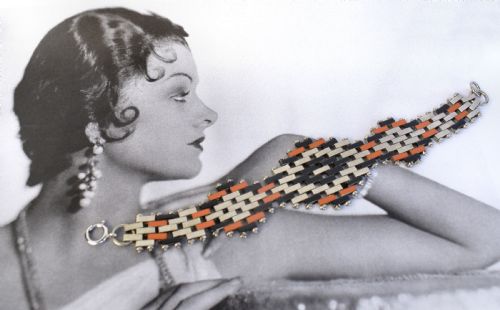
The selection ranges from solid silver links with guilloche enamel to industrial chrome and metal designs. Buyers encounter everything from brickwork link constructions to delicate filigree work incorporating glass, chalcedony, and marcasite.
Forms include flexible link bracelets alongside coordinating necklace and bracelet sets. Occasional jewellery charms complete the types found across these periods.
How they were made
Maker workshops utilised vitreous enamel fused onto metal bases, alongside industrial chromium plating on chrome, nickel, and steel. These materials reflect both traditional precious metals like solid silver and the modern base metals championed during the 1930s.
Techniques combine detailed silver filigree work with machine-tooled chrome components and guilloche enamel patterns. Glass and chalcedony stones are flush-set or secured within metal bezels to complement the enamel sections.
Art Deco Enamel Bracelet Retail Price Guide 2026
Typical asking prices for art deco enamel bracelet among the pieces listed under this phrase on Sellingantiques today, from the lower quarter to the upper quarter. They describe what is for sale here now, not the wider market.
What varies in quality
The distinction between standard production and finer pieces lies in the precision of the metalwork and the complexity of the enamel application. Solid silver and guilloche enamel pieces generally demonstrate a higher degree of hand-finishing than mass-produced chrome alternatives.
Signed examples by known workshops such as Jakob Bengel exhibit superior mechanical construction in their geometric link arrangements. The integration of supplementary stones like marcasite and chalcedony also alters the refinement of the finished piece.
Jakob Bengel·Topazio
The Art Deco Enamel Bracelet Glossary
- Guilloche enamel
- A decorative technique where transparent enamel is layered over engine-turned metal engraving. This creates repetitive geometric patterns that show beneath the coloured glass surface.
- Vitreous enamel
- Glass powder fused to a metal substrate at high temperature. It provides a durable, glossy coloured surface characteristic of period jewellery.
- Filigree
- Delicate openwork created by twisting and soldering fine metal wire into intricate patterns. It frequently appears alongside enamel work in silver settings.
- Marcasite
- Small faceted pyrite stones set into silver to provide a dark metallic sparkle. These stones border enamel panels to add contrast.
Art Deco Enamel Bracelet: Frequently Asked Questions
How do I date an art deco enamel bracelet?
Dating relies on stylistic markers from the 1920 and 1930 periods, alongside material evidence such as chrome and solid silver settings. Maker signatures and construction techniques help narrow the timeframe.
Industrial chrome finishes and specific link designs point firmly toward the 1930s. Silver filigree and guilloche pieces often share contemporaneous hallmarks or stylistic traits.
What metals were used in these bracelets?
Makers employed solid silver alongside industrial metals including chrome, nickel, and general metal alloys. Gold appears selectively on smaller items like charms.
The choice of metal often distinguishes traditional precious jewellery from the modern industrial aesthetic of the machine age.
Are these bracelets flexible to wear?
Most pieces utilise linked constructions designed to articulate smoothly around the wrist. Brickwork links and hinged sections allow the rigid geometric designs to bend.
This engineering ensures that even industrial chrome and enamel panels sit comfortably during daily wear.
How should I clean my enamel bracelet?
Enamel requires gentle maintenance using a soft cloth and mild soapy water to avoid scratching the glass surface. Harsh chemical dips can damage both the enamel and the underlying metal.
Care must be taken with chrome and silver settings to preserve any integrated stones like marcasite or chalcedony.