




Art Deco Dog Statue
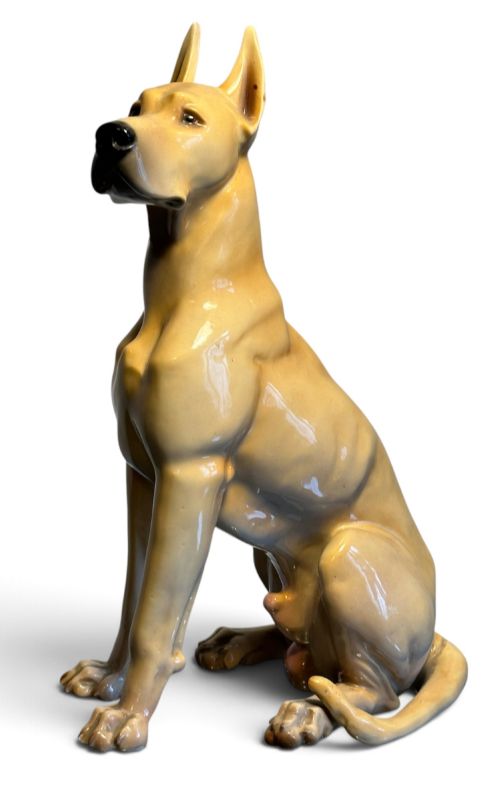
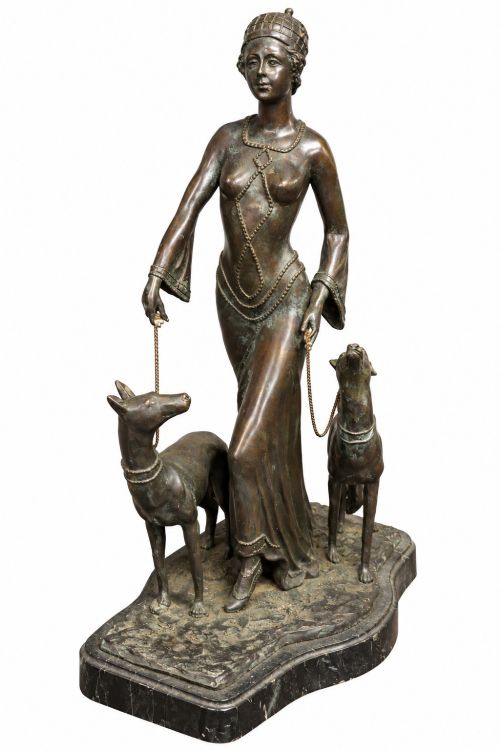
An art deco dog statue captures the sleek lines and motion of the period in metal, marble, and bronze.
Art Deco Dog Statue
An art deco dog statue brings together the stylised forms of the interwar decades with popular breeds like greyhounds, borzois, and spaniels. These pieces appear as standalone sculptures, bookends, table lamps, and car mascots mounted on bases of marble or onyx.
Most examples date from the 1920s and 1930s, reflecting the era's fascination with speed and elegant silhouettes. The greyhound and the borzoi dominate these listings, rendered in dynamic leaps or alert poses that suit the streamlined aesthetic.
Buyers encounter both single figures and figural groups involving children or companion animals. Materials range from substantial cast bronze and spelter to patinated metal, brass, wood, and porcelain.
Materials and construction methods
Foundry methods of the period utilised bronze and spelter to achieve sharp detail in the musculature and coats of the animals. Metal figures often received patination or silvering to enhance the visual depth of the surface.
Statues frequently incorporate heavy plinths of marble or onyx to anchor the dynamic postures of leaping or running hounds. Combination pieces integrate lighting components, glass, or brass to serve dual decorative and functional roles.
Art Deco Dog Statue Retail Price Guide 2026
Typical asking prices for art deco dog statue among the pieces listed under this phrase on Sellingantiques today, from the lower quarter to the upper quarter. They describe what is for sale here now, not the wider market.
Dogs in this era apparently possessed places to be in a tremendous hurry.
Quality factors in period sculpture
The definition in the casting separates standard production runs from superior foundry work. Crisp rendering of anatomical details and smooth finishes on the metal indicate higher skill in the creation process.
The choice of base materials influences the overall presence of the object. Solid mountings of veined marble or onyx paired with signed metalwork distinguish the more substantial works from simpler decorative items.
C Masson·Karl Hagenaur·Alexandre Kelety·Geo Maxim·H. Bal·Louis Lejeune
The Art Deco Dog Statue Glossary
- Spelter
- A zinc alloy commonly utilised as a less expensive alternative to bronze during the early twentieth century. It accepts patination well to simulate heavier metals.
- Patinated metal
- Metal treated with chemicals to produce a specific surface colour or aged finish. This process highlights the sculptural contours.
- Figural group
- A composition featuring more than one subject, such as a child with a dog or multiple animals together. These pieces tell a narrative story within the static sculpture.
- Automobilia
- Collectable items associated with motor cars, including mascot figures mounted on radiator caps. Racing greyhounds served as popular subjects for this category.
Art Deco Dog Statue: Frequently Asked Questions
What materials make up these statues?
The listings show a reliance on bronze, spelter, patinated metal, and brass for the animal figures. These are frequently mounted on heavy bases of marble or onyx.
Some examples incorporate wood, glass, and porcelain, particularly in lamp bases and specialised animal figurines.
How do I identify a period piece?
Period pieces display the characteristic geometric lines and stylized proportions associated with the interwar decades. Examining the base materials, casting marks, and signatures helps confirm the era of production.
Most dated examples originate from the nineteen twenties and thirties, with distinct sculptural treatments of popular breeds like greyhounds and borzois.
Where were these items placed originally?
Many figures served as decorative ornaments on mantelpieces, desks, or specialised display surfaces within domestic interiors. Bookends held volumes upright on library shelves while figural groups occupied prominent spaces.
Certain designs functioned as automobile mascots on vehicle radiator caps or formed the structural base of table lamps.
Which dog breeds appear most often?
Greyhounds and borzois appear frequently in these sculptures, chosen for their elongated shapes that matched the aesthetic of the era. Spaniels and other hunting dogs also feature prominently in sculptural groups and bookends.
These breeds allowed artists to emphasise speed, tension, and graceful posture in metal and stone.