
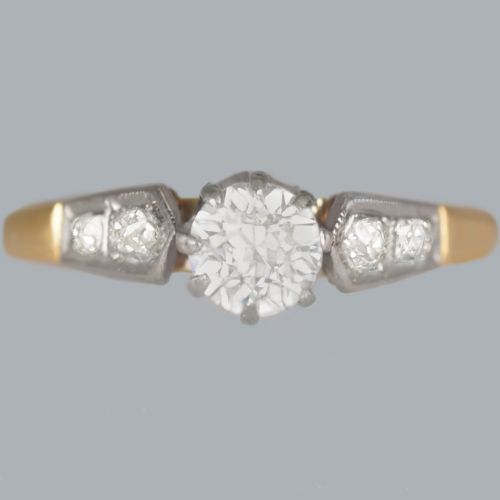
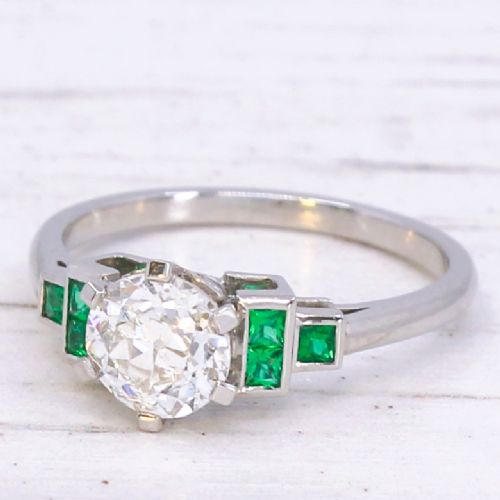
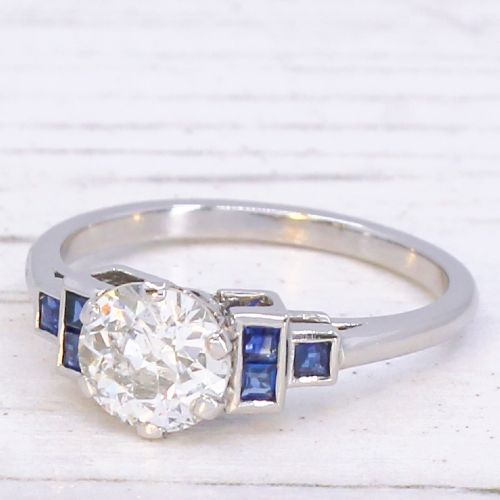


Art Deco Diamond Shoulders
Art deco diamond shoulders define an era of fine jewellery where the band meets the central stone through geometric flourish.
Art Deco Diamond Shoulders
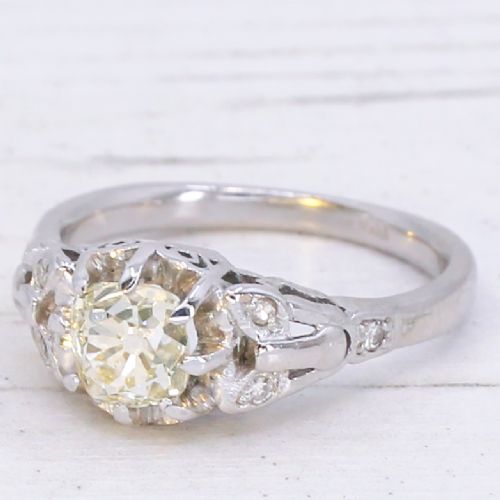
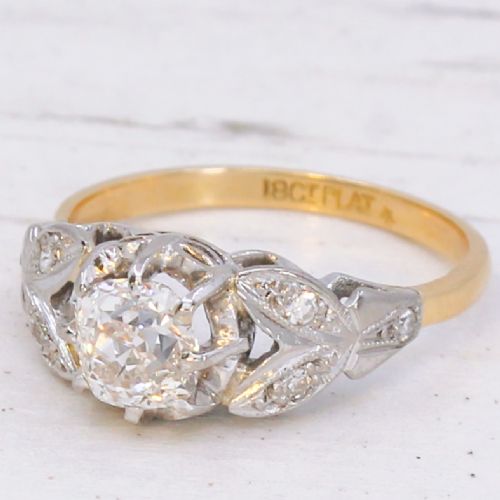
Pieces featuring art deco diamond shoulders comprise rings, primarily engagement rings and dress rings, originating from the early decades of the twentieth century. These designs showcase a central gemstone, frequently an old cut diamond, flanked by smaller stones or metallic geometric details along the band.
The aesthetic draws heavily from the Art Deco style, accompanied by occasional Edwardian influences, capturing the transition toward sharp symmetry and clean lines. Most examples meet the eye as platinum or gold settings where the decoration of the shoulders integrates smoothly with the profile of the ring.
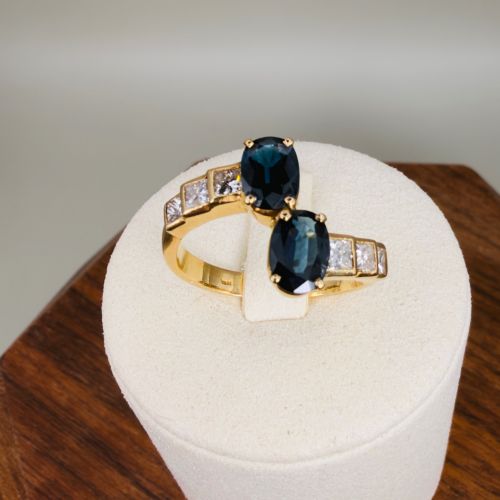
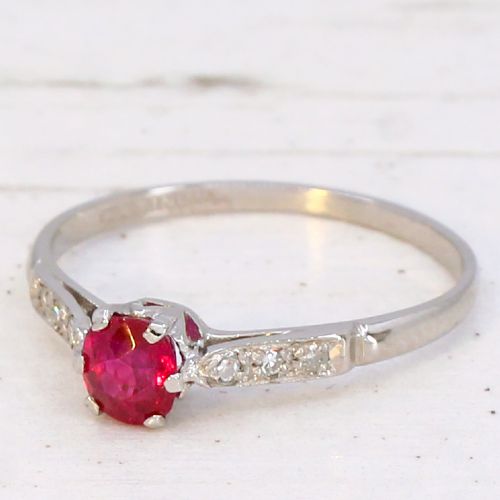
Forms span solitary principal stones alongside clusters featuring sapphires, emeralds, rubies, aquamarines, and opals. The defining characteristic remains the engineered detail flanking the primary gem rather than the central setting alone.
What Varies in Quality
Quality rests upon the precision of the metalwork within the shoulder architecture, where hand-pierced gallery work and crisp millegrain decoration demonstrate superior craftsmanship. The cohesion between the central stone and the surrounding shoulder embellishments dictates the artistic success of the piece.
The selection and matching of secondary diamonds and coloured gems along the shoulders dictate the tier of the piece. Uniformity in stone cutting, colour grading, and secure flush-setting or bead-setting elevate the overall integrity of the design.
Some rings manage to look like tiny, sparkling architectural blueprints strapped to your finger.
The Art Deco Diamond Shoulders Glossary
- Shoulders
- The upper sections of the ring band where it tapers or transitions upward to meet the central setting. This area carries the decorative metalwork or accent stones characteristic of the period.
- Old Cut
- A precursor to the modern brilliant cut diamond, featuring a smaller table, higher crown, and open culet. These stones display softer light return under candlelight.
- Millegrain
- A decorative technique consisting of a row of tiny, raised metal beads along the edges of a setting. This adds a refined texture typical of Edwardian and Art Deco fine jewellery.
- Solitaire
- A ring design featuring a single prominent gemstone as the main focal point. In these pieces, the solitaire format relies on the shoulders to provide visual interest.
- Cluster Ring
- A ring style where a central gemstone is surrounded by a group of smaller stones. This arrangement creates a larger visual footprint on the finger.
Art Deco Diamond Shoulders: Frequently Asked Questions
What defines art deco diamond shoulders?
Art deco diamond shoulders refer to the decorated sloping sides of a ring band that connect to the central gemstone. They incorporate geometric patterns, millegrain work, or accent stones.
This design approach ensures the visual interest of the ring extends across the hand rather than focusing solely on the principal stone.
Are these rings suitable for daily wear?
Platinum and 18ct gold provide the durability necessary for regular wear when paired with secure diamond settings. Proper care ensures the fine metalwork remains intact over decades.
Consulting a specialist regarding the condition of the claws and shoulder stones helps maintain structural integrity during everyday use.
How do I identify an old cut diamond?
Old cut diamonds feature hand-faceted proportions with smaller tables and deeper pavilions than modern stones. Their distinctive facet arrangement creates a softer sparkle.
Examining the stone under magnification reveals the characteristic open culet at the base of the diamond.
What other gems accompany these diamonds?
Sapphires, emeralds, rubies, aquamarines, and opals frequently appear alongside the diamonds in these rings. These coloured stones often form calibré-cut accents in the shoulders or frame the central gem.
Such combinations highlight the chromatic contrast favoured by jewellers during the 1920s and 1930s.