





Art Deco Desk Stand
These art deco desk stand pieces bring geometric order and striking materials to a workspace.
Art Deco Desk Stand
An art deco desk stand serves as a functional centrepiece for writing materials, often incorporating inkwells, pen trays, and matching ornaments. The pieces found here span the 1920s, 1930s, and 1940s, alongside earlier transitional Edwardian and Art Nouveau examples.
Green onyx and marble frequently form the heavy bases of these desk accessories, providing a stable plinth for mounted figures and inkwells. Metal components in chrome, bronze, and spelter add the characteristic industrial sheen of the period.
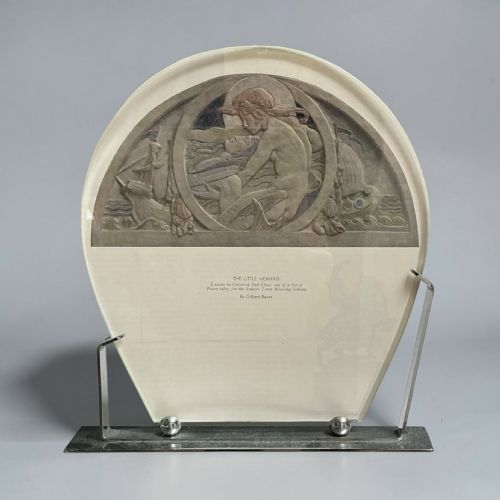
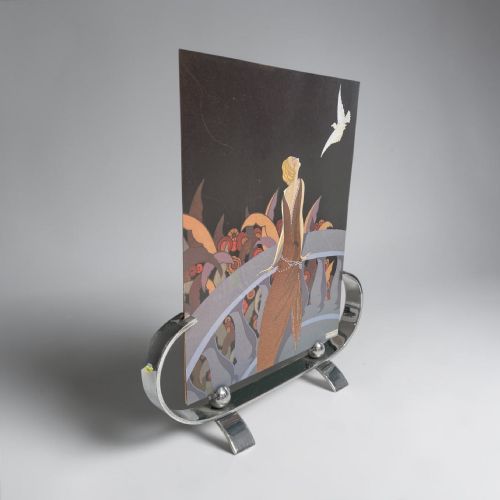
Buyers will also encounter related desk items such as framed picture stands, letter racks, and travelling clock cases sharing the same stylistic vocabulary. Geometric skyscraper motifs and stylised human figures dominate the forms across these working surfaces.
How they were made
Natural stone bases are hand-cut and polished to showcase the heavy grain of green onyx and marble. Metal figures and mounts utilise cast spelter, bronze, and chrome-plated brass to achieve sharp geometric lines.
Detailed surface decoration often relies on guilloche enamel work applied to silver and metal frames. Glass elements are moulded to fit precise channels in metal or stone frames.
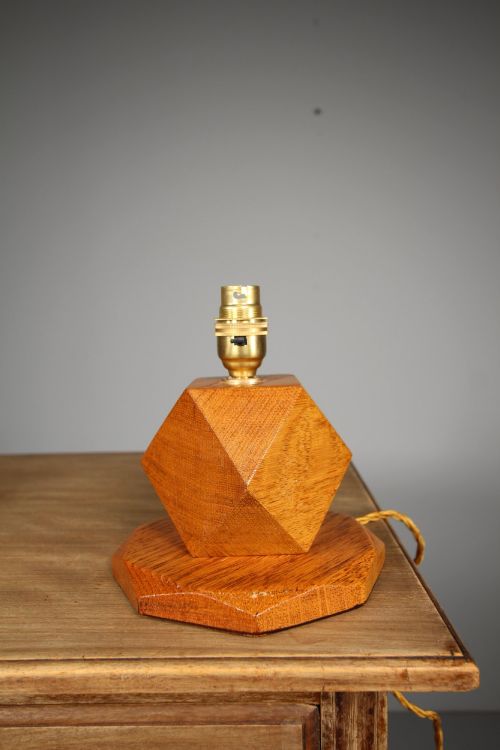
Makers combined contrasting textures, pairing cold polished chrome with warm walnut wood or translucent glass panels. Structural joints rely on threaded metal fixings secured into the dense stone plinths.
Art Deco Desk Stand Retail Price Guide 2026
Typical asking prices for art deco desk stand among the pieces listed under this phrase on Sellingantiques today, from the lower quarter to the upper quarter. They describe what is for sale here now, not the wider market.
One desk accessory immortalises Pierrot the clown in a permanent pose of stationary theatrical melancholy.
What varies in quality
Intricate hand-applied guilloche enamel requires precise skill to avoid bubbling or uneven translucency across the metal surface. The integration of mixed materials, such as glass fitted cleanly into chrome frameworks, separates standard production from finer examples.
Bruno Zach·Zimmermann
The Art Deco Desk Stand Glossary
- Guilloche enamel
- A decorative technique where an engine-turned metal surface is covered with transparent translucent enamel. This method allows patterns beneath the coloured glass to catch the light.
- Spelter
- An alloy of zinc and lead used as a cost-effective substitute for bronze in decorative figures. It is typically electroplated or painted to simulate finer metals.
- Onyx
- A banded variety of chalcedony used extensively for heavy desk bases and architectural clock bodies. Its natural veining ensures no two stands share identical patterns.
- Inkwell
- A small container holding writing ink, usually fitted with a hinged lid to prevent evaporation. In desk stands, these are often housed directly within the carved stone plinth.
Art Deco Desk Stand: Frequently Asked Questions
What materials are used in an art deco desk stand?
These items combine heavy stone bases like green onyx and marble with metal elements in chrome, bronze, and spelter. Glass and guilloche enamel frequently appear as secondary decorative details.
Makers also incorporated wood and silver plating into specific desk accessories and reading stands from the period.
How do I date an art deco desk stand?
Dating relies on stylistic shifts from transitional Edwardian and Art Nouveau curves toward the sharp geometric lines of the 1920s and 1930s. Materials like chrome and synthetic coloured glass point firmly to the interwar decades.
Hallmarks on silver components and inscribed presentation dates on travelling cases provide precise chronological markers when present.
How were these desk stands originally used?
They sat upon writing desks to organise correspondence, hold ink for dip pens, and display pocket watches or small photographs. Modelled figures of animals and human subjects served as decorative paperweights or pen rests.
Portable versions included folding travel clock cases designed for use away from the permanent study.
How do I care for marble and onyx desk stands?
Natural stone requires dusting with a dry microfiber cloth to protect the polished surface from abrasive particles. Moisture should be kept away from metal mounts and enamel panels to prevent corrosion.
Applying mild furniture wax occasionally helps maintain the lustre of the stone without building up residue.