



Art Deco Cocktail Sticks
Art deco cocktail sticks bring distinct geometric flair and miniature novelty charm to home entertaining.
Art Deco Cocktail Sticks
Art deco cocktail sticks comprise small sets of picks designed for skewering olives, cherries, and fruit garnishes at home bars. The items on this page typically date from the 1920s, 1930s, and 1940s, originating from British and French makers.
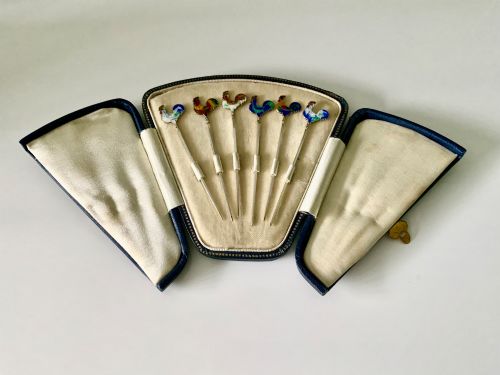
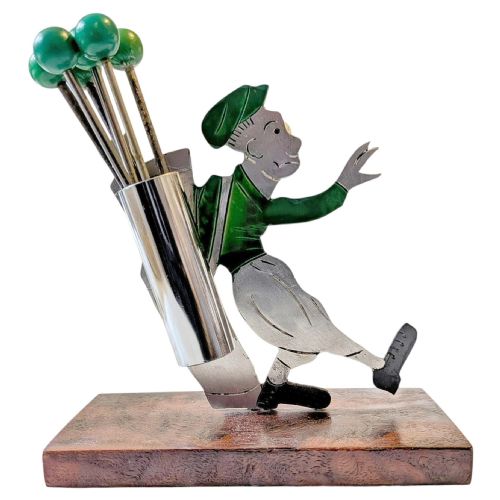
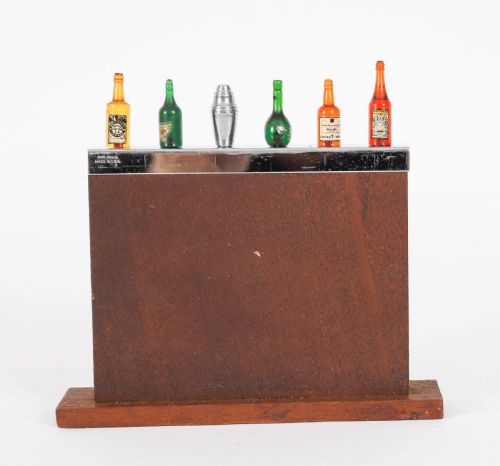
Buyers encounter fitted boxed sets alongside individual holders made from cut glass or metal. Many examples take the form of novelty figures, such as golfers or cherry men, while others display colourful enamel work.
Barware accessories from this era reflect the growing popularity of cocktail culture between the wars. These pieces survive in matched sets of four or six, often complete with their original presentation packaging.
How they were made
Sterling silver provides the structural foundation for many fine English sets, hallmarked in cities like London and Birmingham during the late 1920s and 1930s. French novelty pieces often utilise chrome-plated metal combined with hand-painted enamel detailing.
Early plastics such as bakelite emerge alongside wood and cut glass in twentieth-century manufacturing. Makers shaped chrome and cast metals to form whimsical figures and sleek geometric stands that held the picks upright when not in use.
Art Deco Cocktail Sticks Retail Price Guide 2026
Typical asking prices for art deco cocktail sticks among the pieces listed under this phrase on Sellingantiques today, from the lower quarter to the upper quarter. They describe what is for sale here now, not the wider market.
Some sets feature comical golfer figures holding tiny caddies, turning a simple olive pick into a miniature sporting scene.
What varies in quality
The degree of artistic execution in novelty figures separates standard production pieces from finer sculptural examples. Signed French work by makers such as Sudre demonstrates greater attention to character and modelling in the miniature figures.
Completeness of the set and the presence of original fitted boxes significantly influence the character of surviving pieces. The preservation of applied enamel work and crisp hallmarks on the silver shafts also distinguishes superior examples.
Sudre
The Art Deco Cocktail Sticks Glossary
- Bakelite
- An early form of synthetic phenol formaldehyde resin developed in the early twentieth century. It appears frequently in colourful handles and stands on 1930s barware.
- Hallmark
- An official stamp applied to precious metals indicating the standard of purity and the assay office. British silver items from this era commonly feature date letters and maker's marks.
- Novelty
- An object designed in a humorous or unusual figurative shape rather than a standard utilitarian form. These cocktail picks frequently depict human figures or fruit.
- Enamel
- A glassy substance melted onto the surface of metal for decorative colour. It is applied in recessed channels on silver shafts to create geometric patterns.
- Barware
- Equipment and accessories utilised for the preparation and serving of alcoholic drinks. Cocktail sticks form a specialist category within twentieth-century entertaining accessories.
Art Deco Cocktail Sticks: Frequently Asked Questions
How were cocktail sticks used?
Hosts utilised these miniature picks during cocktail parties to serve olives, onions, and fruit garnishes from mixing glasses or individual glasses. Guests would take a pick from the communal holder to select items from a tray.
When not in use, the picks rested upright in fitted metal bases, cut glass holders, or specialised novelty figures designed to keep the set together on a bar cart.
How do I care for vintage cocktail sticks?
Silver pieces require occasional gentle cleaning with a suitable metal polish to maintain the finish without removing crisp hallmarks or fine detailing. Enamelled and bakelite components should be washed by hand in warm soapy water rather than soaked.
Store complete sets in their original boxes or dedicated stands to prevent the individual picks from bending or becoming separated.
How do I identify 1930s pieces?
British silver examples often carry clear hallmarks including town marks and date letters that pinpoint the exact year of manufacture. The presence of early plastics like bakelite alongside chrome points directly towards twentieth-century production.
Stylistic cues such as streamlined geometric motifs and figurative novelty designs further separate items from earlier Victorian or later mid-century barware.