


Art Deco Ceramic Vessel
An art deco ceramic vessel brings geometric form and rich glaze into a room, offering a sharp silhouette that anchors a mantelpiece.
Art Deco Ceramic Vessel
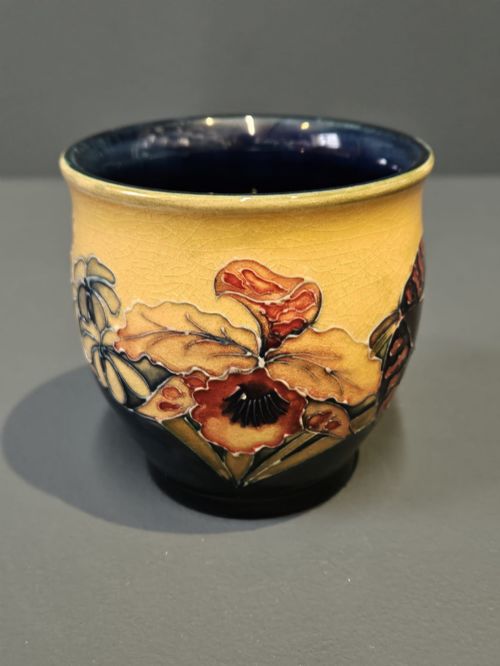
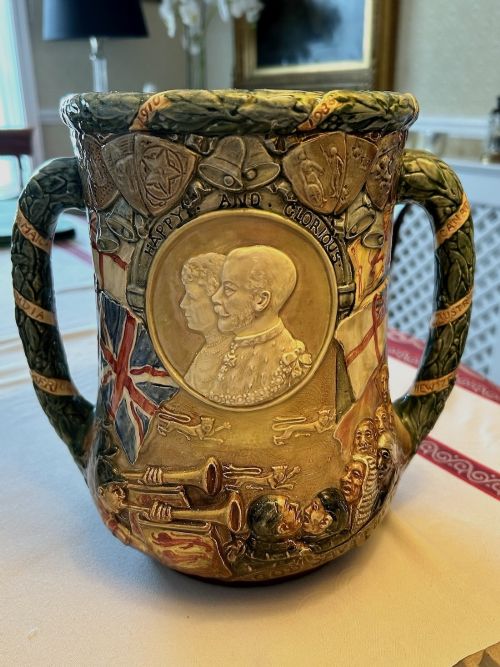
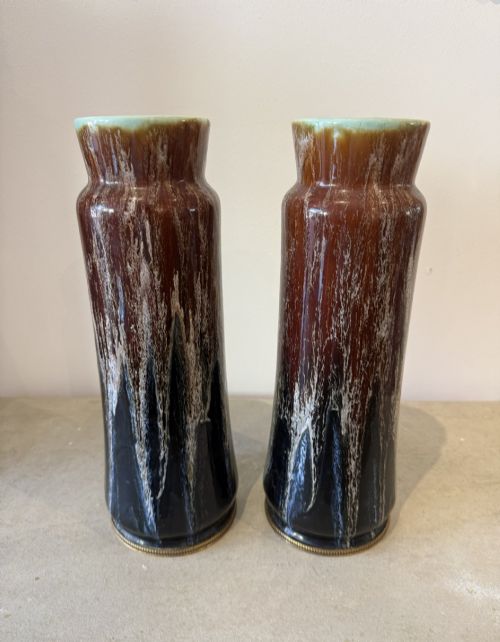
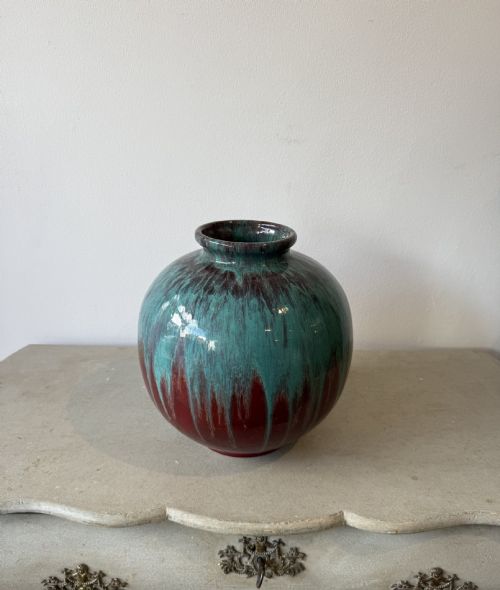
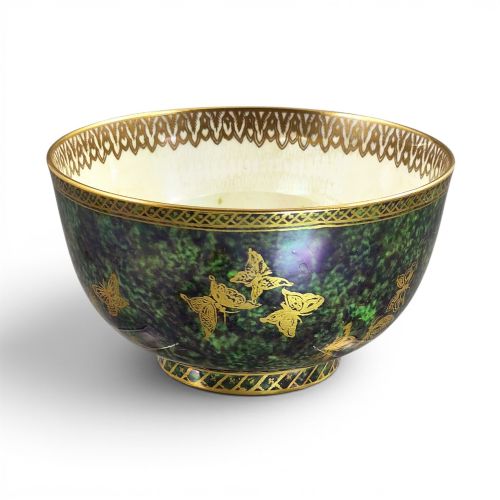
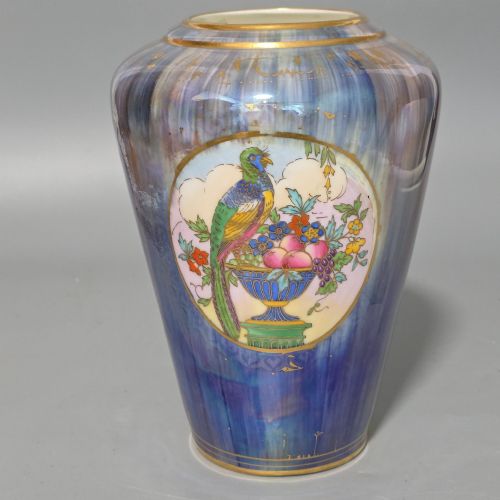
An art deco ceramic vessel represents an era of bold design and stylised motifs, appearing frequently on this page in forms ranging from tall handled vases to octagonal bowls. These pieces often draw on French studio pottery traditions or British earthenware production from the nineteen-twenties and nineteen-thirties.
Makers shaped these objects to catch the eye through strong lines and saturated colour palettes, utilising earthenware, porcelain, and glazed ceramic. The selection here spans compact sugar bowls to large display vases created during the height of the twentieth-century design movement.
Materials and production methods
Potters shaped these vessels using earthenware and porcelain bodies before applying complex glazes, enamels, and occasional accents of gold leaf. Hand enamelling and lustre techniques allowed workshops to build shimmering, iridescent surfaces across the ceramic body.
Techniques varied from the high-temperature firing of crystalline and lustre glazes to careful hand-painting over printed outlines. Studios employed specialist turners and decorators to achieve the crisp geometric profiles characteristic of the period.
Listings here feature earthenware and porcelain pieces spanning the Edwardian period through to the nineteen-forties, centred heavily on nineteen-twenty and nineteen-thirty designs.
Assessing quality and finish
Quality rests upon the precision of the form and the depth of the glaze, with superior pieces showing controlled application of lustre and enamel without muddy overlap. The crispness of moulded relief work and the richness of the underlying ceramic body dictate the standing of a vessel.
Successful examples display a deliberate harmony between shape and surface decoration, whereas lesser pieces rely on simple, uninspired colour washes. The reputation of the decorator or pottery often elevates a piece through superior kiln work and refined pigment selection.
Royal Doulton·Boch Freres·Wedgwood·Minton·Robert T Lallement·Carlton Ware·Royal Copenhagen·Clarice Cliff·Mougin·Pilkingtons Royal Lancastrian·Falcon Ware·Charlotte Rhead·Roger Guerin·Poole Pottery
The Art Deco Ceramic Vessel Glossary
- Earthenware
- Porous pottery fired at lower temperatures, requiring a vitreous glaze to hold liquids. It serves as the primary body for many brightly decorated twentieth-century wares.
- Lustre
- A type of ceramic glaze containing metallic oxides that produce an iridescent sheen upon reduction firing. Daisy Makeig-Jones utilised this method extensively for whimsical bowl designs.
- Enamel
- Opaque glass mixture applied over a fired glaze and fixed with a secondary, lower-temperature firing. This technique provides the vibrant, raised colours seen on patterned vases.
- Porcelain
- A dense, vitrified ceramic material fired at high heat, renowned for its white body and ringing tone. It provides a smooth canvas for delicate underglaze and overglaze painting.
- Chinoiserie
- European decorative style reflecting Chinese artistic traditions, often featuring imaginary landscapes and mythical creatures. It appears on lustre bowls decorated with dragons and phoenixes.
Art Deco Ceramic Vessel: Frequently Asked Questions
How do I clean an art deco ceramic vessel?
Dust these pieces gently with a soft dry cloth to protect fragile surface enamels and gold leaf details. Avoid submerging vessels that feature delicate lustre or overglaze painting in water.
Water should be kept out of porous earthenware bodies entirely, particularly if the interior glaze shows hairline crazing. Display them away from direct sunlight to preserve the saturation of early twentieth-century pigments.
What periods do these ceramic vessels cover?
The pieces on this page span from the nineteenth century through the Edwardian era and into the nineteen-twenties, thirties, and forties. The majority cluster around the interwar period when modernist design took hold in European workshops.
Earlier nineteenth-century examples sit alongside experimental studio pottery from the height of the art deco movement. Each era brought distinct glaze chemistries and moulding techniques to the ceramic form.
Were these vessels used or decorative?
Many of these objects served as purely decorative bowls, mantel vases, or cabinet pieces designed to showcase modern interior aesthetics. Items like loving cups, commemorative mugs, and sugar bowls also carried functional domestic roles.
Makers balanced utility with striking sculptural presence, allowing even small vessels to function as focal points in a room. Their primary purpose shifted toward display as households embraced artistic pottery.
How do I spot hand-painted details?
Look closely at the outlines and brushstrokes under good light to detect subtle variations in pigment thickness and direction. Hand-enamelled pieces show slight pooling where the liquid colour settled before firing.
Printed transfers often reveal microscopic dot patterns or uniform thickness that distinguishes them from freehand brushwork. Skilled decorators signed or marked their wares to denote individual studio output.