


Art Deco Bed
When choosing an art deco bed, buyers seek the distinctive geometric forms and rich timber grains of the interwar period.
Art Deco Bed
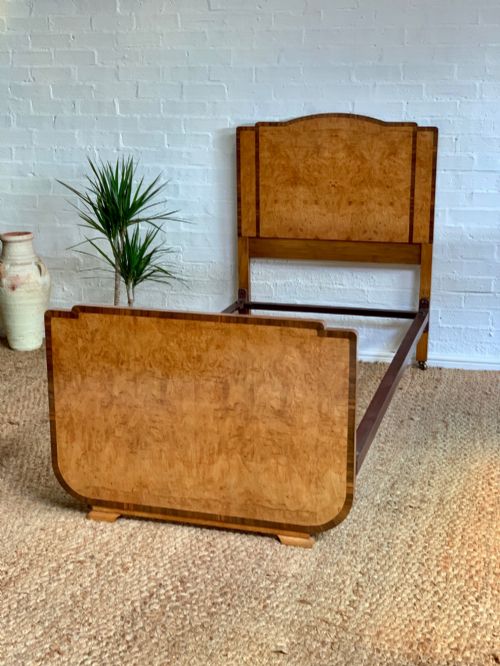
An art deco bed embodies the streamlined aesthetics and bold geometry popular during the interwar decades, primarily originating from the nineteen-thirties. These pieces span standard double beds, single beds, and grander frames complete with integral bedside cabinets or streamlined headboards.
Most examples seen here emerge from French and English workshops, utilising architectural silhouettes like the tiered skyscraper style or clean, curvaceous lines. Alongside standard bed frames, buyers frequently encounter paired single beds and specialised day beds reflecting the period's preference for integrated bedroom suites.
Materials and construction methods
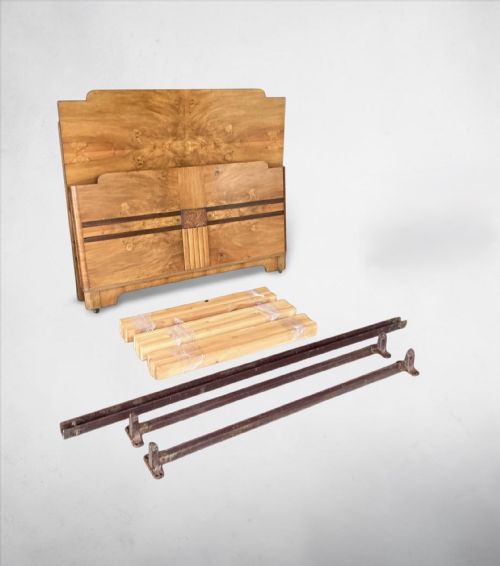
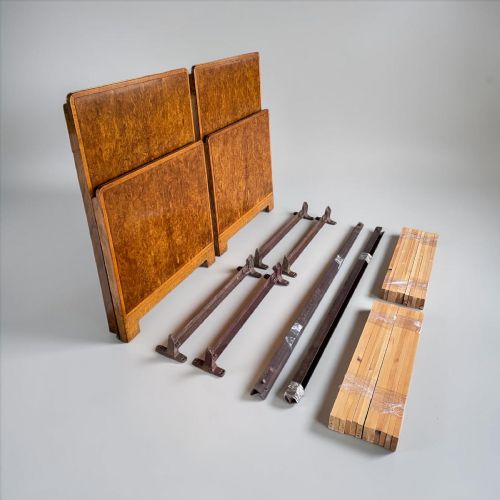
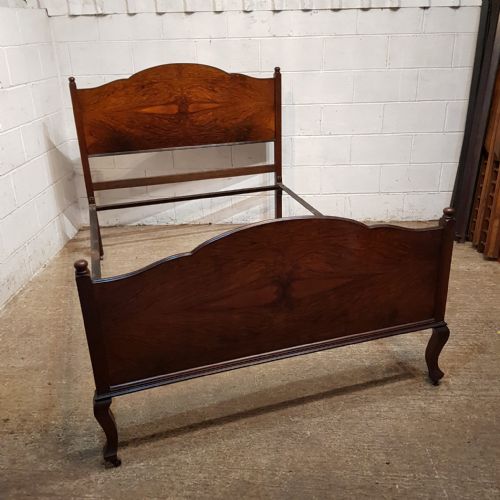
Cabinetmakers constructed these frames using solid timber foundations overlaid with decorative veneers, notably burr walnut, figured walnut, and exotic blonde maples. The application of highly figured grain patterns created striking symmetrical motifs across large flat surfaces such as headboards and footboards.
Accents in contrasting woods like satinwood, macassar, or metal fittings completed the visual effect, whilst iron and brass provided structural support in select metallic and hybrid frames.
Listings feature pieces spanning the Victorian era through the nineteen-thirties, utilising walnut, satinwood, iron, and maple.
Determining quality in period furniture
Quality rests upon the selection and matching of wood veneers, where expert craftspeople arranged grain patterns to mirror one another symmetrically across the surface. Superior examples display thoughtful integration of functional elements, such as bedside tables built directly into the headboard framework.
The distinction between standard production and masterwork output involves the fluidity of carved curves, the depth of polished finishes, and attribution to notable designers or workshops of the era.
Waring & Gillow England·Betty Joel·H.L. Epstein Brothers·Heal's·Brynmawr Furniture
The Art Deco Bed Glossary
- Veneer
- A thin layer of choice timber applied to a sturdier secondary wood foundation. This technique allowed makers to showcase expensive grain patterns economically across large furniture surfaces.
- Burr walnut
- A specialised timber cut from the abnormal growth growths on walnut trees. It yields deeply swirled, highly decorative grain formations prized in interwar cabinetmaking.
- Skyscraper style
- An architectural design influence characterised by stepped profiles and vertical emphasis. This motif translated directly into bedroom furniture headers and cabinet structures.
- Headboard
- The upright vertical panel forming the front of a bedstead. Period examples frequently incorporate attached nightstands or shelving units.
- Bedstead
- A complete framework supporting a mattress, comprising headboards, footboards, and side rails. These structures accommodate modern bedding dimensions while retaining original period proportions.
Art Deco Bed: Frequently Asked Questions
Will a vintage frame fit a modern mattress?
Many historic frames accommodate standard mattress sizes, though exact dimensions can vary slightly from contemporary standards. Buyers should check internal rail lengths and widths carefully before purchasing.
Custom mattress ordering remains a common solution for securing a proper fit within older wooden side rails.
How do I care for polished walnut surfaces?
Maintaining these timber finishes requires avoiding direct sunlight and excessive moisture. Regular dusting with a soft, dry cloth preserves the original polish.
Occasional application of appropriate wax feeds the timber without building up heavy chemical residues.
Are bedside tables always attached to the frame?
While many designs feature integral cabinets or shelving units built directly into the headboard structure, numerous variants exist as standalone pieces.
Matching pairs of separate bedside cabinets also appear frequently alongside standard bed frames.
How do I distinguish nineteen-twenties from thirties designs?
Nineteen-twenties pieces often retain heavier proportions and transitional elements from earlier Victorian aesthetics. Thirties designs lean further into streamlined geometry and pale maple or blonde finishes.
Cabinetmaker attribution and documented construction dates help clarify the exact timeline of manufacture.