

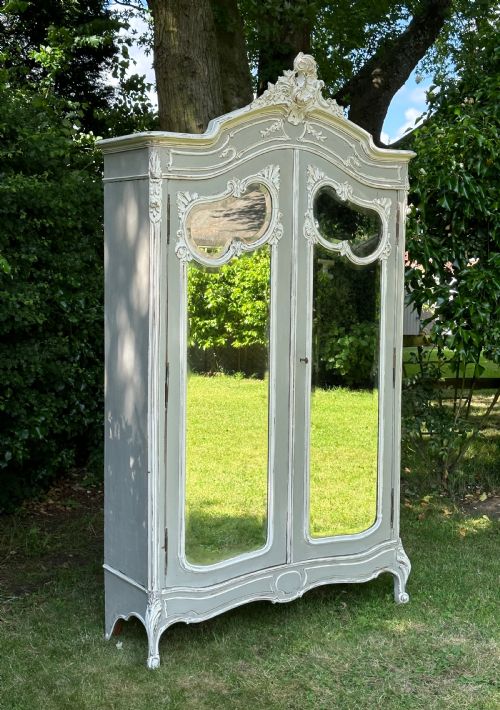
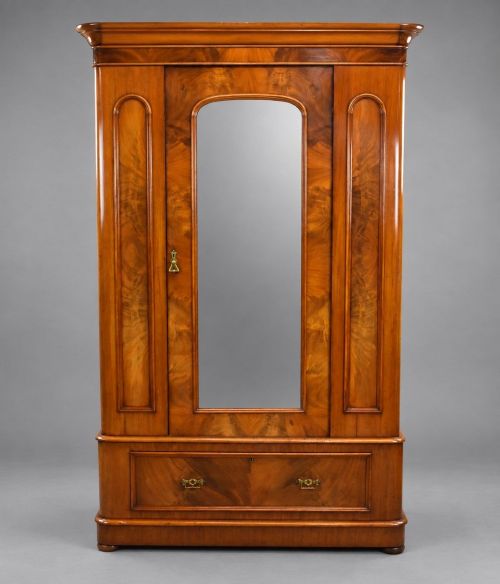
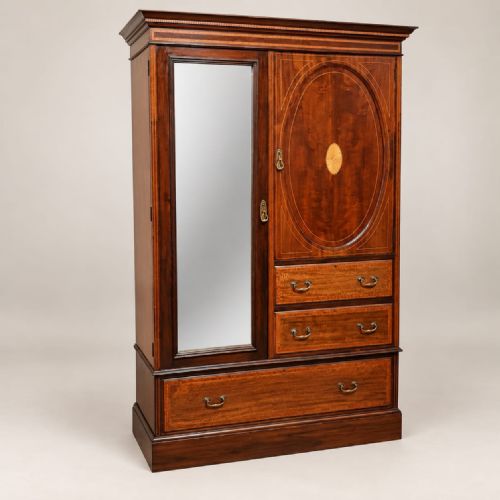
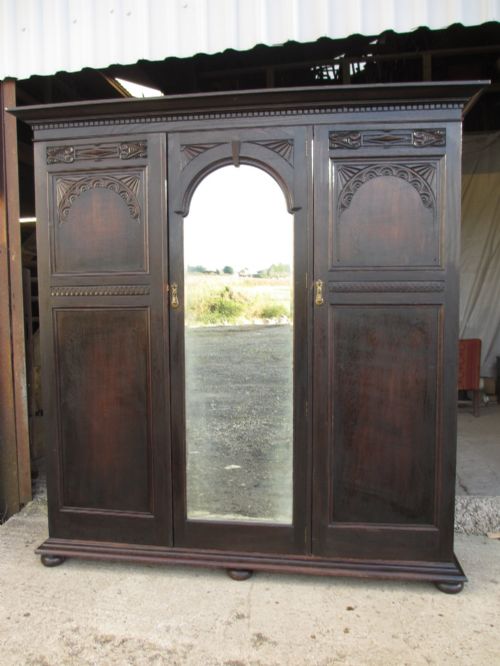
Armoire with Mirror Door
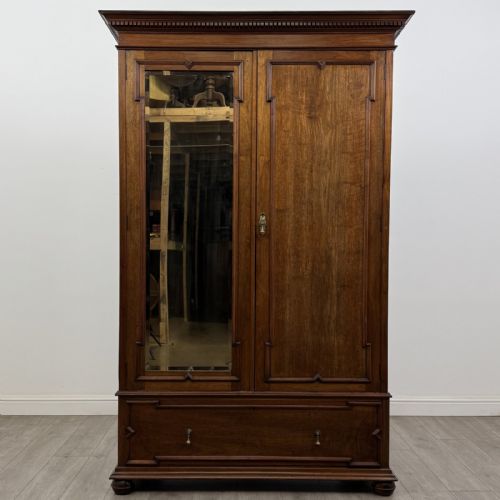
An armoire with mirror door is a grand bedroom storage piece combining hanging space with a full-length glass panel.
Armoire with Mirror Door
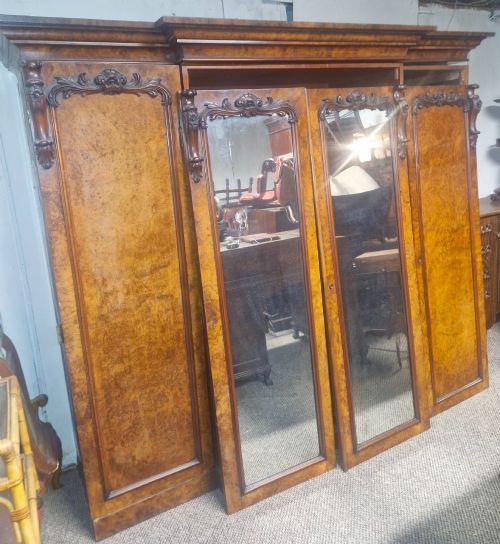
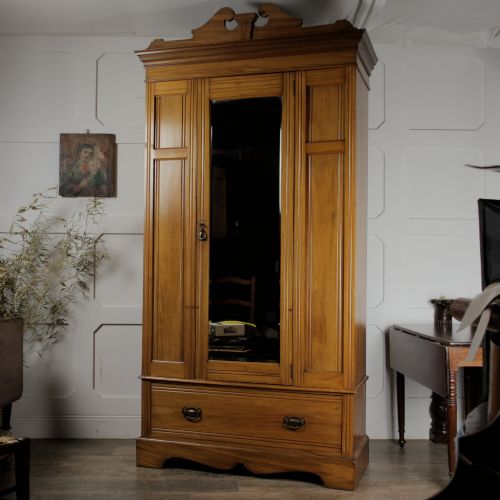
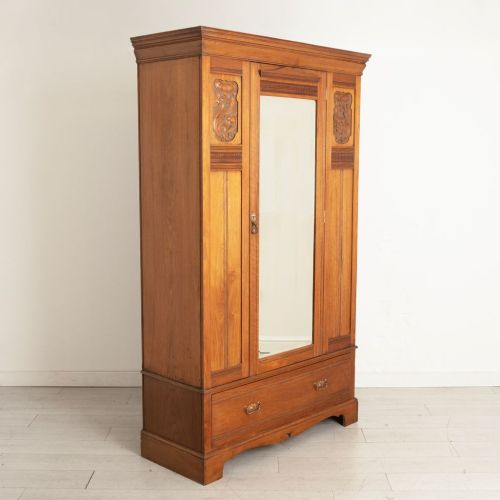
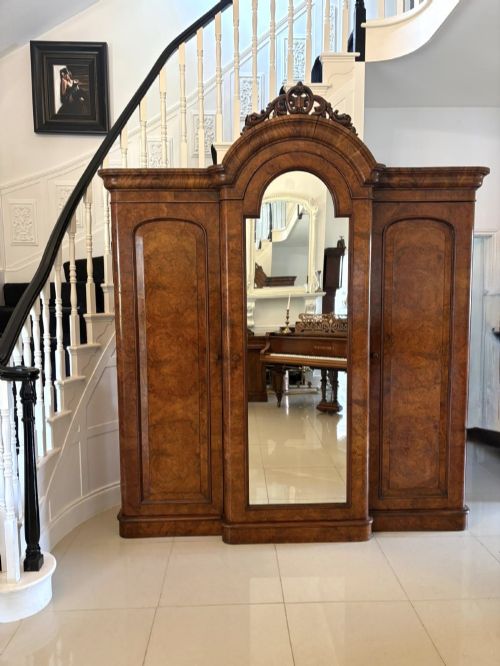
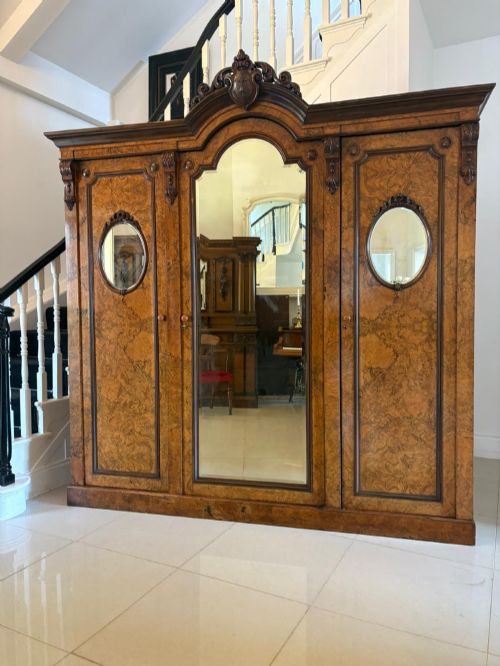
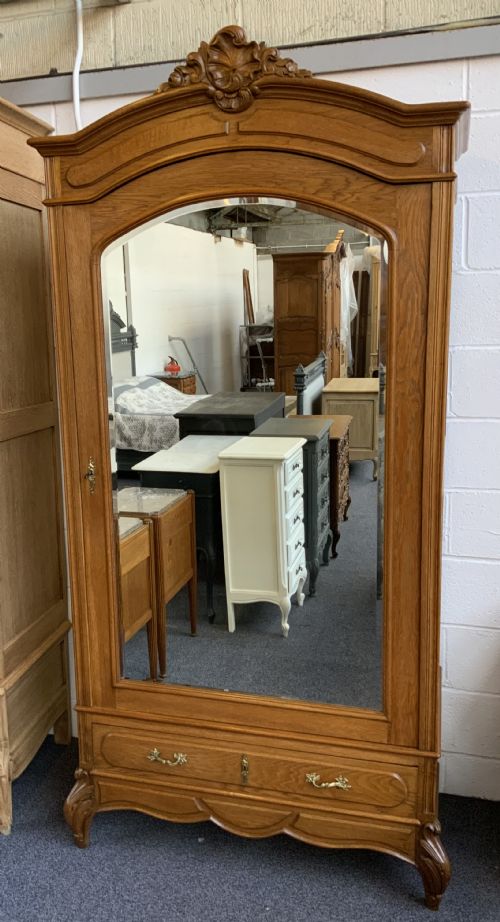
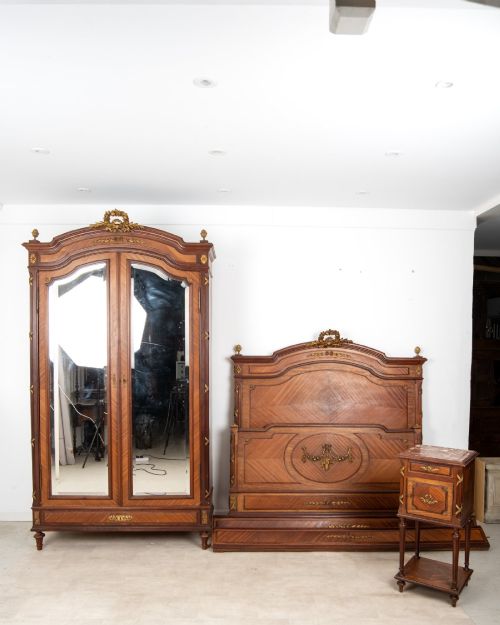
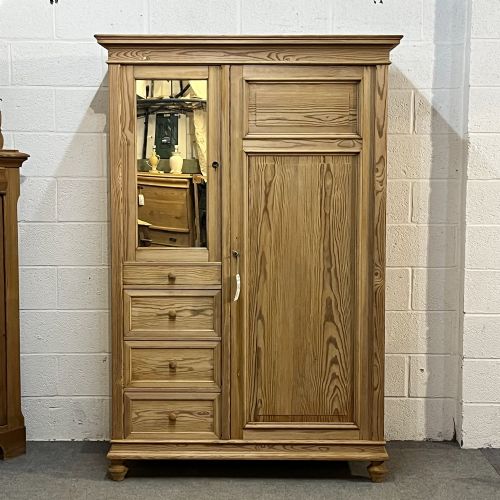
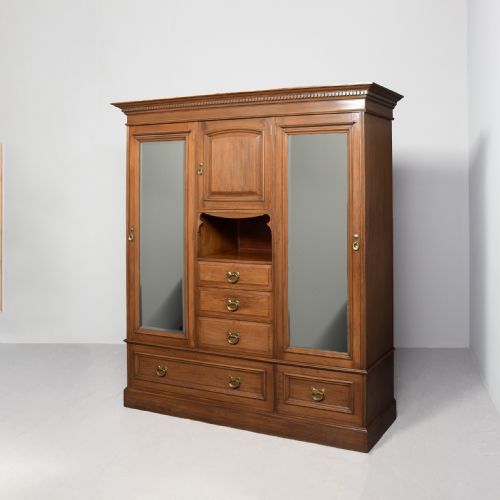
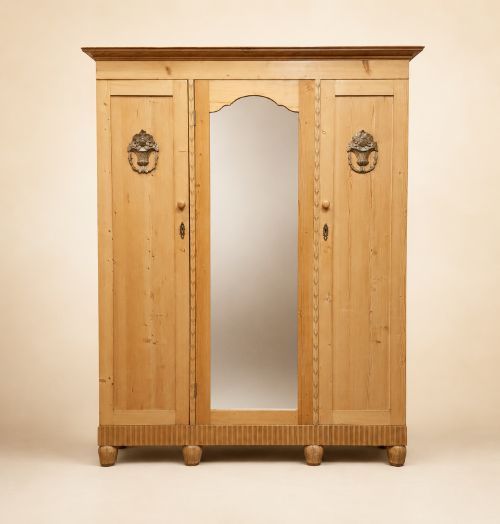
An armoire with mirror door stands as a substantial storage item originating from periods spanning the nineteenth century through the nineteen-thirties. Pieces encountered here emerge from Edwardian, Victorian, and later provincial contexts, taking forms such as triple wardrobes, compactums, and single-door hall pieces.
Makers shaped these items in varied configurations, including combination wardrobes featuring internal drawers and linen presses alongside the primary hanging compartment. Buyers find both British workshop examples in mahogany, pine, and ash alongside continental French designs in walnut and painted finishes.
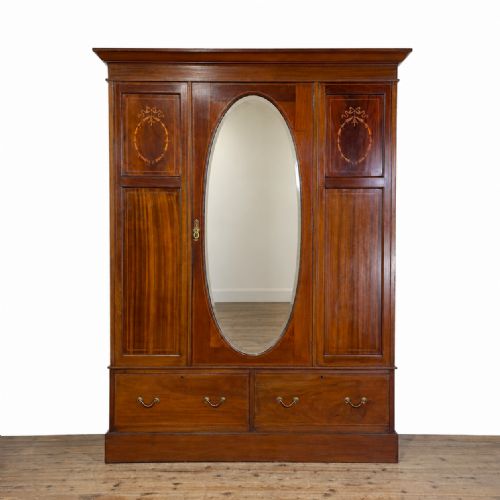
Stylistic influences range from straightforward country utility to revival aesthetics like Louis XVI and neoclassical schemes. The integration of a mirrored panel serves both a practical dressing function and a method to bounce light around a bedroom.
How they were made
Carpenters constructed carcasses from primary timbers such as mahogany, walnut, oak, and pine, frequently incorporating secondary woods like pitch pine and ash for internal components. Surface treatments include wax polishes, painted finishes, and satinwood or maple veneers.
Decorative detailing relies on brass hardware, gilt bronze ormolu mounts, and inlaid wooden motifs rather than complex carving alone. Glass plates provide the mirrored doors, housed securely within heavy timber frames to support the swing of large panels.
Armoire with Mirror Door Retail Price Guide 2026
Typical asking prices for armoire with mirror door among the pieces listed under this phrase on Sellingantiques today, from the lower quarter to the upper quarter. They describe what is for sale here now, not the wider market.
Periods represented across the inventory stretch from nineteenth-century Victorian designs through Edwardian iterations up to nineteen-thirty examples.
What varies in quality
The refinement of the timber selection and the sophistication of the joinery set finer examples apart from utility items. Mahogany and figured walnut versions with crisp brass detailing or ormolu mounts represent a higher grade of craftsmanship than standard pine pieces.
Proportion and scale dictate visual success, where large triple configurations or fitted compactums demonstrate greater ambition than single-door hall wardrobes. The clarity of the mirror glass and the integrity of internal fittings also distinguish superior examples.
Maples and Co
The Armoire with Mirror Door Glossary
- Compactum
- A multi-compartment wardrobe combining hanging space, shelving, and internal drawers within a single carcass. This form maximises storage efficiency in period bedrooms.
- Ormolu
- Cast bronze mounts finished with a gold-coloured metallic application, frequently seen on continental revival pieces. Makers utilised these details to enhance the decorative presence of doors and cornices.
- Linen Press
- A storage item traditionally designed for folded textiles, often featuring sliding trays or drawers enclosed by panelled doors. In later examples, this form merged with the standard wardrobe layout.
- Sentry Box
- A narrow single-door wardrobe configuration designed for compact spaces. The layout prioritises vertical hanging length over width.
Armoire with Mirror Door: Frequently Asked Questions
How do I fit a large wardrobe?
Many period wardrobes were constructed with knockdown carcases held together by bolts or pegs, allowing them to be dismantled for transport and reassembly in tight spaces.
Buyers should verify whether a specific piece separates into sections before attempting movement through narrow stairwells or low doorways.
What is a compactum wardrobe?
A compactum combines hanging space, shelves, and internal drawers within one unified piece of bedroom furniture. This layout offers versatile storage without requiring separate chests of drawers.
Examples often appear from the Victorian and Edwardian eras in timbers like ash, oak, and mahogany.
Are mirrored doors original?
Mirrored glass panels on nineteenth and early twentieth-century wardrobes are generally original to the construction, though glass could be replaced if damaged.
Bevelled edges and slight silvering irregularities often indicate age and authenticity in the mirror plate.
How do I care for polished wood?
Maintain timber surfaces by applying a traditional beeswax polish sparingly and buffing with a soft cloth. Avoid placing furniture in direct sunlight or near heat sources to prevent timber shrinkage and cracking.
Regular dusting prevents particle build-up on delicate veneers and brass mounts.