



Arita Ware Wall Dish
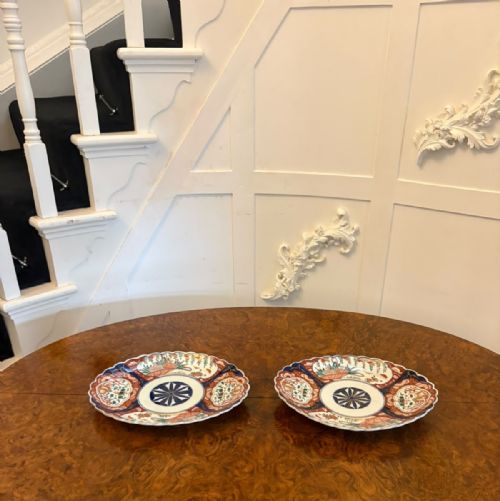
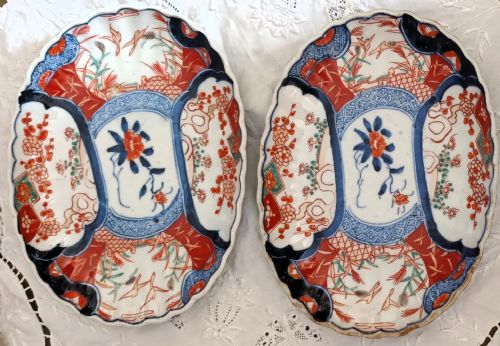
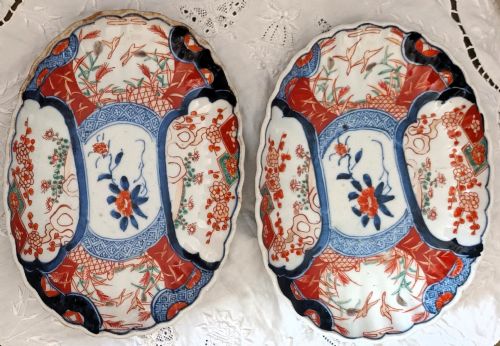
These arita ware wall dish examples are decorative porcelain chargers and plates displaying traditional Japanese Imari patterns.
Arita Ware Wall Dish
An arita ware wall dish encompasses decorative plates, chargers, and dishes originating from Japan during various historical periods, including the Edo and Meiji eras. Buyers searching for an arita ware wall dish frequently encounter circular or shaped porcelain items intended for display.
Early examples date back to the late seventeenth century under Hizen production, while later nineteenth century Meiji period items form the bulk of available pieces. Each object reflects traditional Japanese ceramic traditions adapted for decorative display.
How they were made
Potters shaped porcelain and ceramic bodies before applying underglaze blue and overglaze enamel colours, often incorporating gold leaf or gilt details. These materials fused during firing to create durable surfaces decorated with hand painted motifs.
Artisans utilised specific glaze formulations and enamel colours to achieve the distinctive Japanese Imari appearance seen on chargers and plates. Scrolling foliate borders and intricate pictorial scenes demonstrate the meticulous brushwork typical of Arita production.
Some plates abandon circles entirely to mimic folded fans, proving that seventeenth-century potters enjoyed origami just as much as anyone else.
What varies in quality
The precision and detail of the hand painted decoration distinguish standard production from superior pieces, with finer lines and richer enamel glazes elevating the visual impact. The complexity of the design, whether simple blue and white scrolling or multi-coloured Imari palettes with gilt, marks the tier of workmanship.
Unusual forms such as fan shaped, square, or hexagonal plates demand greater skill from the potter compared to standard circular dishes. The clarity of the porcelain body and the preservation of the enamel and gold leaf over centuries further determine the standing of each piece.
The Arita Ware Wall Dish Glossary
- Imari
- A style of Japanese porcelain decorated in underglaze blue, iron red, and gold, named after the port from which it was shipped. This aesthetic dominated export wares during the Edo period.
- Charger
- A large decorative plate utilised primarily for display on walls or sideboards rather than for dining purposes. These substantial vessels showcase expansive painted scenes.
- Edo Period
- The historical era in Japan lasting from 1603 to 1868, characterised by economic growth and stable arts production including early Arita ceramics. Pieces from this time often exhibit classic underglaze blue and early enamel techniques.
- Meiji Period
- The era spanning from 1868 to 1912, representing a time of increased export trade and highly detailed decorative arts. Many surviving plates and chargers originate from this productive late nineteenth century span.
- Aka-e
- Japanese terminology for red picture decoration, describing wares featuring dominant red enamel pigments. This technique forms an integral part of the polychrome palette found on Arita dishes.
Arita Ware Wall Dish: Frequently Asked Questions
How do I hang an arita ware wall dish safely?
Display plates require specialised spring-loaded brass wall hangers that grip the rim securely without causing abrasion to the porcelain glaze. Ensure the mounting bracket anchors firmly into wall studs given the substantial weight of large chargers.
Position dishes away from direct sunlight and high traffic areas to protect the delicate overglaze enamels and gold leaf highlights from accidental damage.
What is the difference between Arita and Imari?
Arita refers to the Japanese town and surrounding region in Hizen province where the porcelain clay was mined and fired. Imari simply designates the shipping port through which these finished ceramics travelled to international markets.
Consequently, all Imari export wares are technically Arita ware, created by regional artisans utilising local ceramic materials and traditional kiln techniques.
How do I date an antique arita ware wall dish?
Dating relies on stylistic markers, potting techniques, and the composition of the glaze and enamel colours. Seventeenth-century pieces typically show thicker, heavier bodies with simpler blue and white foliage, whereas Meiji period items often display brighter, denser polychrome palettes.
Examining the foot ring and any wear patterns on the unglazed base also provides clues regarding the manufacturing era.
Can these antique dishes be used for serving food?
Most antique chargers and decorative plates are intended strictly for display rather than culinary use. Historic overglaze enamels and delicate gold leaf details can degrade when exposed to acidic foods, moisture, and frequent washing.
Gentle dusting with a dry microfibre cloth is sufficient for routine maintenance of these fragile display pieces.