

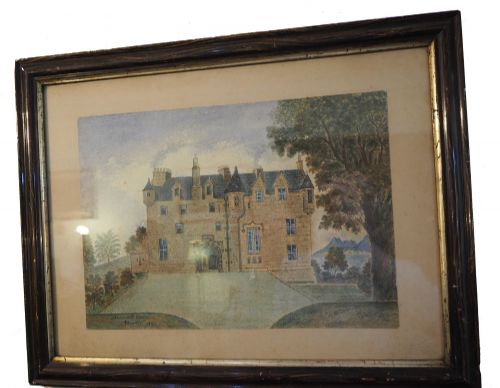


Architectural Watercolour Artwork
Architectural watercolour artwork brings together precise building studies and fluid pigment, capturing historic streets, ancient ruins and grand facades across the nineteenth and twentieth centuries.
Architectural Watercolour Artwork
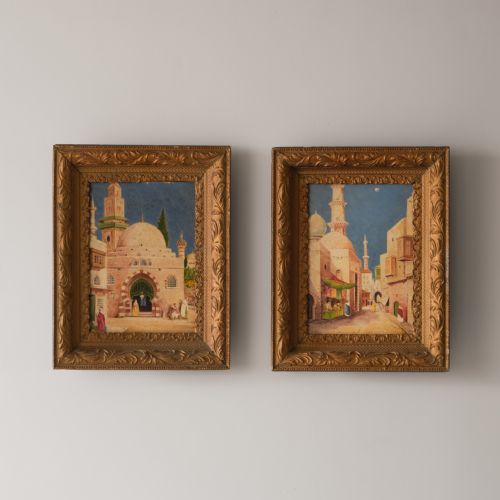
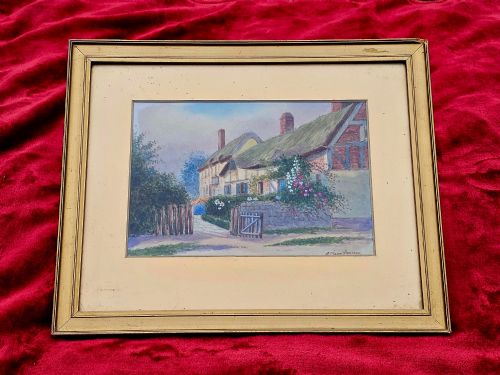
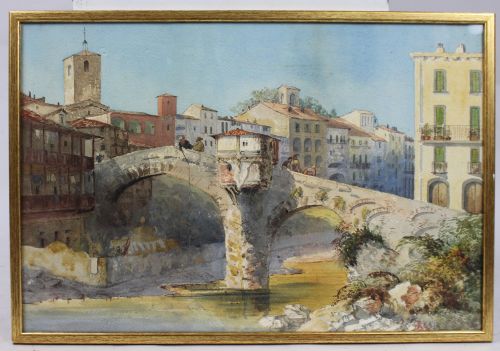
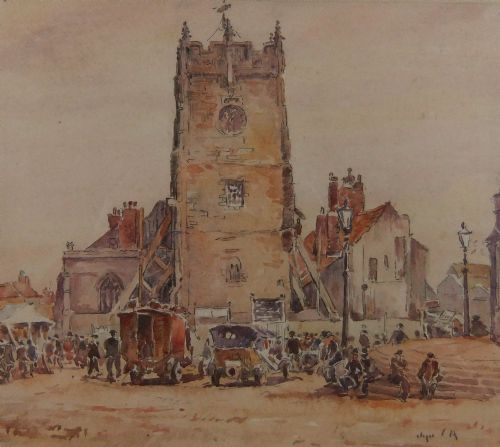
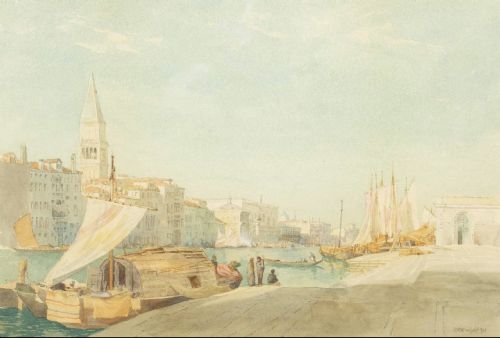
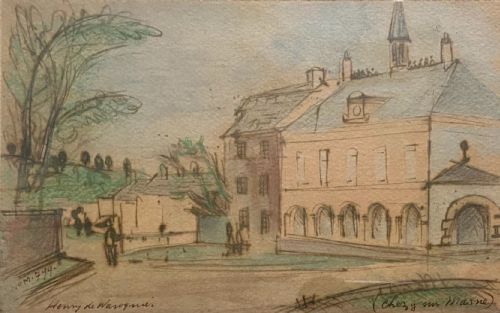
Architectural watercolour artwork comprises paintings, framed drawings and detailed studies centring on buildings, street scenes, castles and classical ruins. These pieces range from intimate sketches of local cottages and market crosses to expansive views of Venetian canals, Roman arches and French town halls.
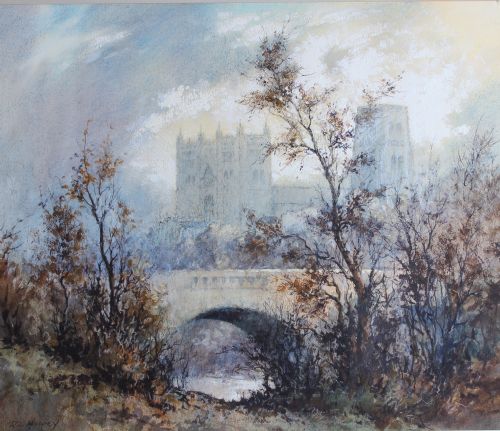
The versions most frequently met on this page span the Victorian era, the Edwardian period and the mid-twentieth century. Creators recorded both British locations, such as Durham Cathedral and York, and continental destinations visited during the Grand Tour, including Pompeii and Venice.
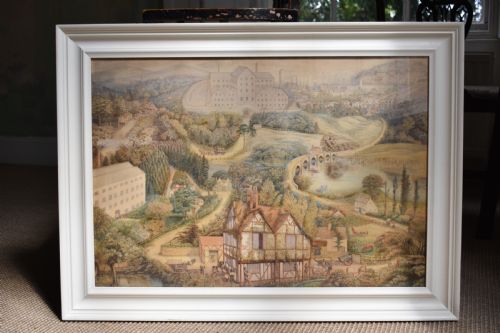
Works appear under various classifications such as fine art paintings, townscapes and mixed media drawings. Many pieces retain their original framing under glass, preserving delicate paper supports and subtle washes of pigment over decades.
Materials and execution
Makers applied watercolour pigment and ink onto paper supports, often beginning with pencil guidelines to map out perspective, arches and stone facades. Selected pieces incorporate mixed media elements, combining fluid washes with precise ink line work to define masonry and shadows.
Framed works utilise glass protection alongside wood and gilt wood frames to secure the paper artworks. The combination of transparent watercolour washes and ink allows artists to render atmospheric skies, reflective waterways and intricate architectural details on a portable surface.
Periods represented span from the 1870s through the Edwardian era and into the 1950s.
Distinctions in quality
Quality in these watercolours rests upon the precision of perspective, the handling of light and shadow across stone surfaces, and the confidence of the initial ink or pencil drawing. Superior examples demonstrate a secure grasp of architectural proportions alongside atmospheric depth in skies and surrounding landscapes.
Condition of the paper support and the vibrancy of the watercolour pigment further separate works. Pieces that retain their original tones without heavy fading or excessive acidic discolouration from old mounts represent the finer survivals from the nineteenth and twentieth centuries.
Thomas Ellison·Richard Henry Wright·Henry de Waroquier·Robert Leslie Howey·Fred Lawson·Sir Thomas Newenham Dean·Charles James Lauder·Rowland Henry Hill·Stanley Orchart·Louie Stanley Maurice Prince·G Villiers Stuart·Vittore Zanetti Zilla·Joseph W Milliken·Edith E Caswall·Hercules Brabazon Brabazon·Pio Panfili·John Sowden·Jack Merriott
The Architectural Watercolour Artwork Glossary
- Grand Tour
- A traditional journey through Europe undertaken by upper-class travellers to study classical antiquities and art. Watercolours purchased on these travels often depicted Italian ruins, Venetian canals and ancient monuments.
- Wash
- A thin, fluid layer of diluted watercolour pigment applied to paper to create smooth areas of colour or tone. Artists used layered washes to build shadows on buildings and depth in skies.
- Mixed media
- An artwork created using more than one medium on the support. In these listings, pieces frequently combine ink and watercolour pigment.
- Provenance
- The documented history of ownership of an art object. Signatures, dates and inscriptions on the reverse often help establish the background of these watercolours.
- Townscape
- A painting or drawing depicting a built urban environment, streets, market squares or architectural complexes. This genre forms a significant portion of the architectural works available.
Architectural Watercolour Artwork: Frequently Asked Questions
What periods do these watercolours cover?
The works span from the nineteenth century through the Edwardian era and into the mid-twentieth century. Dates range from early nineteenth-century architectural studies up to post-war townscape views.
Creators active across these decades documented changing urban landscapes alongside historic European architecture.
How were these architectural scenes used?
Artists created these pieces as finished exhibition watercolours, travel records from continental tours, or preparatory design drawings for cabinetry and buildings. Many served as framed wall art for domestic interiors.
Travellers also collected them as mementos of significant journeys through Britain and Europe.
How should I display watercolour artwork?
Watercolour paintings require protection from direct sunlight to prevent the pigments and paper from fading over time. Hanging them in rooms with stable humidity levels helps preserve the paper support and original framing.
Keeping pieces behind glass shields the delicate pigment layers from dust and atmospheric pollutants.
How do I identify different periods in the paintings?
Stylistic clues, artist signatures and dated inscriptions help determine the era of a piece. Victorian and Edwardian works often display detailed narrative elements in townscapes, whereas mid-century examples lean towards freer ink and watercolour techniques.
Subject matter also offers guidance, as Grand Tour pieces typically reflect nineteenth-century classical interests.