

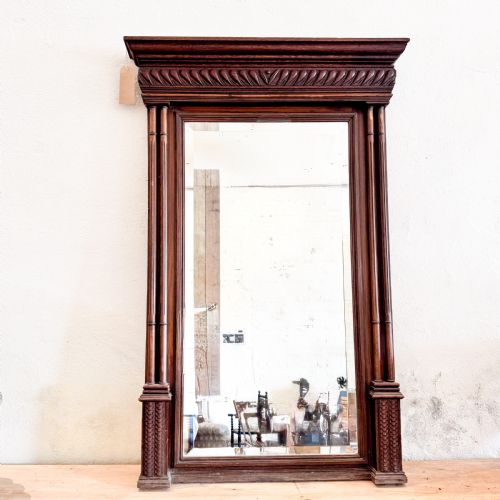


Architectural Walnut Mirror
An architectural walnut mirror brings classical proportion and rich grain to a room, offering the structured symmetry that collectors prize in period wall furniture.
Architectural Walnut Mirror
When you search for an architectural walnut mirror, you encounter wall furniture shaped by classical building design, featuring pediments, mouldings, and gilt details. These pieces originate from various eras, spanning the Georgian, Victorian, and later revival periods.
The version you are most likely to meet on this page is a wall-hanging mirror framed in walnut, often highlighted with parcel gilt accents or carved crests. Forms range from smaller wall mirrors to large overmantels, pier glasses, and tall hall mirrors.
The materials recorded in these listings combine warm timber frames with reflective glass, frequently enhanced by marble and gilt wood or giltwood highlights. Makers drew upon styles such as George II, Empire, and French Chateau to construct these imposing furnishings.
Materials and construction methods
Walnut timber forms the structural foundation of these frames, valued for its rich grain and dark warmth. Artisans shaped this wood into architectural profiles, incorporating carved crests and mouldings.
Parcel gilt and giltwood applications accent the timber, catching the light against the dark grain. Selected examples integrate marble elements to heighten the classical presence of the frame.
Architectural Walnut Mirror Retail Price Guide 2026
Typical asking prices for architectural walnut mirror among the pieces listed under this phrase on Sellingantiques today, from the lower quarter to the upper quarter. They describe what is for sale here now, not the wider market.
Materials appearing across the inventory include figured walnut timber, marble, parcel gilt, and giltwood.
Distinctions in quality
The refinement of the carving determines the distinction between standard production and superior craftsmanship. Crisp execution in the architectural mouldings and parcel gilt details separates the finest examples from simpler alternatives.
Proportion and scale dictate the visual impact of each piece. Larger scale mirrors require balanced timber construction to maintain structural integrity across tall or wide frames.
The Architectural Walnut Mirror Glossary
- Parcel gilt
- Partial gilding applied to specific areas of a wooden frame, usually highlighting carved details such as mouldings or crests. This technique creates contrast against the darker walnut timber.
- Pier glass
- A tall mirror designed to hang on the wall space between windows, often reflecting light back into the room. These frequently match the height of surrounding architectural joinery.
- Palladian
- A classical architectural style inspired by Andrea Palladio, characterised by symmetry, pediments, and strict proportions. Mirrors in this manner borrow directly from building facades.
- Overmantel mirror
- A wide glass designed specifically to sit above a fireplace mantelpiece. They often mirror the horizontal proportions of the hearth below.
Architectural Walnut Mirror: Frequently Asked Questions
Where should I hang an architectural walnut mirror?
These pieces suit principal reception rooms, hallways, or above a fireplace where their vertical or horizontal proportions can anchor the surrounding wall space.
Because many examples feature substantial scale and weight, secure wall fixings are essential to support the timber and glass safely.
How do I identify a Georgian style mirror?
Georgian and George II style mirrors typically display architectural elements such as broken pediments, parcel gilt accents, and symmetrical wooden frames influenced by classical buildings.
Revival pieces from later centuries often emulate these exact proportions and decorative vocabulary, requiring careful examination of the timber age.
Are these mirrors suitable for modern interiors?
The warm tones of walnut timber and classical symmetry allow these mirrors to integrate effectively into contemporary rooms as statement focal points.
Their architectural framing provides a strong visual contrast against plain walls, drawing the eye and reflecting ambient light.