



Architectural Ruins Art
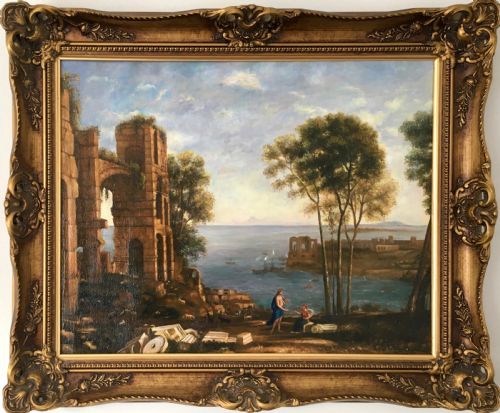
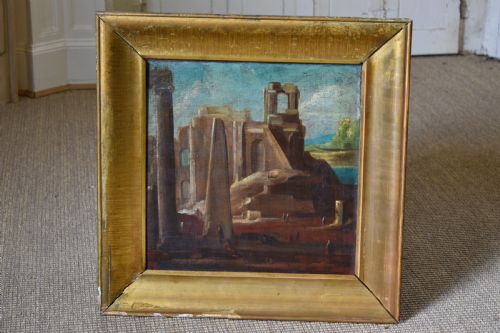
Architectural ruins art captures the enduring fascination with fallen classical and medieval structures through works on paper and canvas.
Architectural Ruins Art
Architectural ruins art encompasses paintings, watercolours, prints, and etchings depicting classical architecture, Italian landscapes, and weathered abbeys. Buyers seeking these pieces encounter works spanning from the eighteenth century through to the twentieth century.
Grand Tour watercolours of Roman sites and depictions of English monastic remains form the core of the available selection. Collectors acquire these works to bring classical perspective and historical depth to domestic interiors.
Materials and technique
Works in this category rely upon traditional media including watercolour, oil on canvas, oil on panel, and etching on paper. Artists applied ink and wash alongside watercolour pigments to delineate crumbling stonework and masonry details.
Gilded wood and gold leaf frames frequently enclose these pieces, providing a formal border that complements the classical subject matter. The physical support ranges from heavy artist paper to stretched canvas and wooden panels.
Architectural Ruins Art Retail Price Guide 2026
Typical asking prices for architectural ruins art among the pieces listed under this phrase on Sellingantiques today, from the lower quarter to the upper quarter. They describe what is for sale here now, not the wider market.
Periods span from the eighteenth century through the nineteenth and twentieth centuries.
Factors of quality
Quality in these works resides in the accuracy of the architectural perspective and the handling of atmospheric light. Finer pieces demonstrate a confident command of scale when rendering towering arches, columns, and crumbling walls.
The skill of the individual artist dictates the vitality of the composition, particularly in the depiction of shadow and vegetation reclaiming the stone. Provenance linking a work to known topographical traditions or named artists elevates the standing of the piece.
Francesco Guardi·Giovanni Paolo Panini·Francesco Piranesi·John Sowden·Fred Lawson·Tom Dudley·William Crouch·Lamorna Birch
The Architectural Ruins Art Glossary
- Capriccio
- An architectural fantasy placing fictitious or real classical ruins in a picturesque fictitious combination. This style dominated eighteenth-century Italian landscape painting.
- Grand Tour
- A traditional educational trip through Europe undertaken by upper-class young European men during the eighteenth and nineteenth centuries. Travellers frequently acquired local watercolours and antiquities as souvenirs.
- Etching
- A printmaking process where lines are incised into a metal plate with acid before ink is applied and pressed onto paper. This technique allowed artists to produce detailed architectural prints.
- Topographical art
- Accurate representations of specific real places, landscapes, or buildings. These works served as visual records before the widespread adoption of photography.
- Neoclassical
- A Western cultural movement drawing inspiration from the classical art and culture of ancient Greece or Rome. This style influences the balanced proportions and solemn subjects seen in many ruin paintings.
Architectural Ruins Art: Frequently Asked Questions
What subjects appear in architectural ruins art?
These works depict classical Roman monuments, Italian landscapes, and British abbeys and castles. The subjects range from classical arches and forums to ruined medieval monasteries.
Artists focused on the poetic decay of stone structures, often incorporating figures or natural foliage to emphasise the passage of time.
How were these artworks displayed historically?
Historically, Grand Tour watercolours and oil paintings were framed and hung in studies, libraries, and drawing rooms. They served as scholarly conversation pieces and reminders of travel.
Collectors often gathered sets of prints or watercolours to display together on panelled walls.
How do I care for antique watercolours and prints?
Works on paper require protection from direct sunlight to prevent fading of watercolour pigments and paper degradation. Acid-free mounting and framing preserve the physical integrity of the sheet.
Maintaining stable indoor humidity prevents foxing and mould growth on older paper supports.
How can I tell the period of a ruin painting?
Dating relies upon stylistic markers, framing materials, and paper or canvas types. Eighteenth-century works often show neoclassical composition rules, while nineteenth-century pieces reflect Grand Tour documentation.
Signatures, inscriptions, and artist attribution labels on the reverse provide further chronological evidence.