

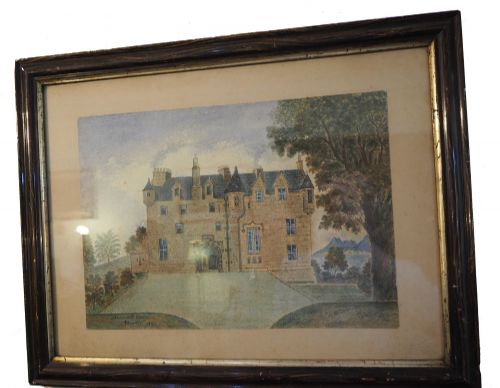


Architectural Landscape Watercolour
These architectural landscape watercolour paintings capture historic buildings and streetscapes across Britain and Europe through delicate washes of pigment.
Architectural Landscape Watercolour
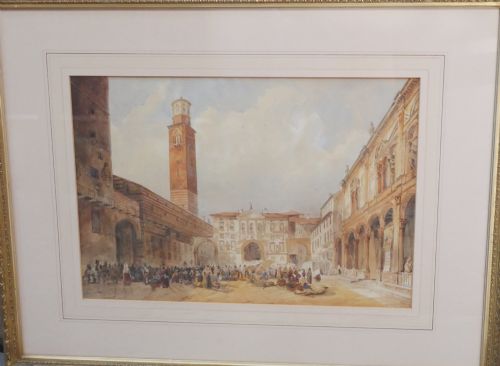
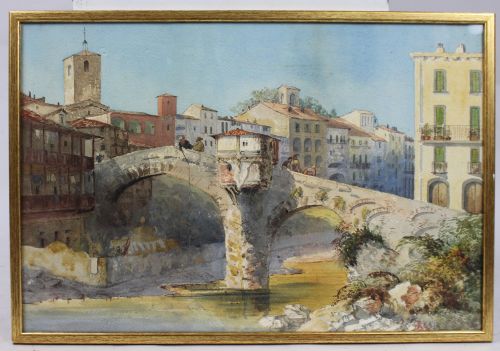
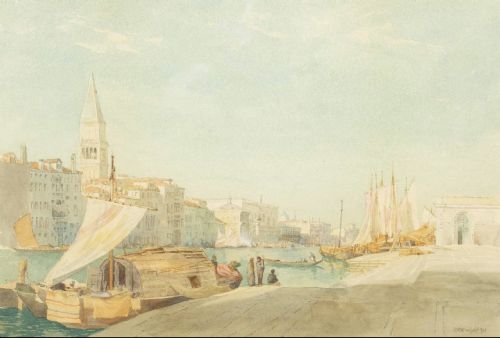
An architectural landscape watercolour brings together detailed masonry and open settings, ranging from bustling Venetian canals to quiet English market crosses. The examples found here span from the nineteenth century through the mid-twentieth century, recording cathedrals, castles, and town halls.
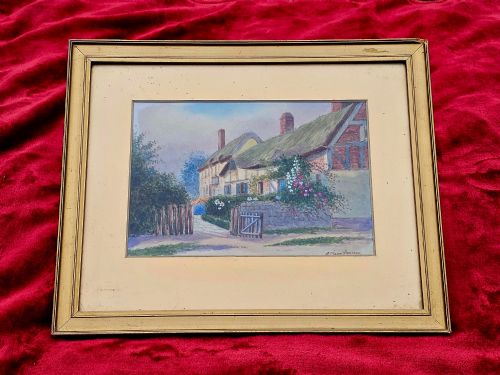
Grand Tour subjects form a distinct group, recording classical ruins and Italian architecture for travellers of the period. Domestic scenes depict familiar British landmarks, including country houses, abbeys, and street scenes.
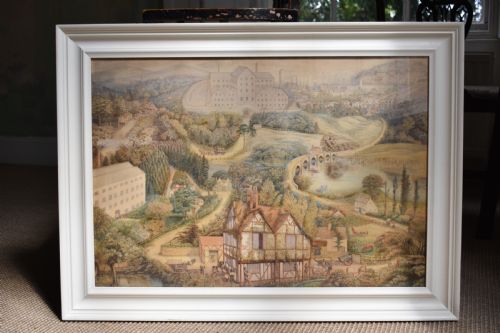
Works appear on paper, often framed behind glass with wood mouldings to protect the delicate medium. Many bear signatures and dates, recording the hand of professional painters and topographical artists.
Materials and Technique
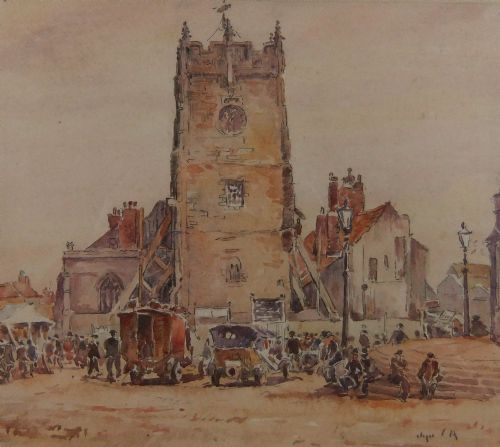
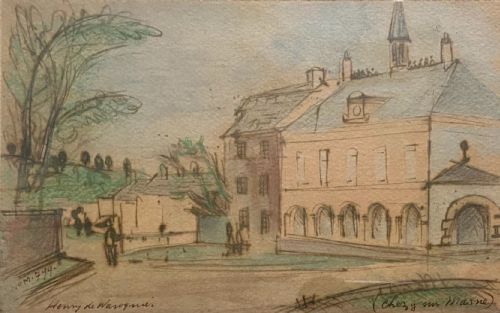
Artists laid watercolour pigment and ink onto paper supports, sometimes combining media with pencil underdrawings to map out complex masonry. Washes of colour created depth in skies and stonework, while fine ink lines defined windows, roofs, and architectural details.
Pigments were mixed with water and applied in translucent layers, allowing the white of the paper to illuminate the composition. Protective glazing with glass and wooden framing preserved these water-soluble colours from moisture and light.
The selection includes architectural subjects from British towns, Gothic abbeys, and classical Italian ruins.
Assessing Quality
The strength of the draughtsmanship dictates the success of an architectural landscape watercolour, separating confident topographical recording from stiff illustration. Perspective, proportion, and the crisp definition of stone against atmosphere reveal the skill of the painter.
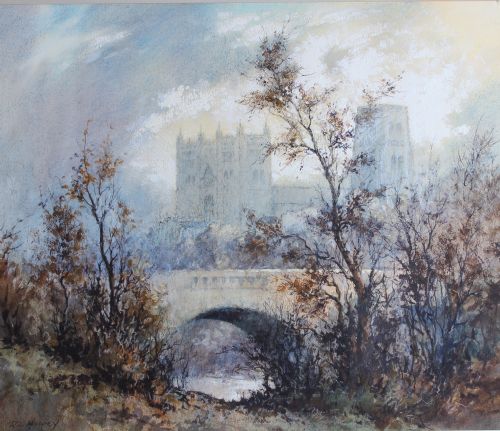
Atmospheric handling of light and shadow animates the scene, moving beyond a dry record of a building to evoke the mood of a specific place and time. The handling of washes in skies and water demonstrates technical control over a medium that allows little room for correction.
Thomas Ellison·A Marie Parsons·Richard Henry Wright·Henry de Waroquier·Robert Leslie Howey·Alfred George Morgan·Fred Lawson·Sir Thomas Newenham Dean·Anne Dorrien Smith·Charles James Lauder·Rowland Henry Hill·Stanley Orchart·J W Hogley·Louie Stanley Maurice Prince·G Villiers Stuart·George Whyatt·Benedetto Salviati·Joseph W Milliken·Edith E Caswall·Hercules Brabazon Brabazon·David Small·John Sowden·Jack Merriott·Tom Dudley·Peter De Wint
The Architectural Landscape Watercolour Glossary
- Grand Tour
- A traditional trip through Europe undertaken by upper-class young men to study art and architecture. Paintings from this context focus on classical antiquities and Italian streetscapes.
- Topographical
- Representing specific places accurately and realistically. These watercolours often document exact buildings, ruins, and street layouts.
- Wash
- A thin, fluid layer of watercolour pigment spread evenly across paper. It provides transparent colour for skies, water, and broad architectural surfaces.
- Mixed media
- An artwork combining more than one medium, such as ink and watercolour. Painters used this to sharpen architectural outlines before applying washes.
Architectural Landscape Watercolour: Frequently Asked Questions
What is an architectural landscape watercolour?
It is a painting on paper that combines natural surroundings with buildings, ranging from grand European monuments to quiet English market squares.
Artists used water-based pigments and ink to record the specific details of historic masonry alongside the surrounding landscape.
How do I date a watercolour painting?
Dates often appear written directly on the front or back of the work by the artist's hand. Stylistic clues, clothing styles of figures, and framing materials also help narrow down the period.
Signatures linked to recorded exhibition dates provide a reliable anchor for the decade of creation.
How should I frame and display these?
Watercolours require protection behind glass to shield the paper and pigments from atmospheric moisture and handling damage. Keeping them away from direct sunlight prevents the delicate colours from fading over time.
Traditional wood frames suit the historic character of these nineteenth and twentieth-century works.
What are Grand Tour watercolours?
These are paintings brought back by travellers who journeyed through France, Italy, and Greece to study classical art and ancient ruins. They typically depict famous sites like the Colosseum, the Forum, or Venetian canals.
Artists working in Italy catered specifically to these visitors by producing detailed views of classical architecture.