
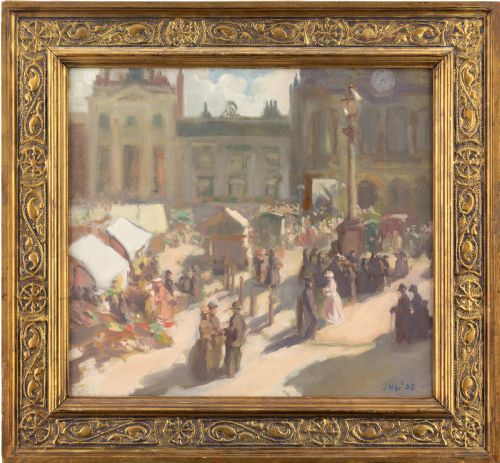


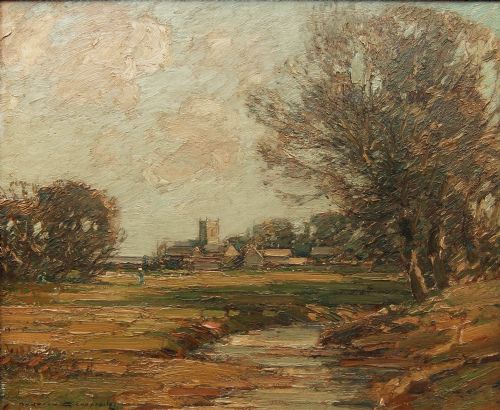


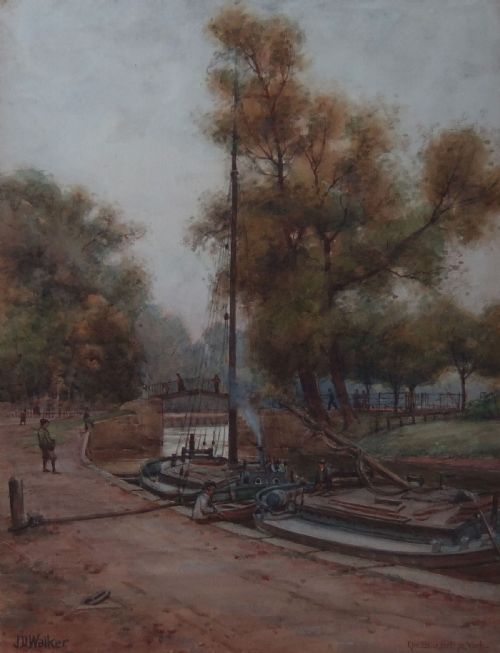


Earthy Tone Landscape Picture
An earthy tone landscape picture brings muted greens, warm ochres and soft browns into a room, capturing rural life and quiet vistas from past centuries.
Earthy Tone Landscape Picture
When you search for an earthy tone landscape picture, you encounter works that focus on natural hues, rustic settings and serene countryside views. These paintings range from pastoral scenes and quiet rivers to village streets and farmyards, reflecting the daily environment of their creators.
The selections available here lean heavily into British Impressionism, the 20th Century British School, and Edwardian styles. You will regularly find pieces originating from the 19th Century up through the 1930s, capturing the shifting artistic moods of those decades.
Most examples take the form of wall art, encompassing both oil paintings and watercolours. These works demonstrate a shared palette of muted earth colours that draw the viewer into pastoral and architectural subjects alike.
Materials and methods
Artists relied primarily on oil paint or watercolour paint applied to traditional surfaces such as paper, board, wood, and canvas. These mediums allowed painters to build up muted tones and subtle washes that define the naturalistic character of the genre.
Many works are framed behind glass, particularly watercolours on paper, which helped preserve the delicate pigments over generations. Oil paintings on canvas or board often retain their original tactile brushwork and textured surfaces.
Several artists preferred painting farmyards and cart sheds, proving that even a humble shed deserves immortalising in oil.
Assessing the work
Quality in these landscape pictures rests on the artist's handling of light and atmospheric depth within a restricted palette. Stronger works convey a distinct sense of place and atmosphere through assured brushwork rather than mere detail.
The relationship between the support, whether canvas, board or paper, and the medium dictates the longevity and visual impact of the piece. Superior examples maintain the vibrancy of their earthy pigments without heavy discoloration or degradation of the underlying material.
John Hodgson Lobley RBA·William JB Jenkins·John Atkinson·Charles H Poingdestre·Kershaw Schofield·Owen Bowen·Fred C Jones·John D Walker·William Kay Blacklock·George Soper
The Earthy Tone Landscape Picture Glossary
- British Impressionism
- A style of painting that focuses on light and its changing qualities, often painted outdoors to capture natural effects. It emerged in Britain towards the end of the nineteenth century.
- Barbizon School
- A French movement toward realism in landscape painting, associated with the mid-nineteenth century. Artists painted directly from nature, emphasising rustic scenes and earthy tones.
- Watercolour
- A painting method in which the paints are made of pigments suspended in a water-based solution. It is traditionally applied to paper to create translucent layers of colour.
- Oil on Canvas
- A technique utilising pigments bound in a drying oil, applied to a stretched cloth surface. This combination allows for rich colour blending and textured brushstrokes.
Earthy Tone Landscape Picture: Frequently Asked Questions
What periods do these landscapes come from?
The available pieces span from the nineteenth century through the early decades of the twentieth century. You will find examples reflecting Edwardian tastes alongside works from the 1900s, 1910s, 1920s and 1930s.
This broad timeframe covers various British and European schools, showing how artists of different eras interpreted rural scenery through muted palettes.
How should I hang an oil painting on board?
Ensure the wall is away from direct sunlight and damp conditions to protect both the wooden support and the oil pigments. Use sturdy picture wire and appropriate wall fixings suited to the weight of the frame.
Because these pieces often come with historical frames, check the fitting at the back before hanging to make sure the board is secure.
What is the difference between oil and watercolour here?
Oil paintings use thick pigments on canvas or board, offering rich textures and deep earthy tones. Watercolours utilise transparent washes on paper, often protected behind glass to prevent moisture damage.
Both mediums achieve atmospheric landscape effects, but they present very different surface finishes and requirements for domestic display.
Are these paintings signed by the artists?
Many of the listed works carry the signature or studio provenance of known painters from British and European schools. Signatures often appear in the lower corners of the canvas, board or paper.
Documentation or studio sales can also help confirm the origins and authorship of these historical landscape studies.