



Architectural Antiquities
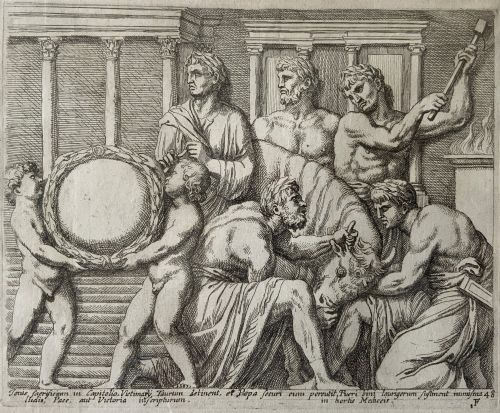
Architectural antiquities bring classical ruins, ancient sculpture and historic buildings into domestic spaces through detailed prints, paintings and watercolours.
Architectural Antiquities
Architectural antiquities comprise framed prints, engravings and paintings that document classical ruins, statues and historic structures. Buyers encounter works ranging from large eighteenth-century engravings of Athens to nineteenth-century watercolour paintings from the Grand Tour.
The selection leans heavily on eighteenth-century paper works depicting Greek and Roman sites, alongside Italian landscape paintings and specific archaeological discoveries. These pieces capture the enduring European fascination with antiquity through precise line work and atmospheric colour.
How they were made
Works on paper rely on copper engraving and etching with ink, capturing intricate architectural details of columns, friezes and statues. Artists utilised paper supports, occasionally adding watercolour or oil on canvas for larger landscape scenes.
Framed works frequently utilise wood frames, sometimes gilded, to house prints and paintings originating from workshops and publishing projects of the seventeenth, eighteenth and nineteenth centuries.
Architectural Antiquities Retail Price Guide 2026
Typical asking prices for architectural antiquities among the pieces listed under this phrase on Sellingantiques today, from the lower quarter to the upper quarter. They describe what is for sale here now, not the wider market.
The site listings span from the seventeenth century through to nineteenth-century watercolours, predominantly featuring works on paper alongside oil paintings.
What varies in quality
The precision of the line work and the clarity of the impression on paper set individual engravings apart, distinguishing publisher proofs from later strikes. The depth of the ink and the preservation of the paper margin dictate the visual impact of architectural plates.
In painted works, the handling of light within landscape settings and the rendering of figural details alongside classical ruins separate standard topographical records from accomplished artistic compositions.
François Perrier·Giovanni Paolo Panini·Alessandro Mocchetti·James Basire·Edward Rooker
The Architectural Antiquities Glossary
- Engraving
- A printmaking technique where an artist cuts an image into a copper plate using a sharp tool. The resulting lines hold ink to be transferred under pressure to paper.
- Grand Tour
- A traditional trip through Europe undertaken by upper-class European young men of means during the eighteenth and nineteenth centuries. Travellers collected watercolours and antiquities as physical records of their travels.
- Neoclassical
- A Western cultural movement drawing inspiration from the classical art and culture of ancient Greece and Rome. This style prioritises symmetry, proportion and classical architectural motifs.
- Etching
- A process where acid cuts into unprotected parts of a metal surface to create a design that holds ink for printing. It allows for free, flowing lines compared to direct engraving.
Architectural Antiquities: Frequently Asked Questions
What subjects appear in architectural antiquities?
These works primarily depict classical ruins, ancient statues, Greek temples and Roman forums. Common subjects include detailed plates from Athens and views of archaeological excavations.
Artists and engravers focused heavily on recording structural elements like columns, pediments and mythical figures integrated into historical landscapes.
How were these prints used originally?
Large architectural engravings served as visual records for scholars, architects and collectors studying classical civilization. They documented remote sites before modern photography.
Travelmers brought home watercolours and paintings from the Grand Tour to display their cultural education and personal journeys through Italy and Greece.
How should I care for paper antiquities?
Paper and watercolour works require protection from direct sunlight to prevent fading of the ink and paper discoloration. Maintaining stable indoor humidity prevents warping and paper degradation.
Framing should utilise conservation-grade materials to ensure the artwork remains separated from the glass and safe from environmental pollutants.
How do I identify eighteenth century engravings?
Eighteenth-century engravings often display distinct plate marks where the metal edge pressed into the heavy handmade paper. Typography, paper texture and publisher inscriptions typically indicate the period of production.
Works associated with major projects like the antiquities of Athens carry specific publication markers and credit contemporary engravers within the lower margins.