

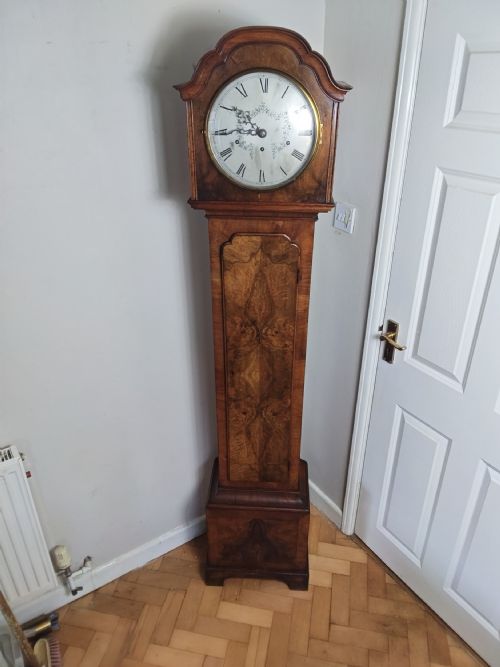
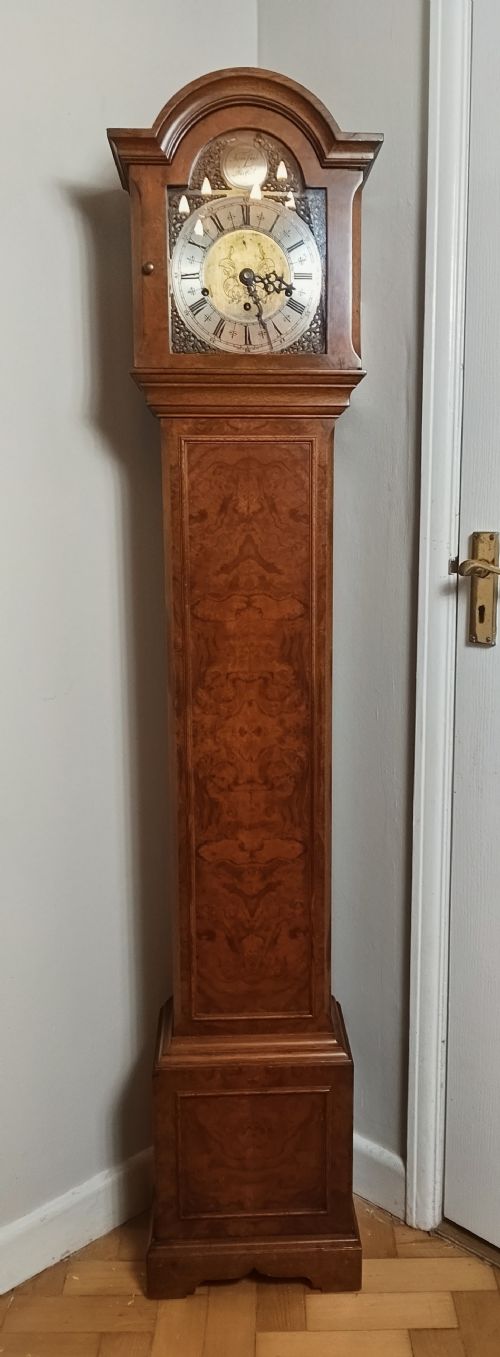


Arched Walnut Clock
An arched walnut clock is a disciplined piece of joinery that houses complex mechanics, prized for the rich grain of its case and the architectural sweep of its bonnet.
Arched Walnut Clock
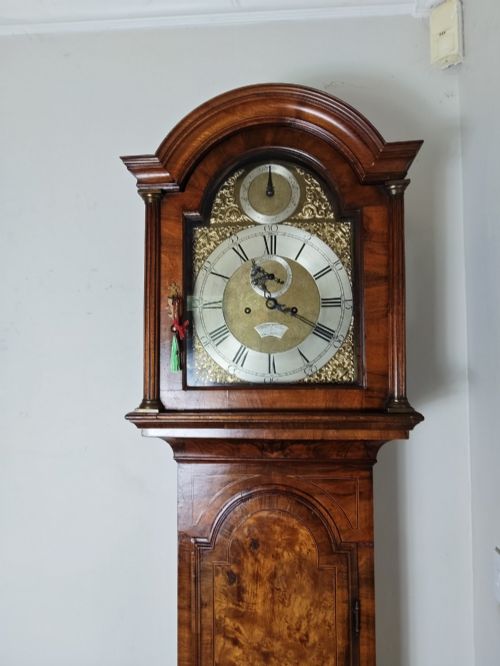
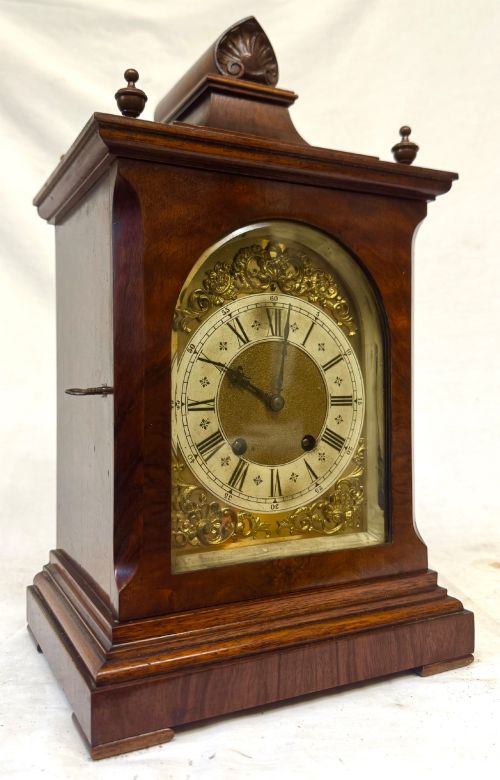
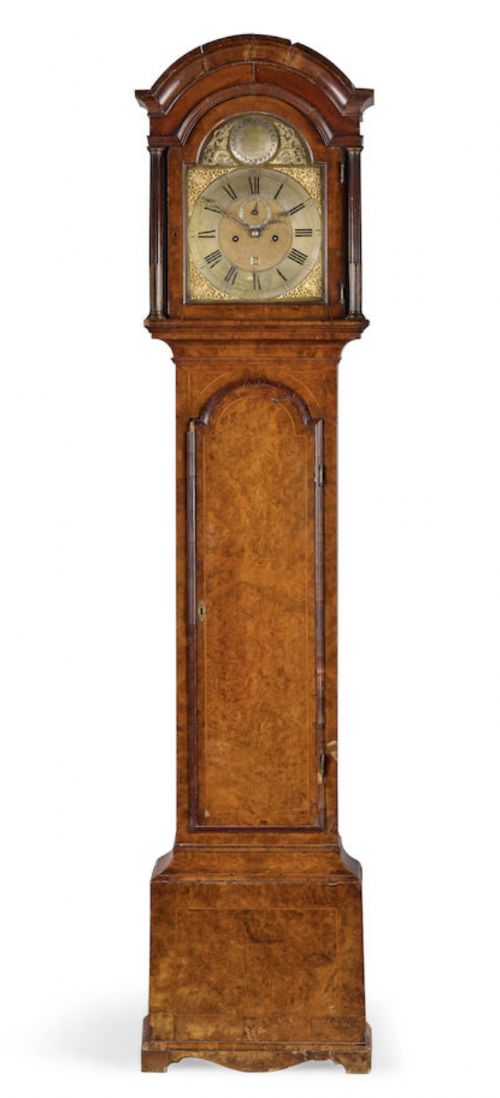
An arched walnut clock brings together the architectural presence of tall case timepieces and the compact form of bracket clocks. When you search for an arched walnut clock, you encounter pieces spanning from the mid-eighteenth century through to the mid-twentieth century, with grandfather, grandmother, and mantel formats forming the core of the selection. These pieces display distinct stylistic revivals alongside genuine period examples from makers working in London, Exeter, and Norwich.
The floor-standing longcase and grandfather models dominate the selection, often featuring sophisticated quarter-chiming or musical movements housed in burr or figured walnut veneers. Smaller mantel and bracket clocks provide an alternative table-top format, utilising brass dials and silvered metal chapters within architectural wooden cases. Regional English makers and continental workshops both contributed to this tradition, producing pieces that rely on the natural warmth of walnut to frame their dials.
Assessing quality in walnut timepieces
The distinction between a standard piece and a superior one rests upon the selection and preservation of the timber veneer. Master cabinetmakers aligned the grain of burr walnut with absolute precision across the arched door panels, whereas lesser examples show disrupted patterns or careless patching.
Movement signatures and mechanical complexity separate workshop output. Signed dials by recorded makers working in London or provincial centres indicate a higher grade of clockmaking, matched by intricate quarter-chiming gear trains and clean, original brass work.
Arched Walnut Clock Retail Price Guide 2026
Typical asking prices for arched walnut clock among the pieces listed under this phrase on Sellingantiques today, from the lower quarter to the upper quarter. They describe what is for sale here now, not the wider market.
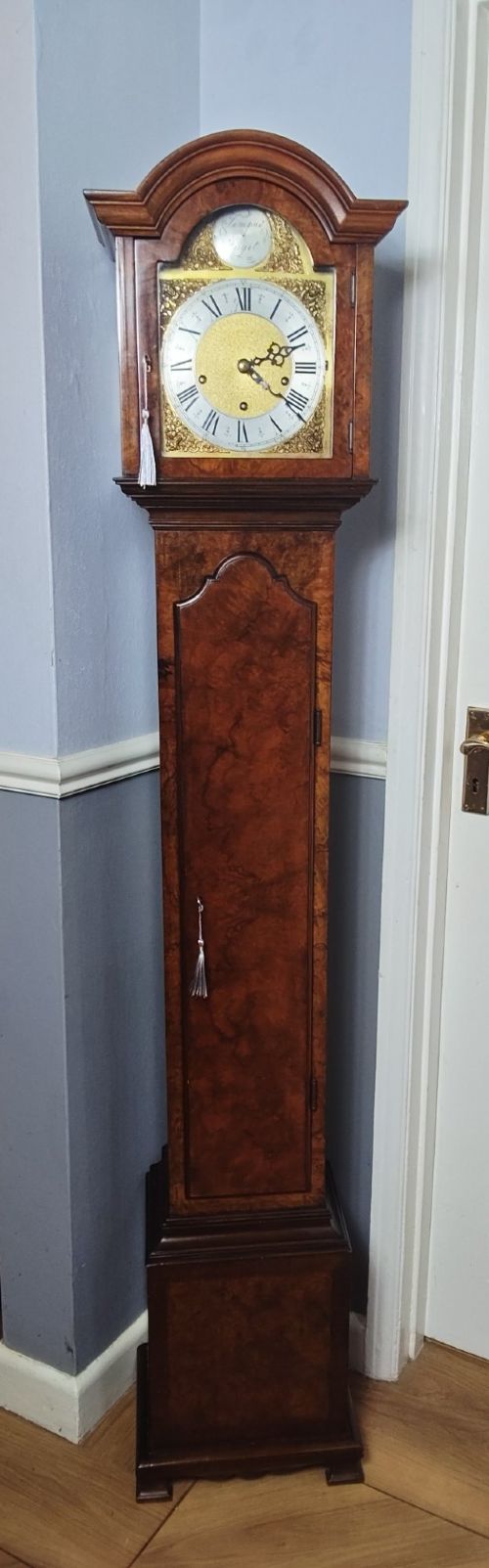
Grandmother clocks were given their affectionate moniker because they are simply miniature versions of their towering grandfather relatives.
Windmills and Wightman·Edward Upjohn·Lenzkirch·Winterhalder and Hofmeier·Joseph Oxley
The Arched Walnut Clock Glossary
- Burr walnut
- A prized veneer taken from the gnarly growths of walnut trees, yielding turbulent, swirling grain patterns. It requires meticulous application by the cabinetmaker.
- Grandmother clock
- A slender, shorter version of the traditional longcase clock, typically standing around five to six feet tall. These pieces became particularly popular during the twentieth century revival periods.
- Bracket clock
- A portable table or shelf clock, historically designed to sit on a wall bracket. Many examples feature arched wooden cases with glazed side panels and carrying handles.
- Chapter ring
- The circular ring on a clock dial that bears the numerical hours, usually rendered in Roman or Arabic numerals upon silvered brass. It frames the central dial area.
- Quarter chiming
- A mechanical capability that strikes the clock bell or gongs at every quarter-hour interval. This adds significant complexity to the internal gear train.
Arched Walnut Clock: Frequently Asked Questions
How do I tell an 18th-century longcase clock from a later revival piece?
Eighteenth-century examples display construction methods appropriate to their period, including hand-sawn timber boards and specific movement signatures tied to recorded provincial or London makers. Revival pieces from the 1920s and 1930s utilise machine-finished internal components and standard twentieth-century brass specifications.
Examination of the walnut veneer and secondary woods provides further clues to dating. Earlier pieces show natural oxidation and wear patterns beneath the finish, whereas twentieth-century grandmother clocks reflect the clean joinery standards of the interwar period.
What is the difference between a grandfather and a grandmother clock?
Grandfather clocks are the full-sized floor-standing longcases, generally exceeding six feet in height and accommodating heavier weights and longer pendulums. Grandmother clocks are scaled-down versions built with narrower proportions and shorter cases.
Despite their reduced stature, grandmother clocks often house sophisticated quarter-chiming or musical movements. Their smaller footprint allowed them to fit into twentieth-century domestic spaces where traditional longcase clocks proved too imposing.
Where should I place a walnut clock in my home?
Walnut clocks require stable indoor environments away from direct sunlight and sudden temperature fluctuations. Direct heat sources can dry out the timber carcase and cause the delicate burr walnut veneers to lift or crack over time.
Longcase and floor models need level flooring to ensure the pendulum swings evenly and the escapement beats correctly. Mantel and bracket clocks sit best on sturdy shelves or tables where vibrations from daily foot traffic will not disturb the mechanism.
How do quarter-chiming movements operate?
Quarter-chiming movements utilise a secondary gear train and additional hammers striking against multiple gongs or bells. At every fifteen-minute interval, this train releases to play a short melodic sequence before the full hour strike sounds.
These systems demand precise calibration of the rack and snail components within the brass movement. Regular setup by someone familiar with weight-driven or spring-driven chiming trains ensures the sequences remain synchronised.