
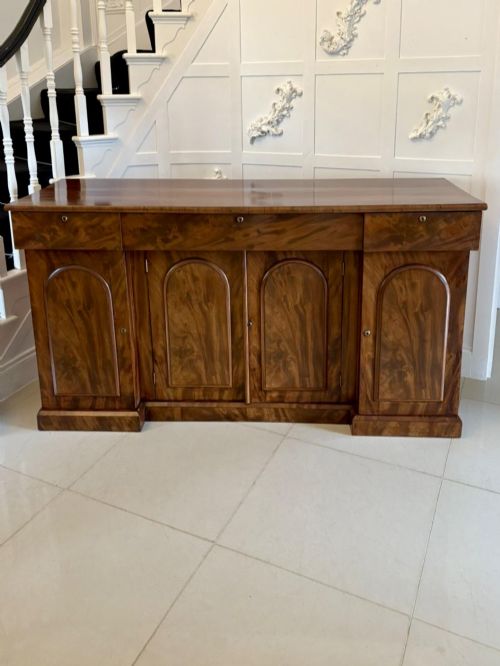
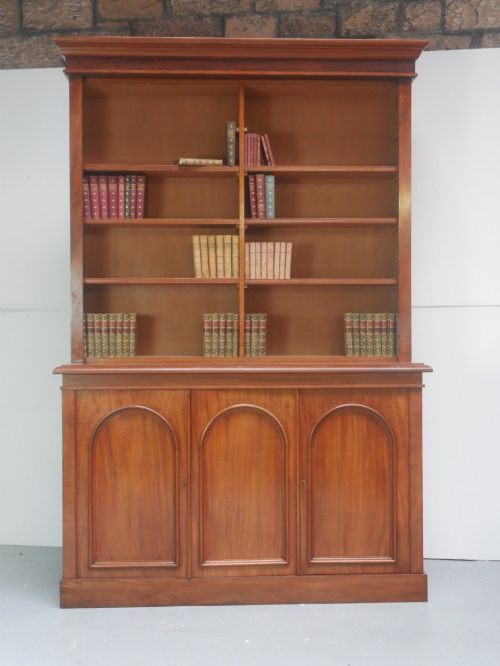
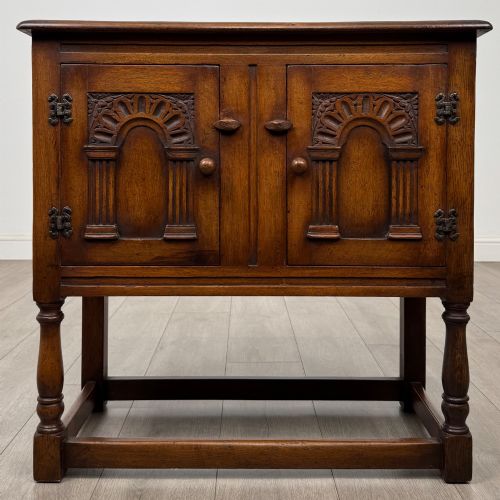
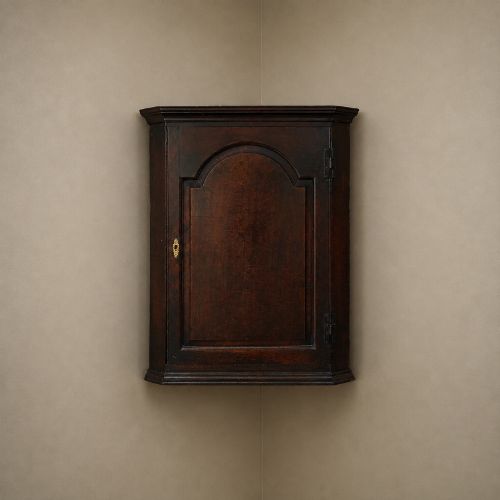

Arched Panel Cabinet
An arched panel cabinet brings timber grain and distinct framing into a room, offering practical storage with architectural presence.
Arched Panel Cabinet
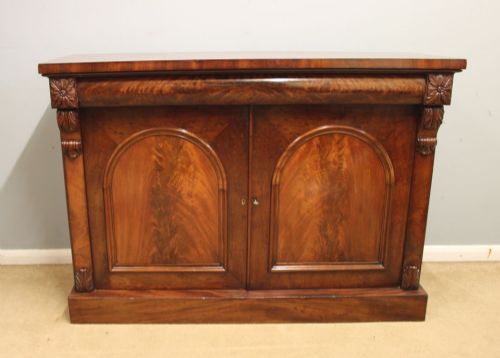
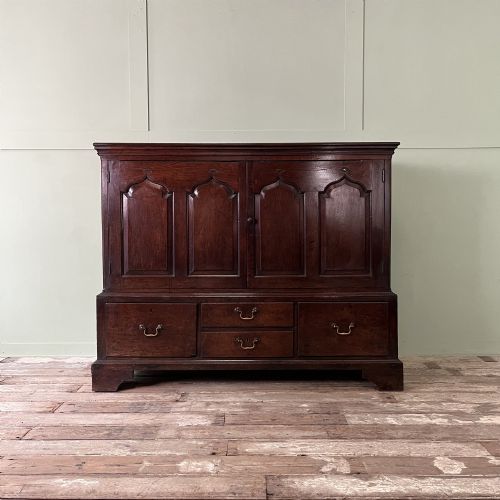
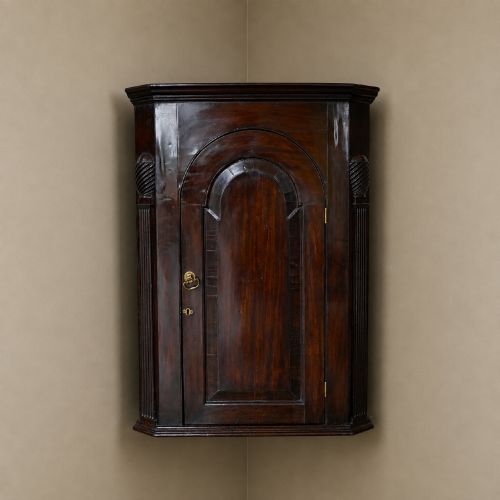
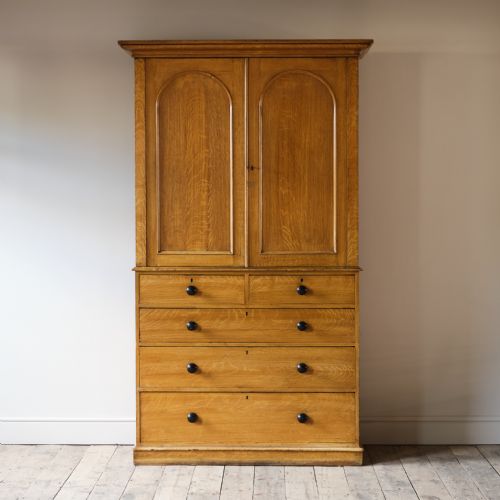
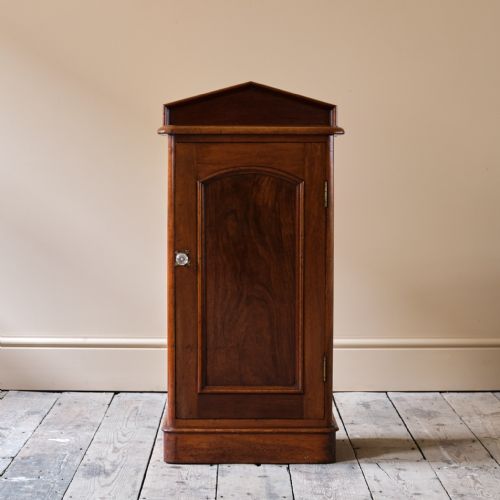
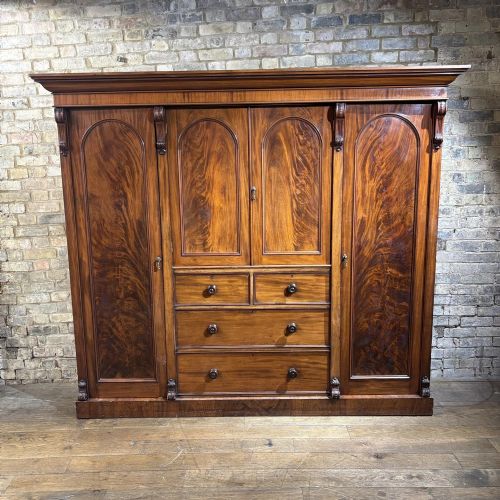
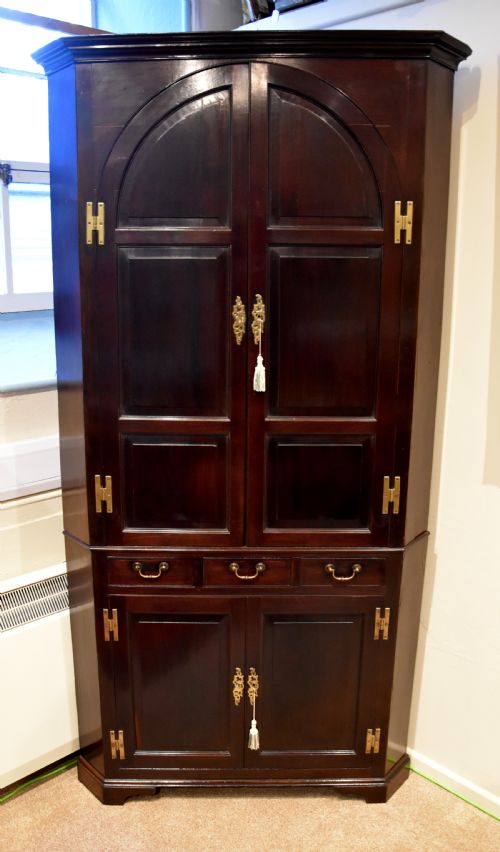
When you search for an arched panel cabinet, you encounter storage furniture defined by distinct curved upper door frames, spanning everything from corner cupboards to larger linen presses and bedside tables. These pieces emerge primarily from the eighteenth and nineteenth centuries, reflecting domestic storage needs across various British and European regions.
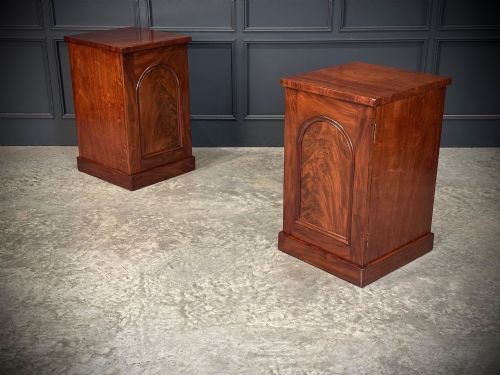
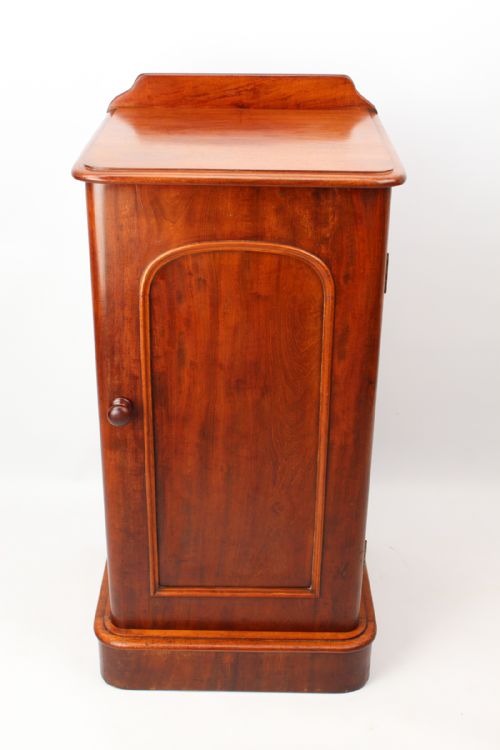
The version you are most likely to meet on this page is the oak or mahogany corner cupboard or bedside cabinet from the Georgian and Victorian eras. These items served distinct domestic purposes, from hanging wall units for china to bedside stands for household utilities.
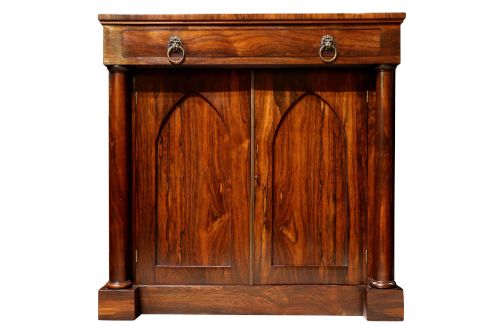
The selection extends into larger vernacular forms like Welsh cupboards and French provincial low buffets alongside refined Regency side cabinets and chiffoniers. Each variation demonstrates how cabinet makers adapted the arched panel motif to both grand reception rooms and modest rural homes.
Materials and Construction
Cabinet makers relied heavily on native oak and imported mahogany, often selecting figured varieties, flame mahogany veneers, or burr walnut for prominent surfaces like doors and fronts. Pine and iron appear routinely in structural carcases, interior shelving, and hardware fixings.
Construction involved joining solid timber planks and frame-and-panel assemblies to accommodate natural wood movement over decades. Carpenters shaped arches directly into solid door panels or applied mouldings to create the characteristic recessed arched profile seen across these pieces.
Several pieces double as spice cupboards, proving that miniature doors still hold the greatest secrets.
Markers of Quality
Quality rests upon the selection of timber figures and the precision of the joinery around the arched panels, where tighter joints and well-matched grains elevate a piece. Secondary woods and internal drawer construction reveal the diligence applied by the original maker.
Proportion and surface finish distinguish standard utilitarian pieces from exceptional examples, with original patination and well-preserved brass hardware carrying significant weight. The integration of the arched door frame into the wider carcase structure dictates the overall visual harmony.
The Arched Panel Cabinet Glossary
- Arched panel
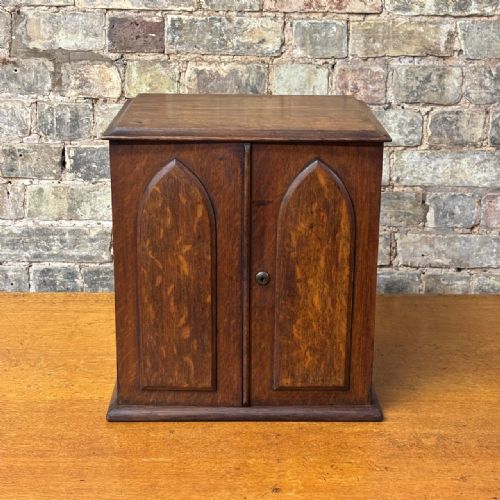
- A door or wall panel featuring a curved upper edge, commonly rounded or pointed in Gothic styles. This shaping requires precise carpentry to fit within the surrounding frame.
- Linen press
- A tall cupboard traditionally used for storing folded textiles and bedding, often featuring sliding trays or shelves behind upper doors and drawers below.
- Corner cabinet
- A storage unit specifically built with an angled back to fit snugly into the corner of a room, saving floor space while utilising idle angles.
- Chiffonier
- A low sideboard or cabinet developed in the nineteenth century, frequently equipped with drawers, enclosed cupboards, and sometimes an upper shelf tier.
- Patination
- The natural sheen and ageing acquired by wood surfaces through years of handling, polishing, and exposure to light, valued for its depth and warmth.
Arched Panel Cabinet: Frequently Asked Questions
What rooms suit an arched panel cabinet?
These cabinets suit living rooms, dining spaces, and hallways where corner units or low sideboards utilise awkward angles and provide enclosed storage.
Smaller bedside cabinets and wall-hanging versions fit domestic bedrooms or studies, offering compact surfaces and concealed compartments.
How were corner cabinets used originally?
Georgian and Victorian households used corner cabinets primarily to display fine ceramics, glassware, or tea wares behind secure doors.
Kitchen and dining variants also stored dried goods, spices, and everyday utensils away from dust and damp.
How do I date an oak cupboard?
Dating relies on examining construction methods, timber preparation marks, and hardware types such as hinges and drawer pulls.
Earlier eighteenth-century pieces often display hand-riven boards and pegged joints, whereas nineteenth-century examples show more uniform machine-sawn components.
What is a linen press?
A linen press is a substantial piece of case furniture comprising an upper section with shelves or sliding trays enclosed by large doors.
The base typically incorporates a configuration of drawers for storing clothes, household linens, and garments.