
Arched Overmantel Wall Mirror
An arched overmantel wall mirror brings proportion and light to a chimney breast, originating primarily from nineteenth-century English and French workshops.
Arched Overmantel Wall Mirror
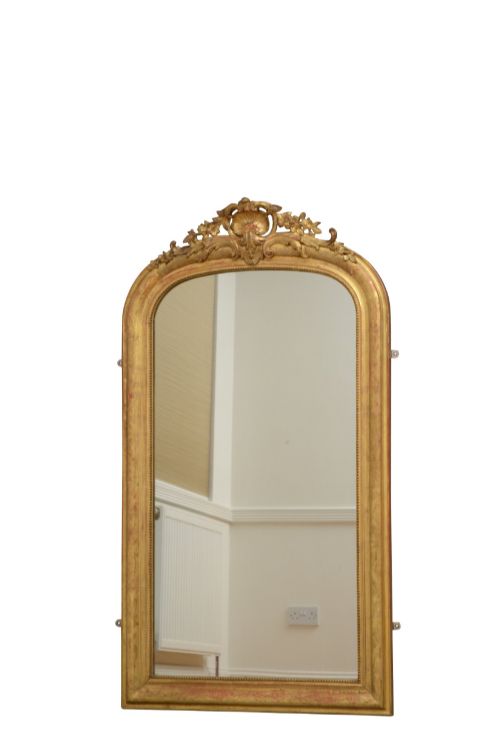
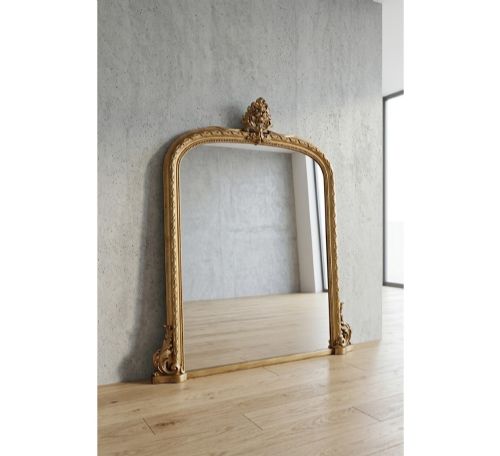
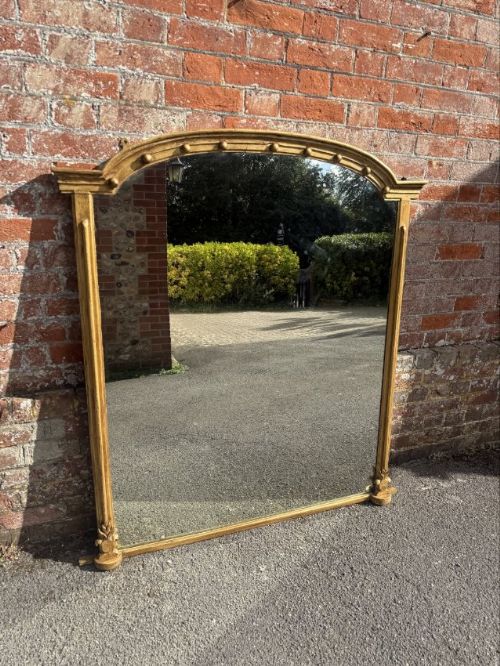
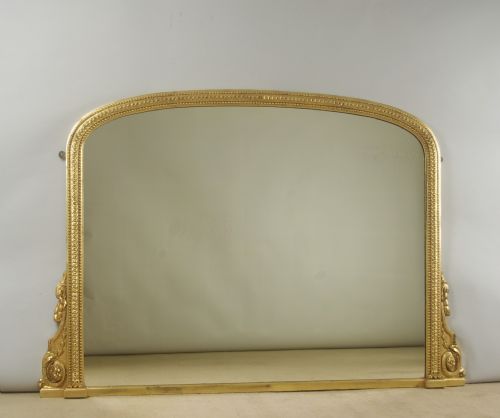
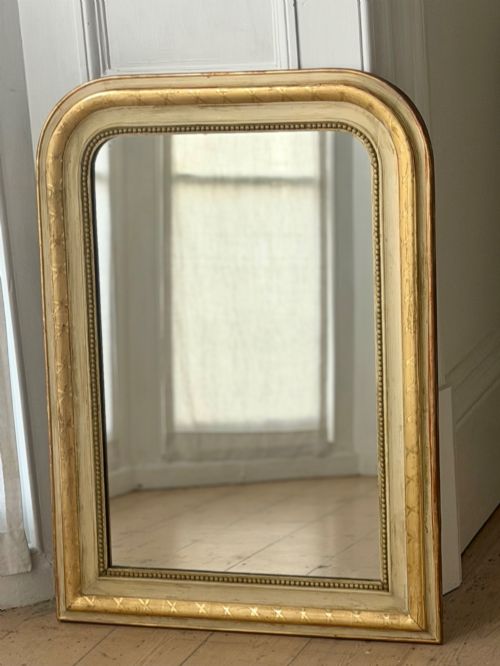
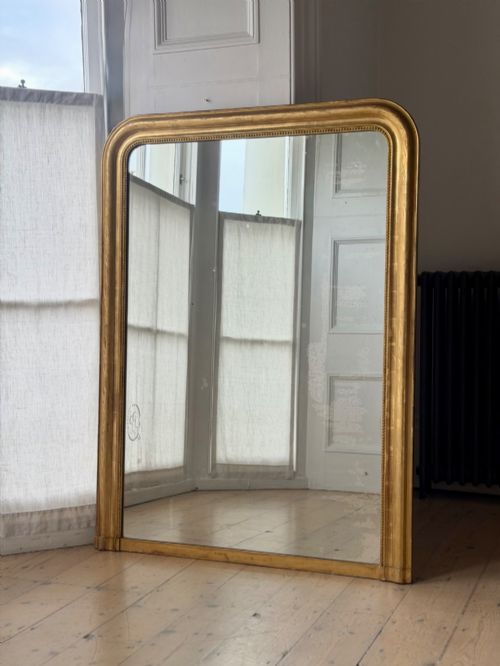
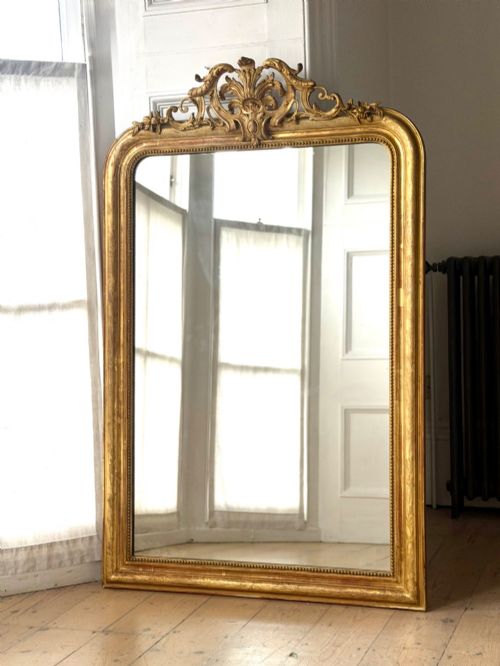
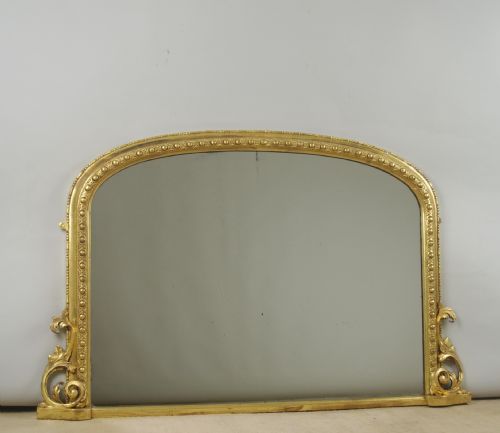
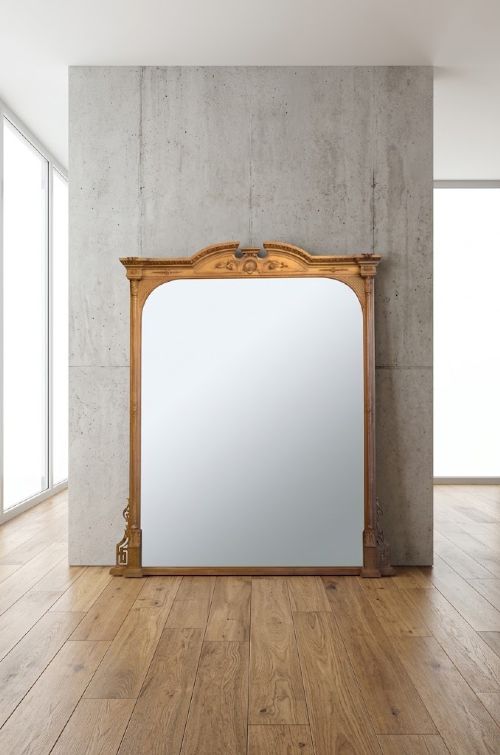
An arched overmantel wall mirror is designed to sit directly above a fireplace mantel, reflecting natural light and balancing the vertical space of a room. The pieces found here span the eighteenth, nineteenth, and early twentieth centuries, drawing heavily from Victorian and French Louis Philippe aesthetics.
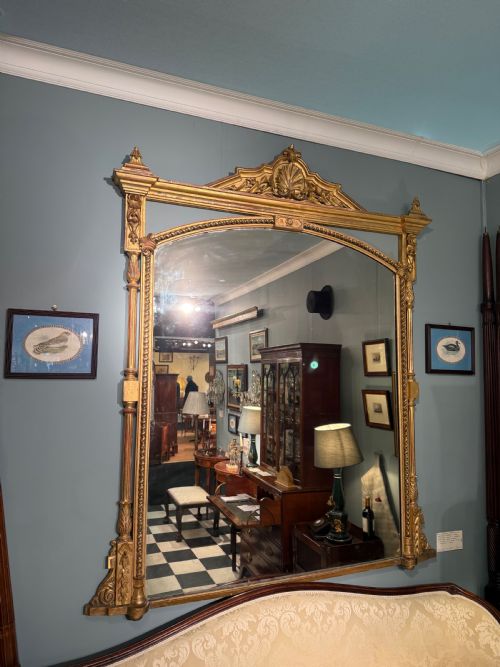
Most examples meet on this page as large formats constructed to command a wall, incorporating curved or shaped crests. English and French models dominate the selection, utilising traditional wooden framing beneath decorative surface treatments.
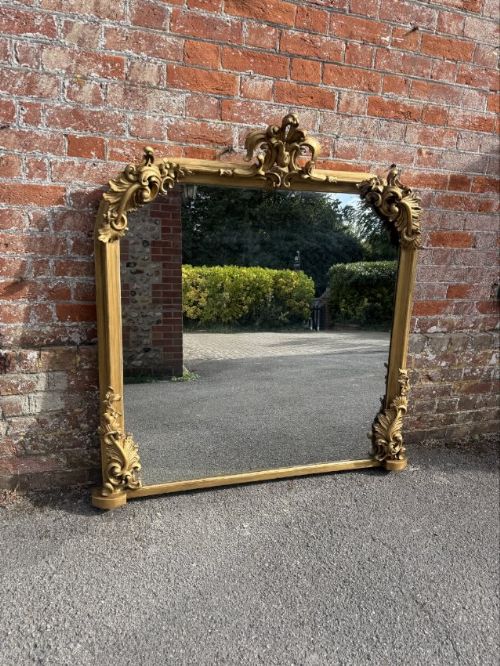
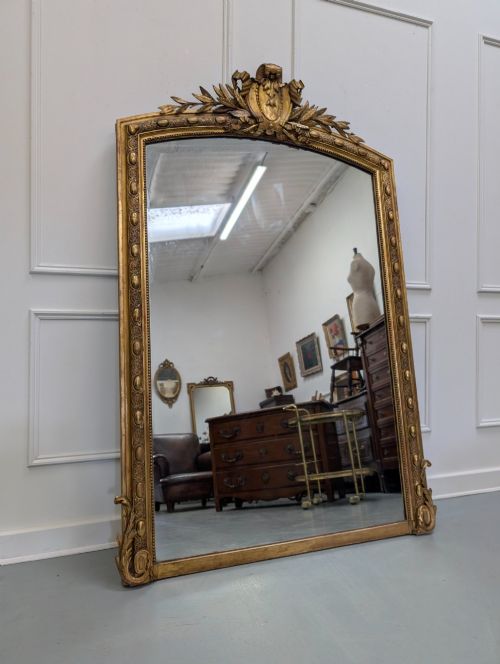
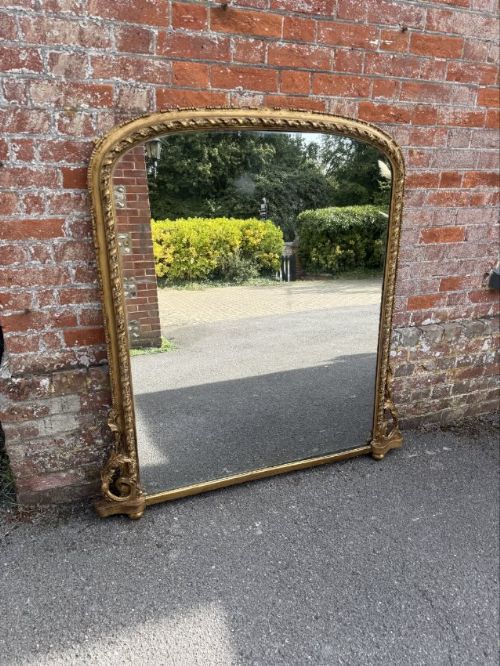
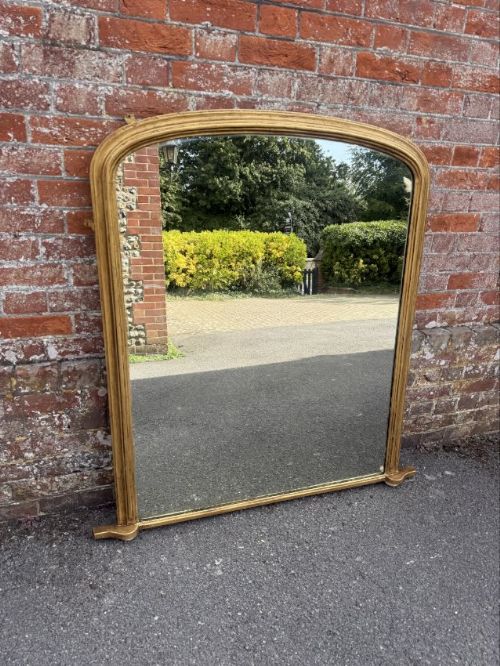
Forms range from restrained classical mouldings to heavily carved Victorian frames featuring rope twists or tulip motifs. Pier mirrors and standard wall configurations also appear, sharing the characteristic arched top profile.
Materials and construction methods
Makers constructed the structural frames from solid timbers such as oak, walnut, or pine, building up ornamental details with layers of gesso. This fine plaster mixture was applied over the wood base and carved or moulded into intricate decorative patterns before gilding.
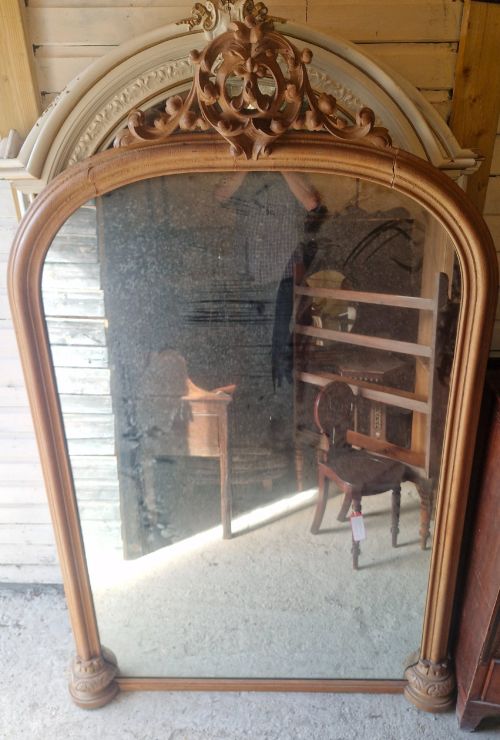
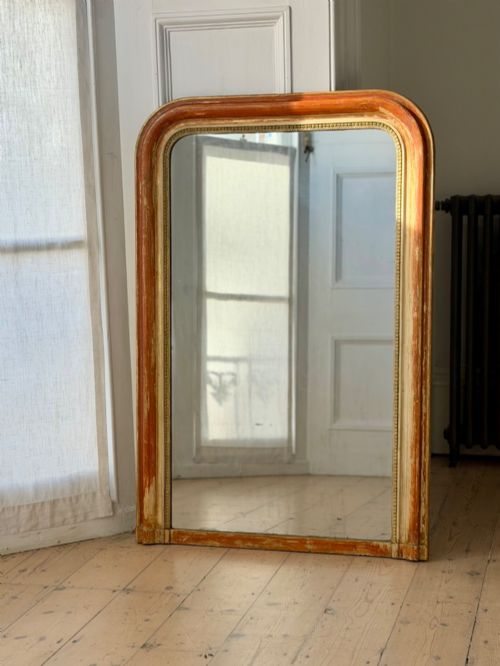
Giltwood and gold leaf finishes were standard for grander reception rooms, often complemented by painted wood surfaces in French provincial pieces. Glaziers supplied heavy mirror glass plates, sometimes retaining original mercury silvering that develops characteristic foxing over time.
Some nineteenth-century frames incorporate nautical rope twist carvings, proving that even formal mirrors occasionally went to sea.
Distinctions in craftsmanship
Quality rests in the crispness of the gesso moulding and the depth of the hand-carved wooden ornament beneath. Superior examples display sharply defined relief work on the crest and frame, whereas lesser pieces rely on simpler linear mouldings.
The integrity of the original gilding and the clarity of the antique mirror glass separate ordinary items from exceptional statement pieces. Original backboards and undisturbed framing pins indicate higher preservation of the original object.
The Arched Overmantel Wall Mirror Glossary
- Overmantel
- A large mirror or painting specifically scaled to hang on the wall directly above a fireplace mantelpiece. These pieces often feature low-slung frames designed to rest right on the shelf.
- Gesso
- A prepared mixture of chalk, gypsum, and size used as a base for paint and gilding on wood. Artisans carved intricate relief decorations directly into this material once dry.
- Giltwood
- Timber that has been coated with a thin layer of gold leaf or gold paint. It provides a bright, reflective surface that catches flickering firelight.
- Pier mirror
- A tall, narrow mirror traditionally hung on the stretch of wall between two windows. They share many stylistic traits with overmantel mirrors of the same period.
- Louis Philippe
- A French nineteenth-century style characterised by understated elegance, simple curved arches, and minimal ornamentation. These mirrors often feature rounded upper corners.
- Foxing
- Age-related spots and discoloration within the silvering of antique mirror glass. This natural degradation creates a mottled appearance valued by collectors for authenticity.
Arched Overmantel Wall Mirror: Frequently Asked Questions
Where should an arched overmantel wall mirror be hung?
These mirrors traditionally anchor the space directly above a fireplace mantel, where their curved top echoes architectural chimney breasts. They also function successfully on large drawing room walls to reflect light across the floor.
Because many examples are exceptionally heavy, proper wall fixings into masonry or structural studs are essential for safe installation.
How do I identify a Victorian overmantel mirror?
Victorian pieces typically present heavier proportions, robust wooden frames, and elaborate carved gesso decoration such as rope twists or floral motifs. They frequently incorporate arched tops designed to make a grand visual statement in nineteenth-century interiors.
Examining the construction of the wooden backboards and framing nails helps confirm the nineteenth-century origin.
What is Louis Philippe style?
The Louis Philippe style emerged in nineteenth-century France, favouring understated curves and clean lines over heavy ornamentation. These mirrors are easily recognised by their gentle arched tops and simple, elegant framing.
They offer a softer alternative to ornate Victorian giltwood while maintaining generous proportions for domestic spaces.
Can antique mirror glass be replaced?
Original mirror glass often exhibits foxing, dark spots, and distortion due to the age of the silvering process. Many collectors prefer this authentic sign of age, while others choose functional clarity.
Replacing the glass is possible, though retaining the original mercury plate preserves the historical integrity of the piece.