


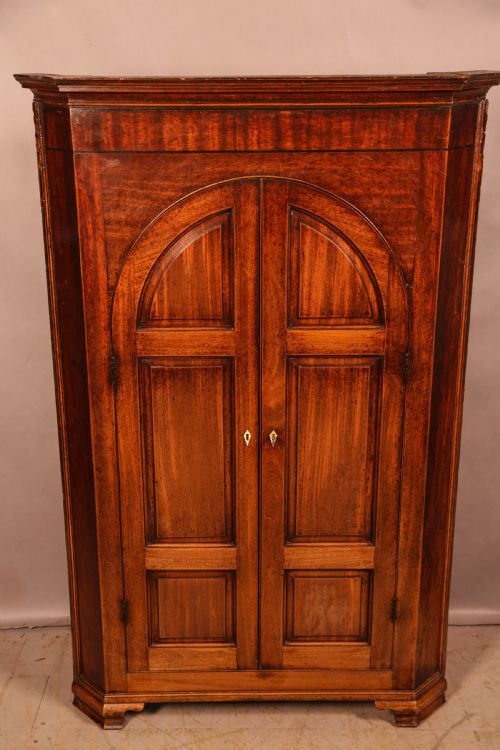
Arched Corner Cupboard
An arched corner cupboard puts dead angles to work with curved timber doors and fitted internal shelves.
Arched Corner Cupboard
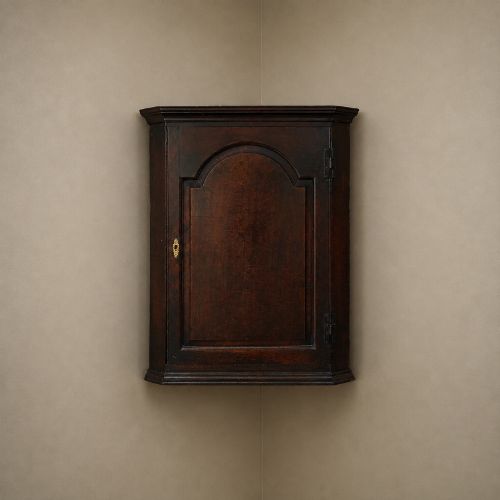
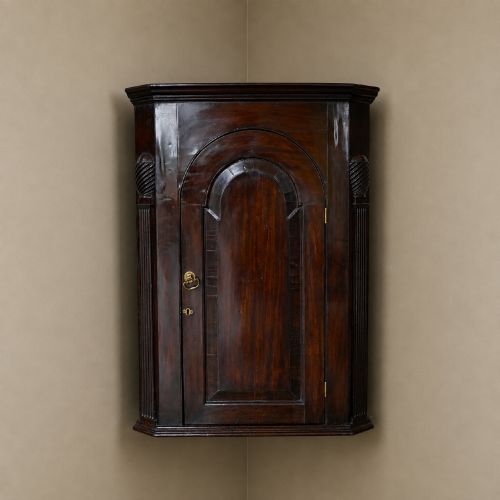
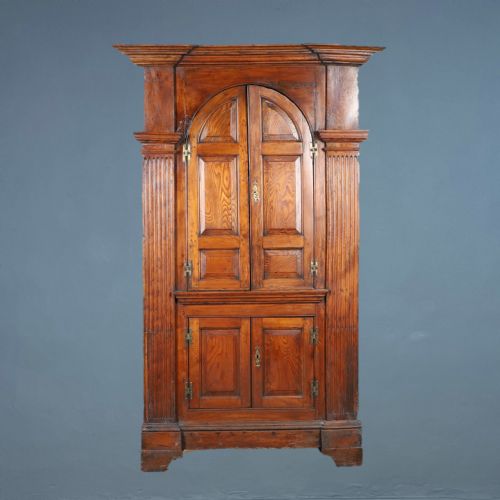
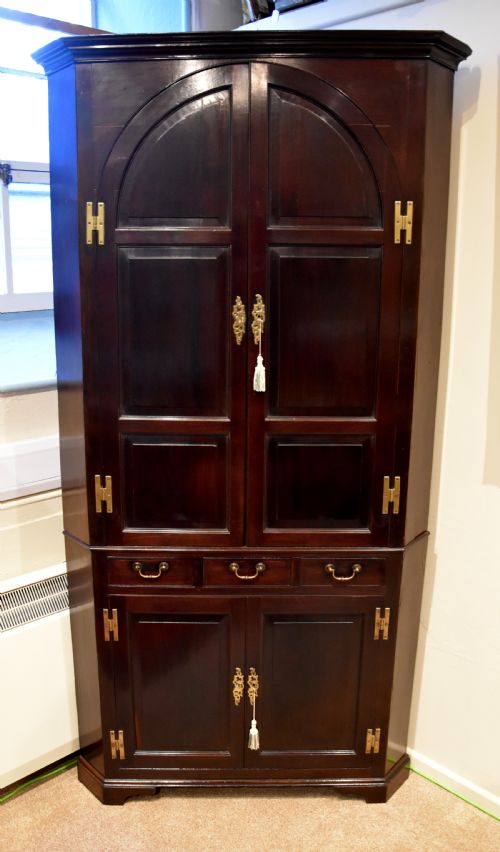
An arched corner cupboard provides fitted storage designed to slot into the angle of a room, saving floor space while displaying or concealing contents. These pieces range from wall-hanging boxes to tall free-standing floor cabinets with architectural pediments.
The selection here draws heavily on eighteenth-century Georgian examples alongside later Victorian and Edwardian interpretations. Timber choices lean towards oak, mahogany, walnut and elm, frequently finished with brass hinges and escutcheons.
How they were made
Cabinetmakers constructed these carcases using solid hardwoods such as oak, mahogany and walnut, often applying satinwood inlay or marquetry for surface decoration. Panels were typically fielded or panelled to accommodate seasonal wood movement without splitting.
Glazed doors utilised timber framing to hold individual panes of glass, while wall-hanging variants incorporated internal fixing points to secure the weight safely into masonry or studwork.
Some eighteenth-century carcases still retain traces of forgotten wallpaper pasted inside by past owners.
What varies in quality
Construction methods dictate longevity, distinguishing pegged frame joints and substantial timber thicknesses from lighter commercial builds. The choice of primary timber, from plain pine to figured Cuban mahogany or burr walnut, shifts the visual weight significantly.
Detailing on the pediment, such as a broken arch or applied mouldings, separates standard utilitarian storage from finer architectural cabinetwork produced in the Georgian period.
The Arched Corner Cupboard Glossary
- Broken arch
- A pediment design featuring an open gap at the apex, frequently centred with a carved finial or plinth. This architectural detail appears on grander eighteenth-century standing and hanging cupboards.
- Escutcheon
- A protective plate surrounding the keyhole of a cabinet door, usually cast from brass. These plates prevent the timber surrounding the lock from wearing away with regular use.
- Fielded panel
- A wooden panel with bevelled edges that thin towards the perimeter to fit into a grooved frame. This technique reduces overall weight while allowing the wood to expand and contract.
- Standing corner cupboard
- A tall piece of furniture resting directly on the floor, occasionally raised on a separate base or stand. They provide much greater internal volume than wall-hanging cabinets.
- Marquetry
- Decorative veneer work arranged in patterns and pictures using various coloured woods. Edwardian and later cabinets utilise this technique to ornament door panels.
Arched Corner Cupboard: Frequently Asked Questions
Are these cabinets difficult to hang?
Wall-hanging examples require secure fixings into structural walls because solid timber cabinets carry considerable weight when empty. Proper bracket placement ensures the piece remains stable.
For taller standing versions, securing the top to the wall prevents tipping, particularly on uneven historical flooring.
How do I know the age of the timber?
Examining the secondary woods inside, tool marks on the backboards and the construction of the door frames helps indicate the period. Hand-cut dovetails and wrought iron or early brass hardware point towards eighteenth-century origins.
Later Victorian and Edwardian interpretations display machine-cut elements and different internal shelving arrangements.
Can these fit in modern rooms?
Corner furniture is fundamentally practical for utilising awkward spaces where straight cabinets block walkways. They fit neatly into unused room angles while adding period character.
Measuring the diagonal depth and wall clearance before purchase ensures the door can swing open fully without hitting adjacent furniture.
What is the difference between hanging and standing types?
Wall-hanging corner cupboards mount directly onto the wall at eye level or above furniture, leaving the floor entirely clear beneath them. They suit smaller rooms and kitchens.
Standing corner cupboards rest on the floor, offering deeper lower shelves and sometimes a separate lower cupboard section beneath the arched door.