
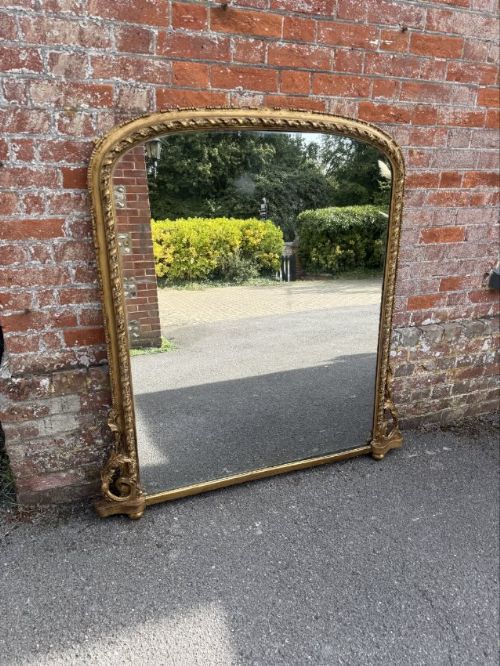
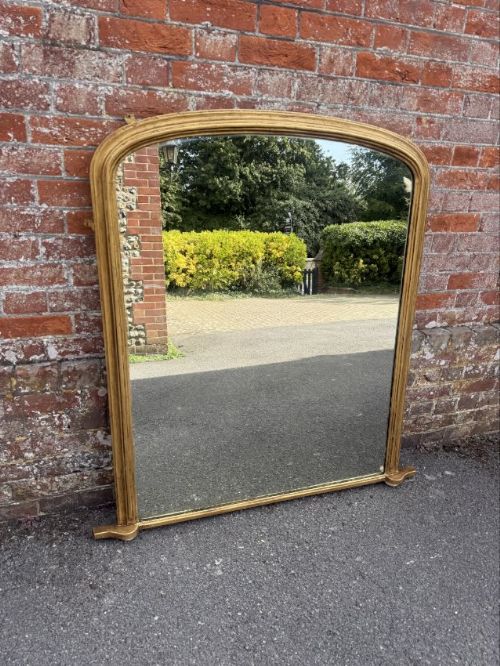
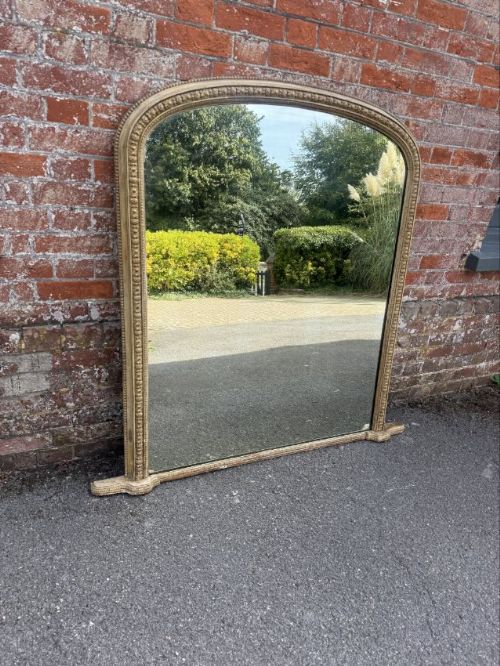
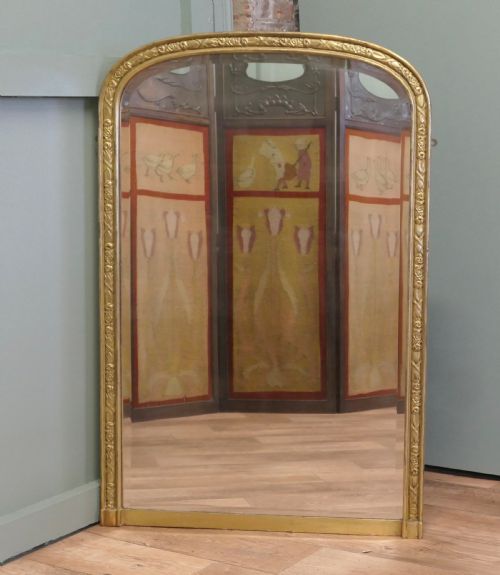

Arch Top Mantle Mirror
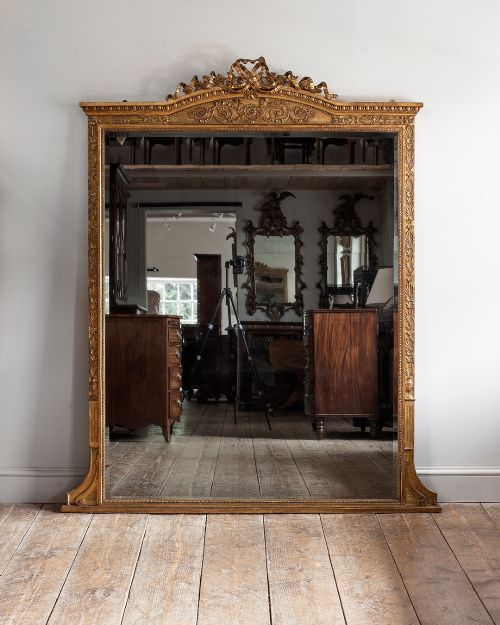
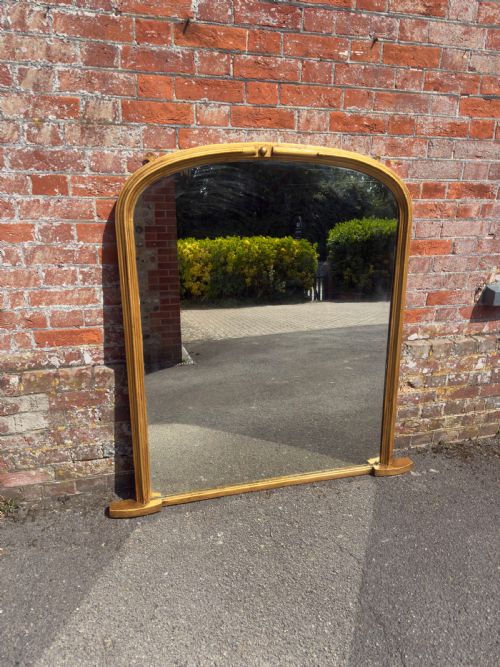
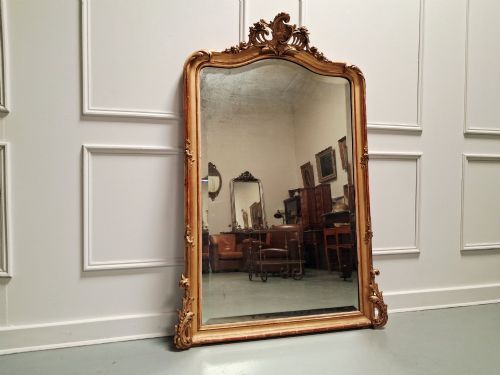
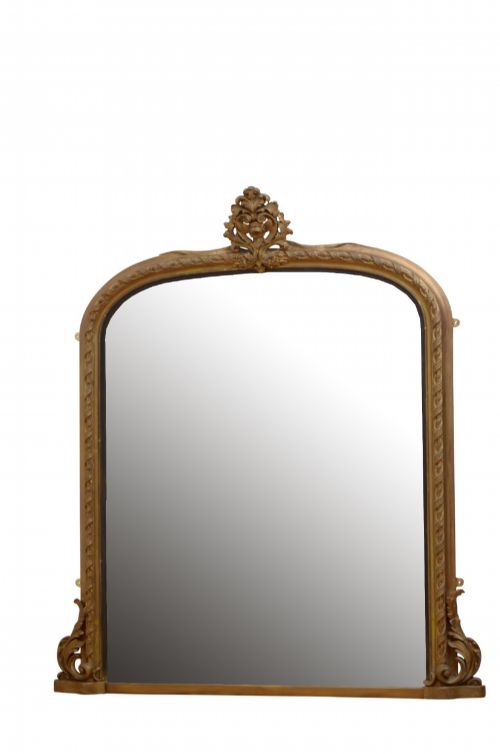
An arch top mantle mirror brings grand nineteenth-century presence to a room, reflecting light and anchoring a fireplace with a curved silhouette.
Arch Top Mantle Mirror
When searching for an arch top mantle mirror, buyers encounter grand nineteenth-century overmantels designed to sit directly above a fireplace hearth.
These pieces function primarily as architectural wall mirrors, combining generous proportions with arched wooden frames to draw the eye upward in a reception room.
How they were made
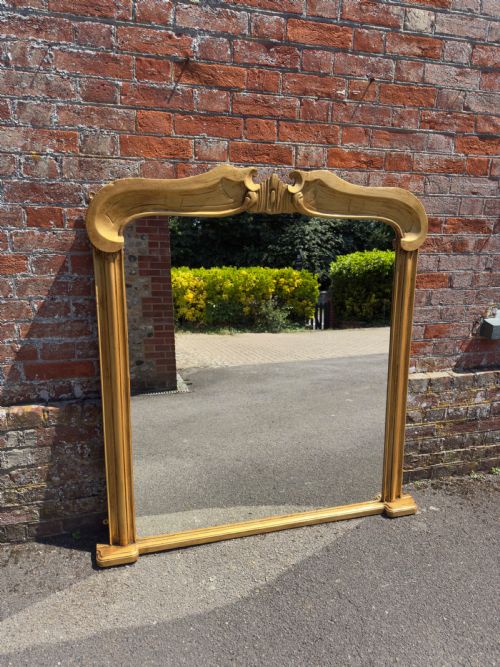
Carved wood and gesso form the structural base of the majority of these frames, allowing artisans to build up intricate relief ornaments and smooth curved arches.
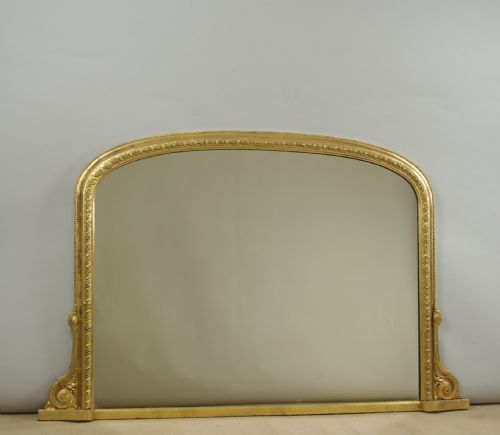
Gilding techniques apply gold leaf or gold paint over the prepared gesso surfaces, creating the luminous metallic finishes seen across the English and French pieces.
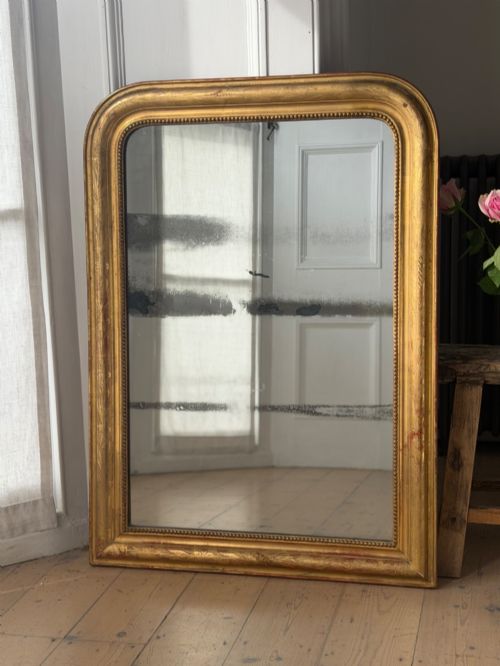
Mirror glass is set within the rebate, with select period examples retaining original mercury glass panels that exhibit characteristic foxing.
What varies in quality
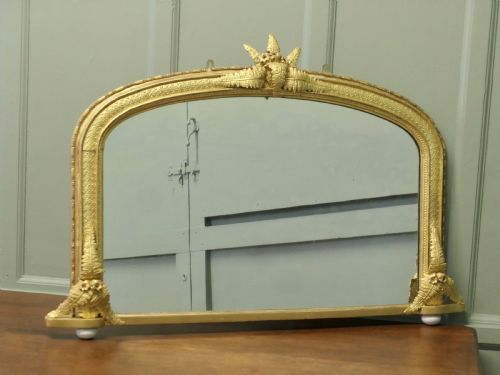
The depth and crispness of the carved wood and gesso ornamentation dictate the visual impact of the frame, distinguishing finely hand-moulded relief work from simpler profiles.
Originality of surface finish matters significantly, as pieces retaining their primary gilding and untouched mirror plates hold greater integrity than those heavily restored.
Proportion and scale drive desirability, with extra-large overmantels requiring robust internal wooden framing to support the heavy glass safely over a mantle.
The Arch Top Mantle Mirror Glossary
- Overmantel mirror
- A large wall mirror specifically proportioned to hang on the chimney breast directly above a fireplace mantelpiece.
- Gesso
- A plaster-like mixture applied to wood frames and carved or moulded into decorative relief details before gilding.
- Giltwood
- Timber that has been coated with thin gold leaf or gold-coloured size to give a rich metallic appearance.
- Foxing
- Age-related spots and discolouration within the mirror plate where the silvering backing has degraded over time.
- Louis Philippe
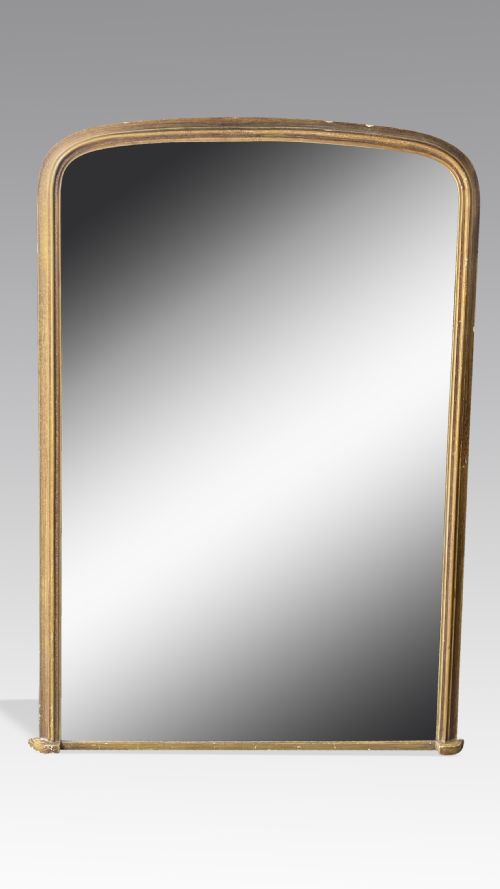
- A nineteenth-century French style characterised by restrained classical curves, gentle arched tops, and minimal ornamentation.
- Cartouche
- An ornamental framed panel, often shaped like a rolled-up piece of parchment, placed centrally on the crest of a mirror.
Arch Top Mantle Mirror: Frequently Asked Questions
Where should an arch top mantle mirror hang?
These mirrors traditionally hang centrally on the chimney breast directly above the fireplace mantel. Their arched shape helps break up the horizontal lines of a room.
Ensure the wall fixings anchor securely into solid brickwork or studs, as nineteenth-century overmantel mirrors carry substantial weight from their wooden frames and glass.
How do I identify a Victorian overmantel mirror?
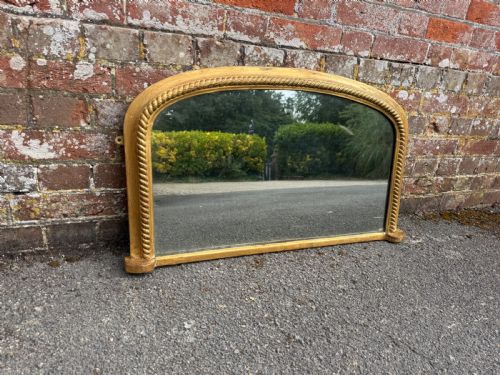
Victorian English overmantels frequently utilise heavy carved wood and gesso frames finished in bright gold leaf. They often feature rope-twist or floral embossed details along the border.
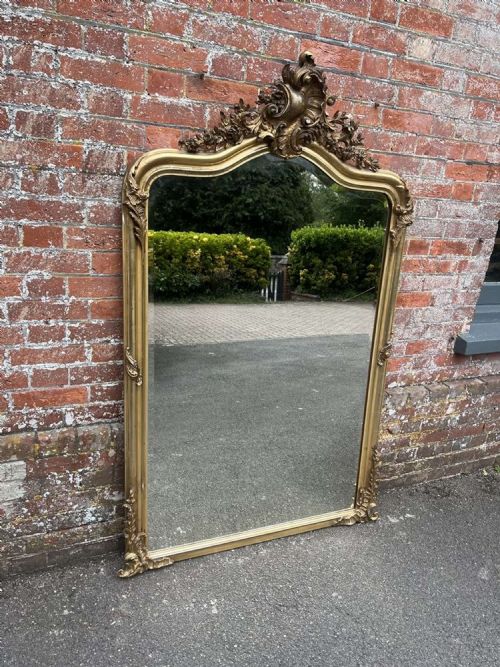
French equivalents from the same era, such as Louis Philippe or Rococo styles, tend to show softer contours and distinct crests without heavy English Victorian moulding.
What is foxed glass?
Foxed glass refers to the speckled dark spots and cloudy patches that develop on antique mirror plates over decades of exposure to moisture and air. This chemical breakdown affects the backing behind the glass.
Many collectors prize foxed mercury glass because it proves the antiquity of the mirror and casts a soft, atmospheric reflection.
Can these mirrors be hung without a fireplace?
While originally built for the mantle, these large wall mirrors suit hallways, dining rooms, and living spaces as standalone decorative focal points. Their generous scale expands visual space in smaller rooms.
When placing one away from a fireplace, match the width of the mirror to the piece of furniture placed beneath it for visual balance.