

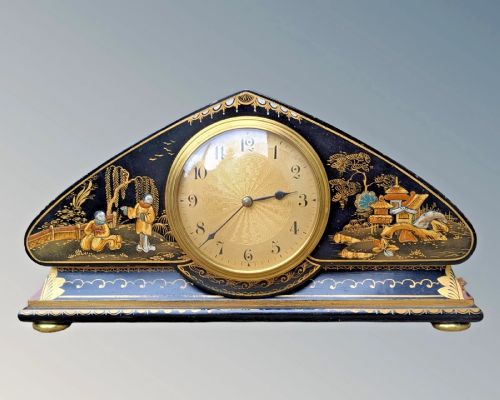
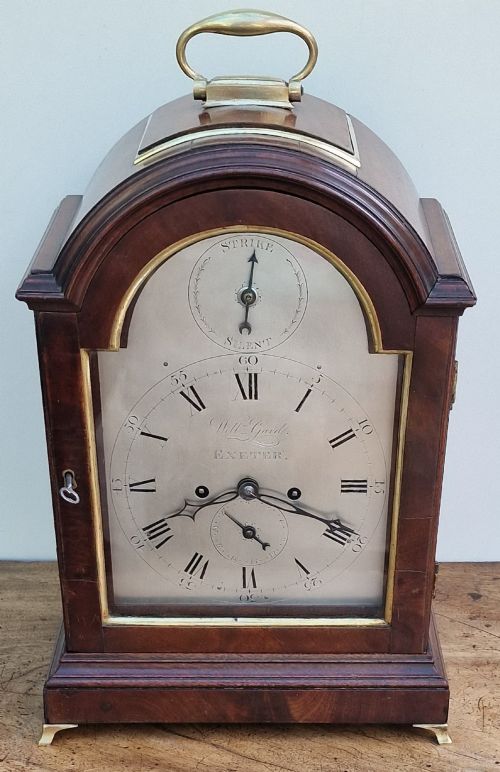
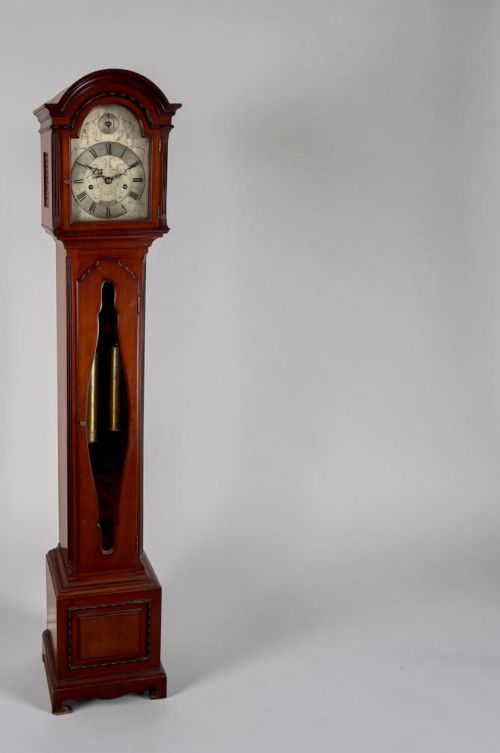
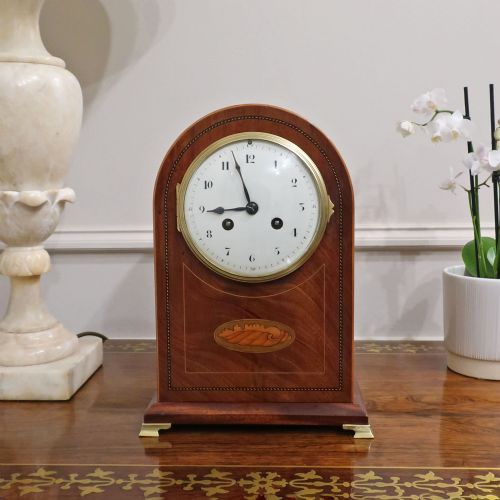


Arch Top Clock Dial
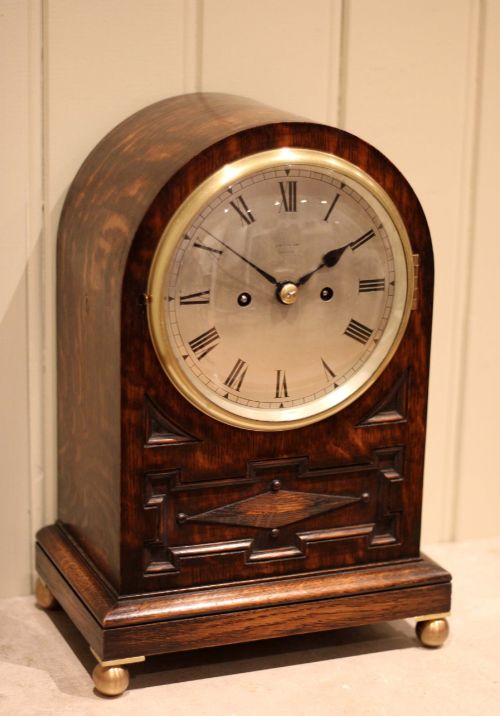
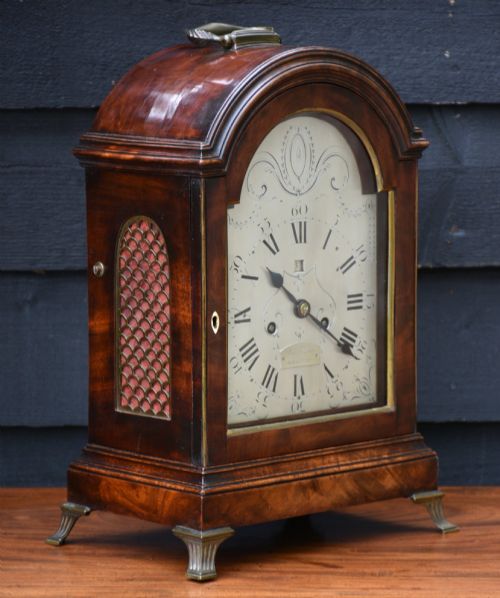
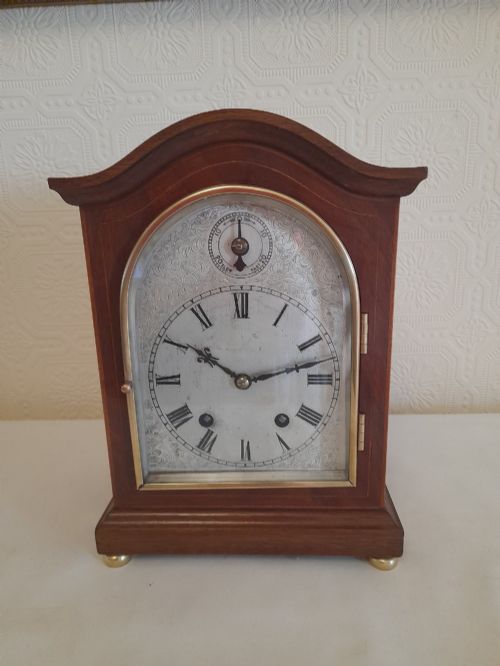
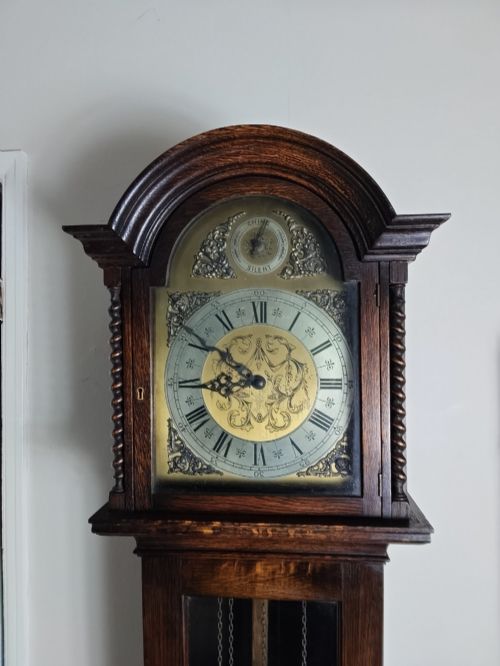
An arch top clock dial sits at the centre of these longcase, bracket and mantel timepieces, bringing distinct architectural proportion to each mahogany, oak or walnut case.
Arch Top Clock Dial
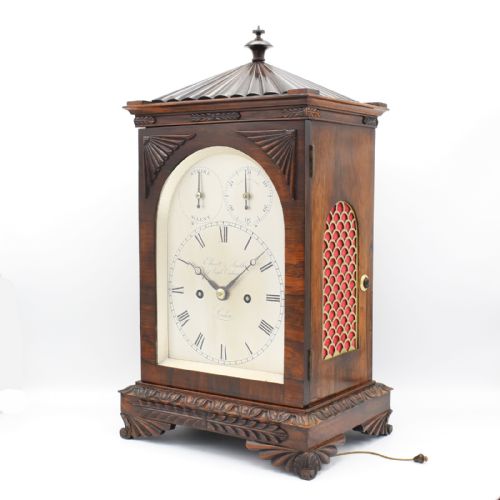
An arch top clock dial marks out the face of longcase clocks, bracket clocks, and mantel clocks spanning the Georgian, Victorian, and Edwardian periods. These timepieces display the signature curved upper section above the main circular chapter ring, a shape found across various scales from grand longcase clocks down to small bracket models.
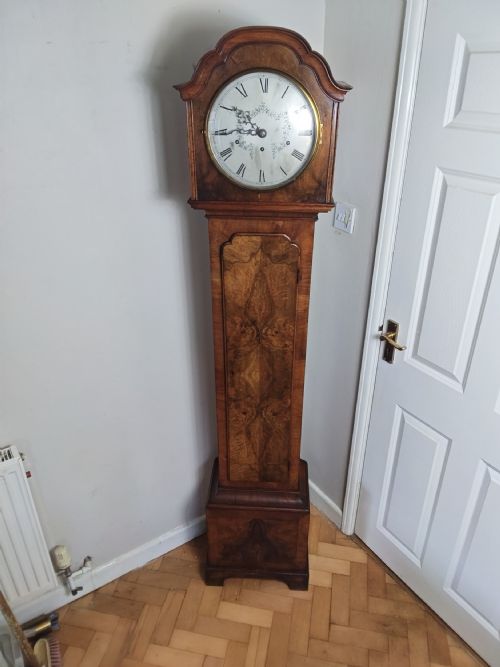
The pieces appearing here include oak and mahogany longcases alongside burr walnut grandmother clocks and table clocks fitted with silvered metal dials. Makers and styles range from Georgian London makers to Edwardian and later productions, showing how the arched dial shape persisted across centuries of horological design.
Materials and Construction
Casework relies on timber selection, utilising solid and veneered mahogany, oak, and burr walnut shaped into bracket, bell-top, and longcase formats. Glass protects the dial face, while brass and steel components form the intricate mechanical movements housed within.
Dials themselves often combine brass backing plates with silvered metal applied for the chapter rings and auxiliary indicators. Cabinetmakers constructed these housings to accommodate specific strike and chime trains, from simple timepieces to quarter-chiming and musical longcase movements.
Arch Top Clock Dial Retail Price Guide 2026
Typical asking prices for arch top clock dial among the pieces listed under this phrase on Sellingantiques today, from the lower quarter to the upper quarter. They describe what is for sale here now, not the wider market.
Some bracket clocks were built with travel in mind, featuring travelling locks to secure the delicate pendulum swing during carriage journeys.
Evaluating Quality
The quality of an arch top clock dial and its housing rests on the crispness of the metal engraving and the depth of figure in the timber case. Finer examples display meticulous hand-cut numerals and well-proportioned brass spandrels that integrate harmoniously with the arched summit.
Internal complexity also divides the standard pieces from superior examples, as seen in multi-train movements featuring quarter-striking, musical barrels, or moonphase mechanisms. The precision of the joinery in the hood and bracket top indicates the skill of the original maker.
Gillett and Johnston of Croydon·Winterhalder and Hofmeier·Thomas Goddard London·James Maitland London·Phillips Brothers
The Arch Top Clock Dial Glossary
- Arch top clock dial
- A clock face featuring a curved semicircular upper extension above the main dial plate. This shape accommodates subsidiary dials, maker signatures, or decorative brasswork.
- Bracket clock
- A portable table or shelf clock originally designed to sit upon a wall bracket. These pieces frequently feature elaborate wooden cases and striking movements.
- Longcase clock
- A tall pendulum clock housed in a wooden trunk with a weighted movement. They are often called grandfather or grandmother clocks depending on their overall height.
- Silvered metal
- A brass or copper dial plate treated with a silver compound to produce a matte white finish. The numerals and markings are subsequently engraved and blackened for legibility.
- Fusee
- A conical pulley connected to the mainspring by a cord or chain. It equalises the driving force of the spring as it winds down to maintain consistent timekeeping.
Arch Top Clock Dial: Frequently Asked Questions
What is a grandmother clock?
A grandmother clock is a smaller, more slender version of the traditional longcase or grandfather clock. These pieces were produced across various periods to fit rooms with lower ceilings.
They share the same mechanical functions and arched dial layouts as their larger counterparts but maintain a compact domestic scale.
How do bracket clocks differ from mantel clocks?
Bracket clocks derive their name from the wall brackets they originally rested upon, typically housing complex spring-driven movements with striking or chiming functions. Mantel clocks emerged later as general shelf or table timepieces.
Both categories frequently utilise an arch top dial design paired with mahogany, oak, or walnut cases.
What is a ting-tang strike?
A ting-tang strike is a two-hammer quarter-striking mechanism used in bracket and mantel clocks. It sounds two different pitched bells to indicate the passing quarters before the main hour strike.
This acoustic feature is commonly found in Victorian and later spring-driven movements.
How do you date an oak or mahogany longcase clock?
Dating relies on stylistic shifts in the casework, dial construction, and movement architecture. Georgian longcases often display arched brass dials with cast spandrels, while later Edwardian and 1920s versions exhibit different timber treatments and simpler proportions.
Maker signatures recorded on the dial plate also help establish a chronological baseline.