


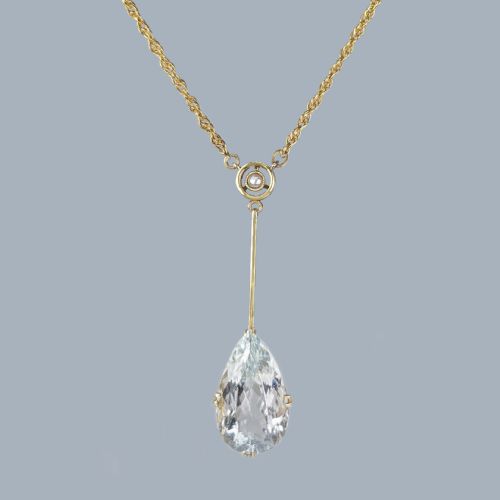


Aquamarine Lavalier Necklace
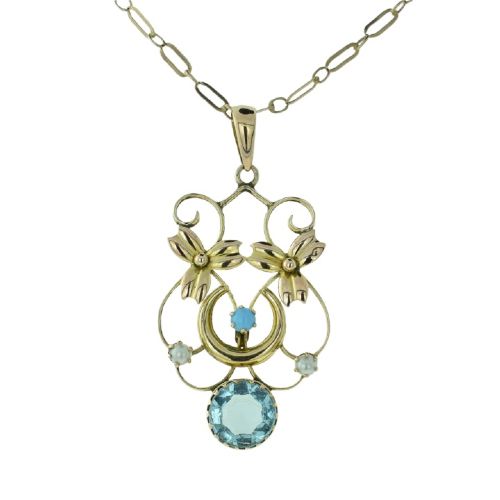
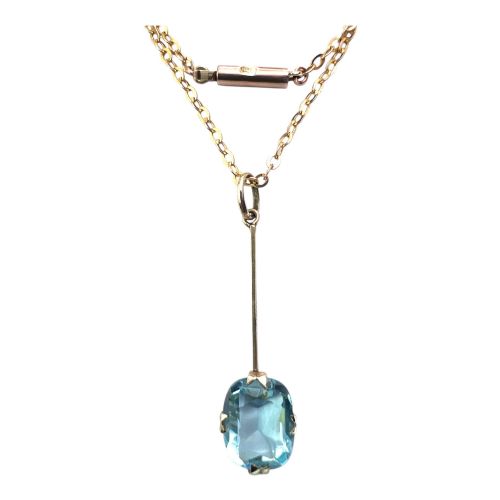
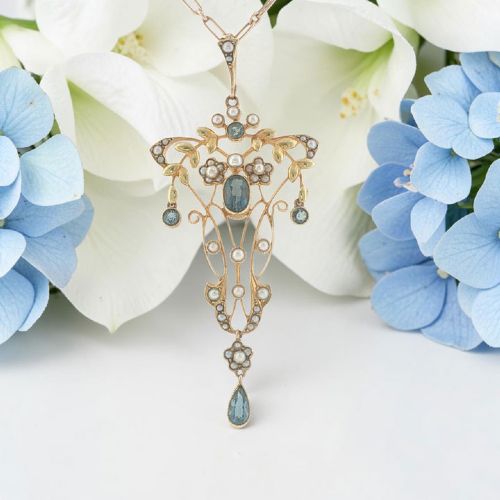
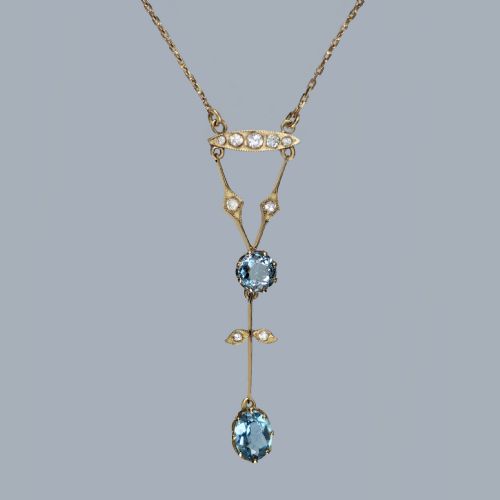
An aquamarine lavalier necklace brings together pale blue stones and delicate gold drops from the Edwardian and Art Nouveau periods.
Aquamarine Lavalier Necklace
An aquamarine lavalier necklace represents a distinct style of pendant necklace originating in the early twentieth century. These pieces feature suspended drops, often incorporating central aquamarine stones paired with seed pearls or diamonds in Edwardian and Art Nouveau designs.
The versions most commonly met on this page date from around 1900 to 1910, reflecting the height of the Edwardian era. They typically combine pale blue aquamarines with yellow gold, rose gold, or higher-carat 15ct gold settings.
Makers of the period arranged these drops to create a balanced, hanging silhouette that suited the fashions of the time. Alongside aquamarine, occasional examples incorporate blue topaz, turquoise, or tourmaline within the pendant design.
How they were made
Goldsmiths constructed these pendants using 9ct or 15ct gold, shaping the metal into intricate wirework frames characteristic of Edwardian and Art Nouveau aesthetics. Seed pearls were frequently set alongside the main gemstones using delicate claw or bezel settings.
Aquamarines were cut into heart shapes, emerald cuts, or faceted drops to catch the light within the suspended frame. The integration of rose gold and yellow gold provided varied colour tones across the pendant designs.
Aquamarine Lavalier Necklace Retail Price Guide 2026
Typical asking prices for aquamarine lavalier necklace among the pieces listed under this phrase on Sellingantiques today, from the lower quarter to the upper quarter. They describe what is for sale here now, not the wider market.
Listings feature items spanning the Edwardian era and 1930, utilising aquamarine, 15ct gold, seed pearls, 9ct gold, and diamonds.
What varies in quality
Quality in an aquamarine lavalier necklace rests upon the clarity and colour saturation of the central aquamarine stone. Finer examples feature clean, well-matched stones with strong pale blue hues rather than washed-out or heavily included crystals.
The intricacy and preservation of the gold work also divide the standard of pieces. Superior items display crisp wirework, securely pinned seed pearls, and substantial 15ct gold settings rather than lighter 9ct alternatives.
The Aquamarine Lavalier Necklace Glossary
- Lavalier
- A pendant necklace featuring one or more drops suspended below a central motif. This style gained popularity during the late nineteenth and early twentieth centuries.
- Art Nouveau
- An international style of art and design spanning the late nineteenth and early twentieth centuries, characterised by fluid, organic, and sinuous plant-like lines.
- Seed pearl
- A very small, natural or saltwater pearl, often round or slightly irregular, used extensively to accent Edwardian jewellery designs.
- 15ct Gold
- An alloy containing 62.5 percent pure gold, commonly utilised in British antique jewellery before the introduction of 9ct and 18ct standards in later decades.
Aquamarine Lavalier Necklace: Frequently Asked Questions
What is a lavalier necklace?
A lavalier necklace is a pendant style featuring dangling drops suspended from a main setting or chain. This design was particularly fashionable during the Edwardian era.
The drop configuration allows stones like aquamarine and seed pearls to move independently, catching the light from various angles.
How do I date an antique pendant?
Dating relies on stylistic clues such as the presence of Art Nouveau whiplash curves or Edwardian garland motifs. Material standards, including the use of 15ct gold, also point to specific eras.
Most pieces from this category originate between 1900 and 1930, capturing transitional phases in jewellery design.
Are aquamarines natural in these pieces?
The aquamarines found in these antique necklaces are natural beryl stones, typically faceted into drops or heart shapes. Their colour ranges from very pale blue to a deeper greenish-blue.
Gemstone treatments were minimal during the Edwardian period, preserving the authentic appearance of the minerals.
How should I wear an antique necklace?
These delicate gold necklaces suit special occasions or careful daily wear, paired with appropriate necklines to showcase the hanging drop. Because the chain and pendant are antique, gentle handling is necessary.
Storing the piece flat in a lined box prevents the fine gold chains from tangling or kinking.
What gold purity is common?
Edwardian and early twentieth-century pieces frequently utilise either 9ct gold or 15ct gold. The higher caratage offers a richer yellow tone.
Some examples also incorporate rose gold alloy mixtures, which were favoured for specific colour contrasts in floral or ribbon motifs.