


Aquamarine Dress Ring
An aquamarine dress ring brings together icy blue beryl and sparkling diamonds in platinum or gold settings.
Aquamarine Dress Ring
An aquamarine dress ring is a statement piece of jewellery designed to catch the eye through substantial central stones and surrounding diamond work. These pieces emerge primarily from the 1920s, 1930s, 1950s, and 1960s, reflecting the enduring appeal of cocktail and cluster designs.
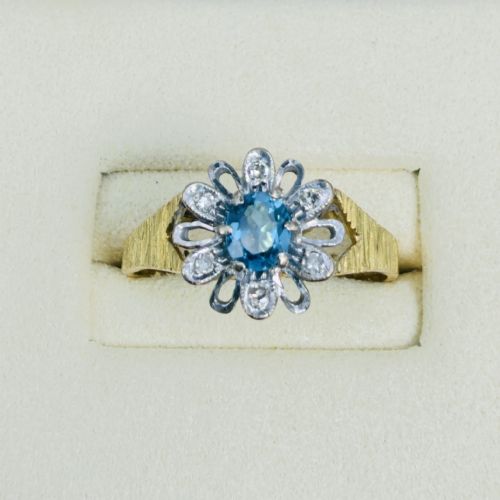
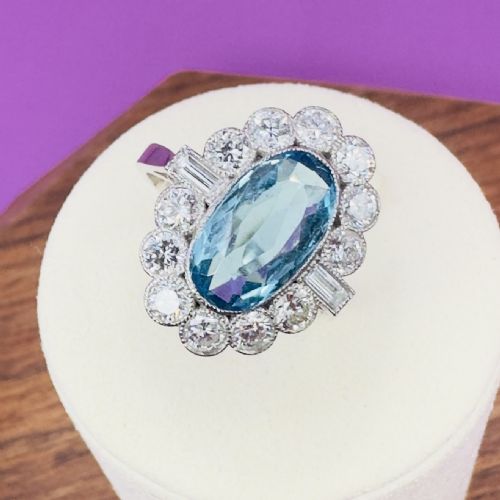
The selections available here range from geometric Art Deco platinum creations to mid-century yellow gold and white gold cocktail pieces. Oval and elongated oval cuts dominate the centre stones, accompanied by accent diamonds in various configurations.
Buyers seeking an aquamarine dress ring will find forms varying from delicate cluster rings to massive cocktail pieces exceeding thirty carats. Each era brings distinct metal choices and silhouette preferences to the jeweller's bench.
Materials and construction
Goldsmiths and platinum smiths utilised precious metals including platinum, 18ct white gold, 14ct yellow gold, 14ct rose gold, and 9ct white gold to anchor the gemstones securely. Platinum was frequently chosen during the Art Deco period for its strength and bright finish, allowing for fine claw and bezel settings.
Stones are faceted into oval and elongated cuts to maximise the pale blue brilliance of the beryl, complemented by brilliant cut, baguette, or smaller accent diamonds. Pink sapphires occasionally appear alongside the central gem in multi-stone coloured arrangements.
Aquamarine Dress Ring Retail Price Guide 2026
Typical asking prices for aquamarine dress ring among the pieces listed under this phrase on Sellingantiques today, from the lower quarter to the upper quarter. They describe what is for sale here now, not the wider market.
Listings feature platinum, white gold, yellow gold, and rose gold paired with aquamarine, diamond, and pink sapphire.
Quality and craftsmanship
The distinction between standard examples and exceptional pieces rests upon the saturation and clarity of the central beryl, alongside the precision of the surrounding diamond work. Larger carat weights combined with crisp, geometric metalwork separate significant cocktail rings from simpler dress styles.
Proportion and stone matching define the finer pieces, where the scale of the beryl harmonises with the mounting and the supporting diamonds without overwhelming the finger. The integrity of the original claw settings and the weight of the gold or platinum chassis also dictate the overall standard of construction.
The Aquamarine Dress Ring Glossary
- Aquamarine
- A pale blue variety of the mineral beryl, forming the primary gemstone in these rings. It derives its name from seawater due to its characteristic translucent blue-green hues.
- Cluster ring
- A ring design featuring a central prominent gemstone encircled by a tight grouping of smaller stones, typically diamonds. This layout maximises overall sparkle and visual impact on the hand.
- Art Deco
- A design style spanning the 1920s and 1930s characterised by geometric symmetry, clean lines, and stylised motifs. Platinum was the favoured metal for mounting gemstones securely during this era.
- Cocktail ring
- A large, attention-grabbing ring featuring oversized gemstones and bold styling. These pieces rose to prominence during the mid-twentieth century for evening wear.
- Baguette diamond
- A small, step-cut diamond in a rectangular shape with straight or tapered sides. Jewellers utilise these stones as linear accents alongside larger central gems.
Aquamarine Dress Ring: Frequently Asked Questions
What periods do these rings come from?
The pieces span several decades of the twentieth century, with notable examples originating from the 1920s, 1930s, 1950s, and 1960s.
Art Deco creations represent the earlier end of the timeline, whilst bolder cocktail rings reflect the post-war styles of the mid-century.
How do I care for my ring?
Beryl is a durable gemstone, but the precious metal settings require gentle cleaning with warm soapy water and a soft brush. Avoid harsh chemical cleaners and remove the ring during heavy manual work to protect the claws.
Professional inspection of the settings ensures the central beryl and surrounding diamonds remain secure in their mounts.
What metals were used?
Jewellers utilised platinum alongside various gold alloys depending on the decade of manufacture. Platinum and 18ct white gold provide a cool backdrop for the icy blue beryl.
Yellow gold and rose gold appear in mid-century designs, offering warmer visual contrasts against the pale blue centre stones.
Are the centre stones natural?
The beryl and diamonds found in these period pieces are natural gemstones shaped by traditional cutting techniques of their respective eras. Carat weights vary widely, from modest dress ring sizes up to substantial cocktail proportions.
Cut styles focus on oval and elongated oval facets designed to enhance light return within the blue crystal.