



Apothecary Vessel Pestle
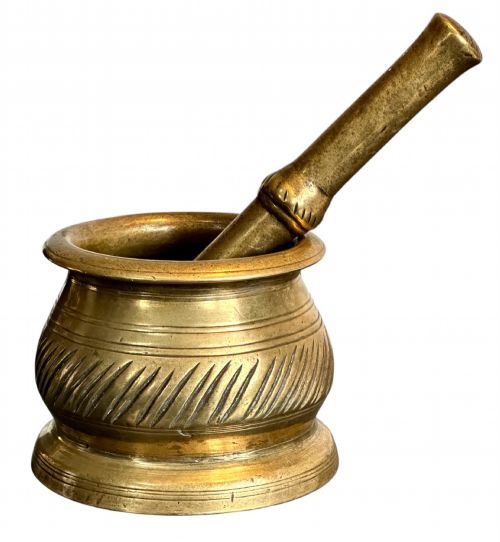
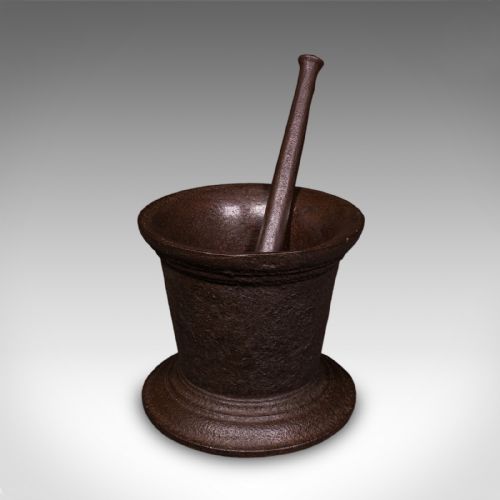
These apothecary vessel pestle items span centuries of practical chemistry and kitchen use, offering heavy metal and dense wood tools designed for crushing.
Apothecary Vessel Pestle
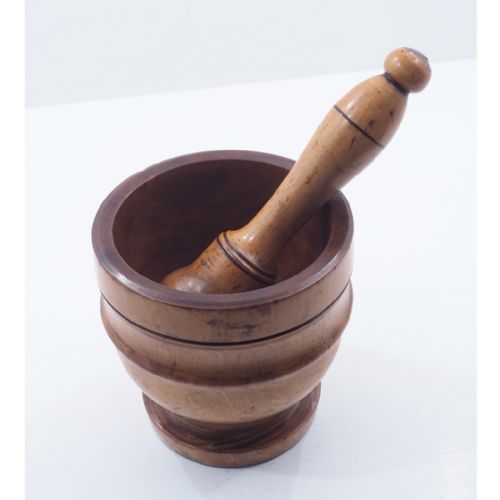
An apothecary vessel pestle set serves the essential function of grinding and mixing ingredients for medicinal, chemical, or culinary preparations. The selection here brings together heavy metal mortars, cast bronze examples, and dense treen timber implements designed to withstand serious downward force.
The materials you encounter most frequently range from solid cast bronze and brass to heavy iron and dense turned woods like lignum vitae, oak, and olive wood. These items cross multiple eras, including seventeenth-century pieces, Georgian examples, and Victorian chemist tools.
Forms vary from robust household kitchenware to monumental industrial dye maker mortars weighing over a hundred pounds. Each piece reflects the functional requirements of its period, whether utilised in a shop by an apothecary or kept in a domestic kitchen.
How they were made
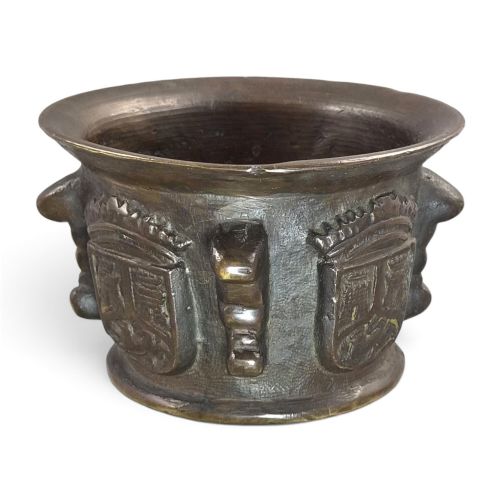
Makers cast bronze and brass vessels using traditional foundry methods, often incorporating decorative ribs, Tudor rose motifs, or heraldic arms directly into the mould. Iron components involved forging and wrought iron mounting to reinforce timber or join separate elements securely.
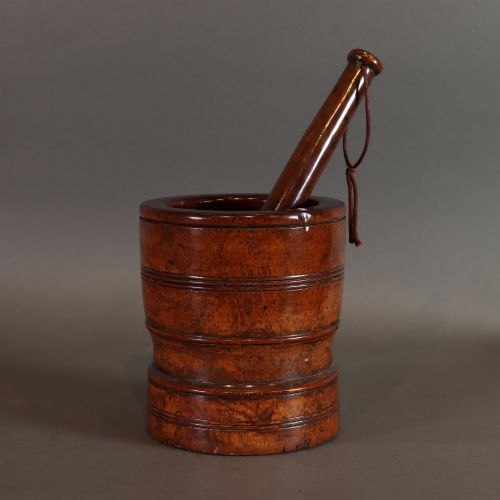
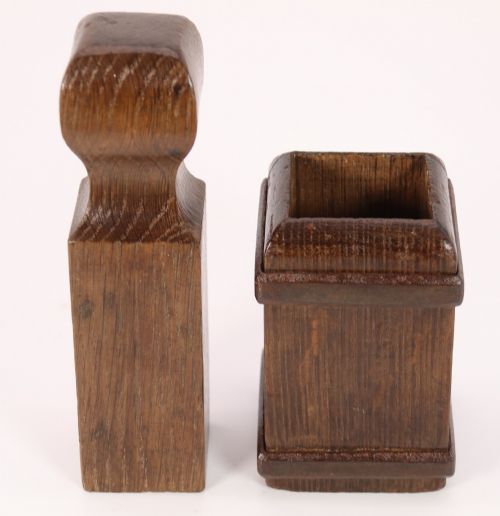
Wooden vessels and their matching pestles relied on lathe turning, shaping dense timbers such as lignum vitae, fruitwood, and oak to create resilient bowls and handles that resist splitting under heavy impact.
Some heavy bronze mortars weigh over a hundred pounds, originally built for industrial dye makers who needed to crush enormous batches of colour.
What varies in quality
Quality rests in the weight of the metal, the crispness of any cast decoration, and the integrity of the timber used in the construction. Heavy, thick-walled bronze and well-balanced fruitwood sets show a superior standard of original craftsmanship.
The survival of a matching pestle with its original mortar elevates the desirability of the set. Pieces displaying distinct period characteristics, such as early cast armorial bearings or precise turned profiles, stand out for their historical completeness.
The Apothecary Vessel Pestle Glossary
- Mortar and Pestle
- The bowl and the handheld crushing tool used together to grind substances. The mortar receives the material while the pestle exerts the force.
- Treen
- Small handmade wooden household objects and utilitarian items. This category covers turned lignum vitae, oak, and fruitwood vessels.
- Cast Bronze
- An alloy of copper and tin poured into a mould to form a rigid, heavy vessel. It forms the primary material for many early apothecary examples.
- Wrought Iron
- Iron beaten and shaped by hand while hot, rather than cast. It appears in mounts and reinforcement bands on wooden vessels.
- Lignum Vitae
- An extremely dense and heavy tropical hardwood. It resists splitting and wear, making it ideal for turned pestles and mortars.
Apothecary Vessel Pestle: Frequently Asked Questions
How were these used?
These vessels ground dried herbs, minerals, and chemical ingredients into fine powders for medicines, dyes, and cooking preparations. The heavy pestle provided the crushing force inside the rigid mortar bowl.
Operators held the pestle vertically, using a rotating and pounding motion to break down stubborn materials against the thick interior base.
Are bronze and brass mortars heavy?
Metal apothecary mortars possess substantial weight to prevent movement during vigorous grinding work. Even smaller examples require two hands to lift securely.
Industrial and dye maker variants scale this weight up significantly, sometimes exceeding one hundred pounds to handle heavy commercial tasks.
How do I date an antique set?
Dating relies on material choice, casting style, and surface wear patterns. Seventeenth-century examples often display rougher casting textures, Tudor roses, or specific heraldic devices.
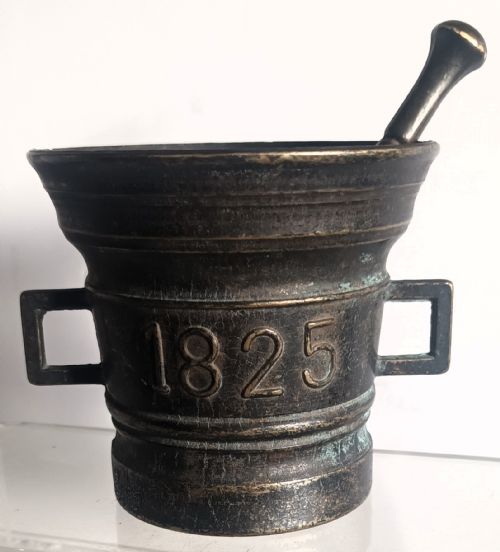
Later Victorian and Georgian pieces tend to show cleaner turned lines, standardised chemist markings, or brighter brass compositions.
Can I use them today?
Many metal and wooden sets remain structurally sound enough for light kitchen grinding or dry spice preparation. Historic materials require careful hand cleaning without harsh detergents.
Some collectors prefer to display them as decorative objects rather than subjecting centuries-old surfaces to modern culinary wear.