





Antique Yomut Bag
An antique yomut bag brings the geometric precision of the Trans-Caspian steppes straight to your wall or floor.
Antique Yomut Bag
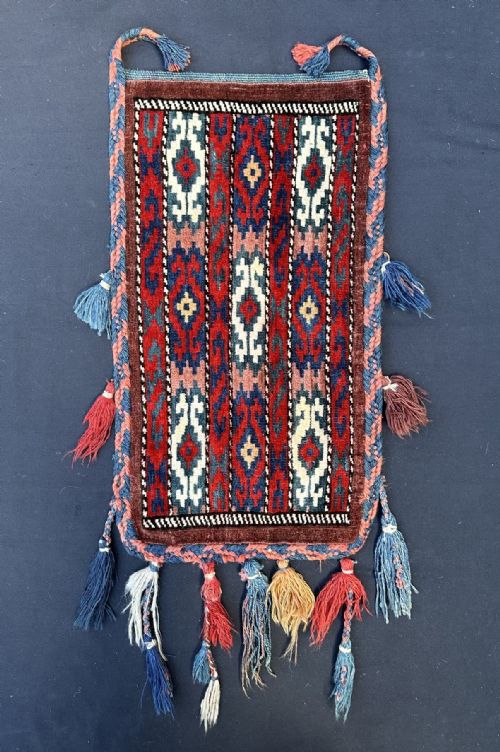
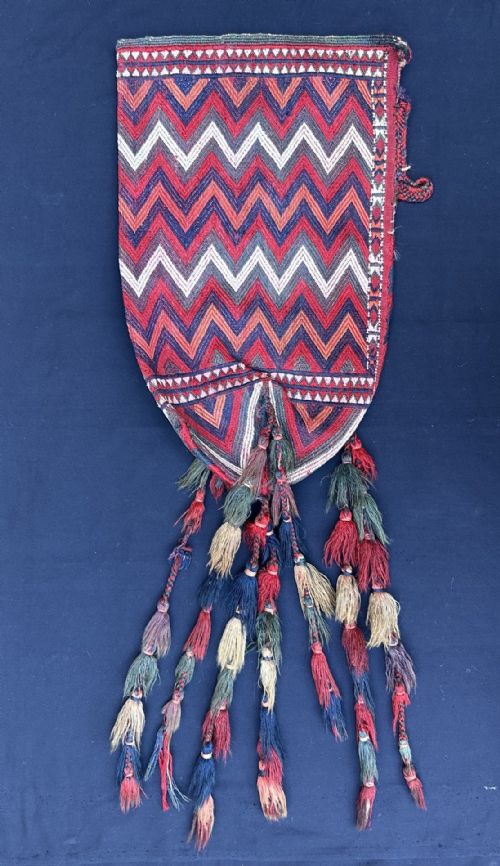
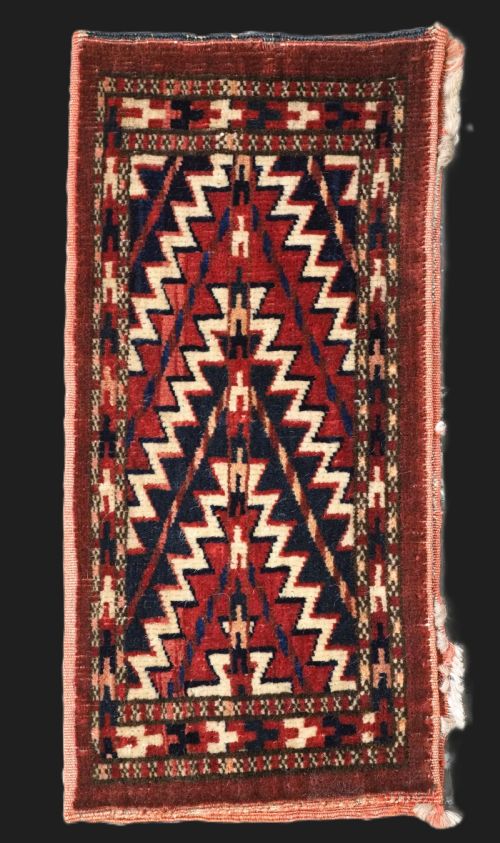
When you search for an antique yomut bag, you encounter tribal weavings originating from the Trans-Caspian steppes of Turkmenistan and wider Central Asia. These nomadic objects span the nineteenth century and the early decades of the twentieth century, created by Turkmen tribal groups. The selections on this page encompass various functional forms made for nomadic life.
The most common forms you meet include spindle bags, storage sacks known as torbas and chuvals, tent-pole bags called uk bash or okbash, and kap fragments. Many examples retain their original plain weave backs or survive as bag faces intended for hanging. Their designs showcase traditional Central Asian tribal motifs rooted in centuries of weaving heritage.
How they were made
These textiles rely primarily on hand-spun wool and dyed yarn combined with cotton structural elements. Artisans utilised natural dyes to achieve deep colour palettes across the pile and flatweave surfaces. The construction ranges from dense pile weaving to banded flatweave techniques.
Makers integrated structural elements like plain weave backs to ensure durability for daily nomadic storage. The interplay of wool pile and cotton foundations creates the characteristic tactile structure observed in these tribal weavings.
Antique Yomut Bag Retail Price Guide 2026
Typical asking prices for yomut bag among the pieces listed under this phrase on Sellingantiques today, from the lower quarter to the upper quarter. They describe what is for sale here now, not the wider market.
Some bags were made exclusively to hold wool-spinning spindles, proving that nomadic multitaskers required dedicated luggage for their knitting.
What varies in quality
Quality rests in the crispness of the drawing and the saturation of the natural dyes. Pieces with sharply articulated motifs display superior control over the wool and dye materials. The rhythm of the repeat patterns dictates the visual strength of the textile.
Integrity of survival distinguishes different examples, from complete bags retaining their original backs to fragmented bag faces. The fineness of the knotting and the tightness of the weave separate standard tribal production from exceptional textile art.
The Antique Yomut Bag Glossary
- Torba
- A small storage bag produced by nomadic tribes for domestic use inside the tent. These horizontal rectangles typically display prominent main guls.
- Chuval
- A large storage bag used for bedding and household goods. They often feature multiple guls arranged in strict rows across the face.
- Gul
- An octagonal medallion motif repeated across Turkmen carpets and bags. Each tribal group utilises distinct gul designs to signify lineage.
- Okbash
- A specialised tent-pole bag designed to cover the ends of wooden struts. These triangular or hood-shaped pieces are also known as uk bash.
- Igsalyk
- A specific term for a spindle bag created to hold spinning implements. These narrow pieces often feature plain weave backs.
Antique Yomut Bag: Frequently Asked Questions
How were these bags used?
Nomadic families utilised these bags inside their yurts for storing household items, blankets, spinning tools, and tent poles. Their portable nature suited a mobile pastoral lifestyle.
Many designs were tailored for specific domestic duties, such as holding spindles or protecting wooden structural elements from damage.
How do I hang a bag face?
Bag faces and complete torbas make excellent wall art due to their flat profiles and strong geometric compositions. Textile conservators often recommend mounting them using a fabric sleeve or specialised non-damaging clips.
Ensure the weight of the wool and cotton is supported evenly across the upper edge to prevent distortion over time.
How do I tell different bag types apart?
Bag types are distinguished primarily by their proportions and intended functions. Torbas are wide storage sacks, while chuvals are notably larger storage formats for bedding.
Spindle bags are narrower vertical formats, and okbash pieces feature distinct triangular profiles designed to fit over curved tent poles.