

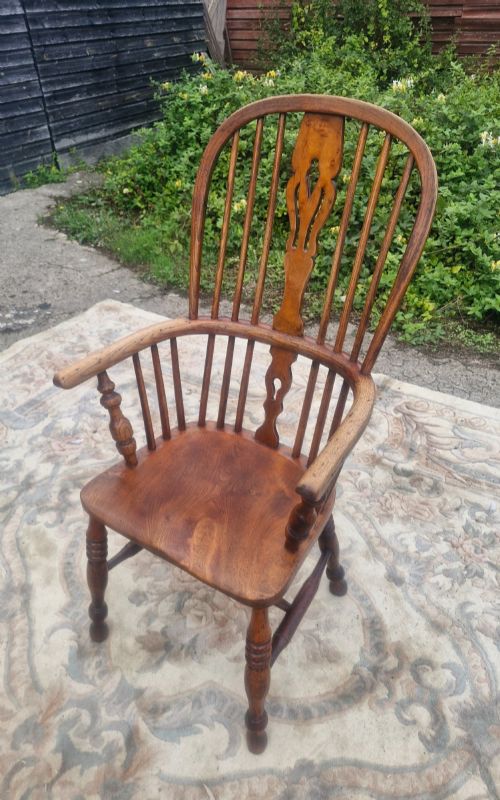
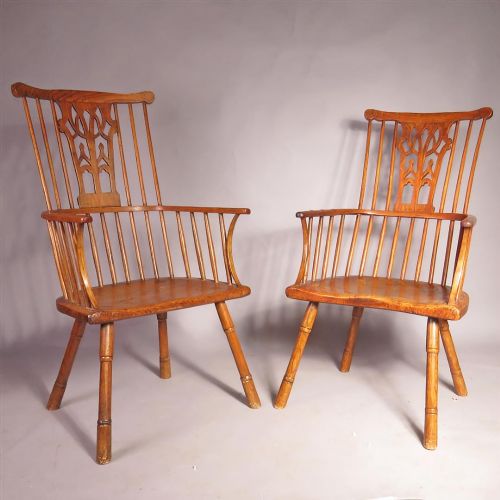
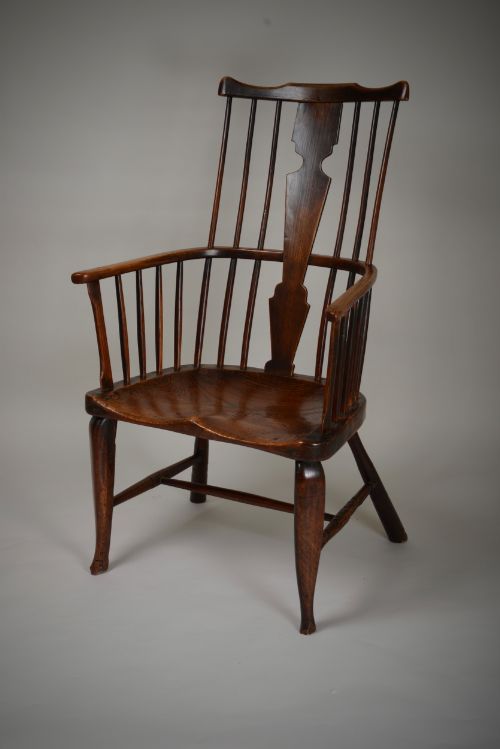
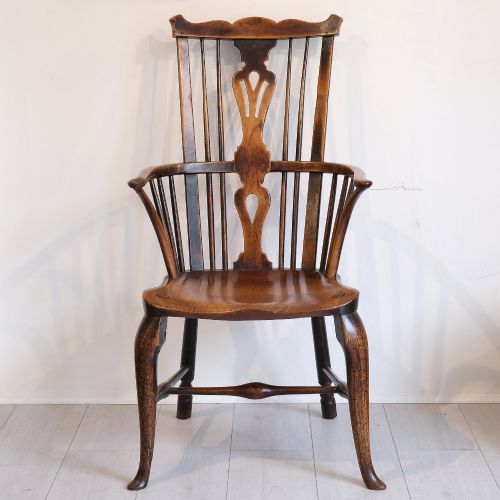
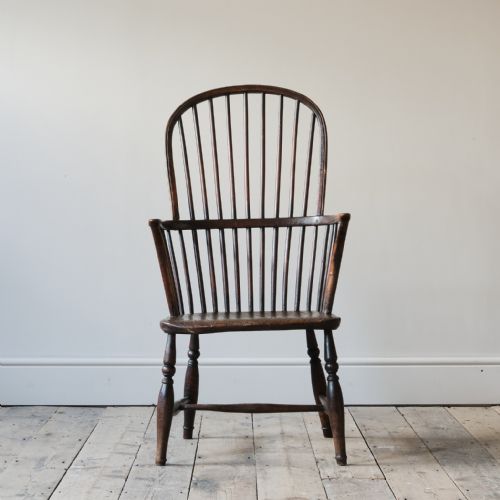


Antique Yew High Chair
An antique yew high chair brings the rich warmth of English country craftsmanship and distinctive timber grain directly into your living space.
Antique Yew High Chair
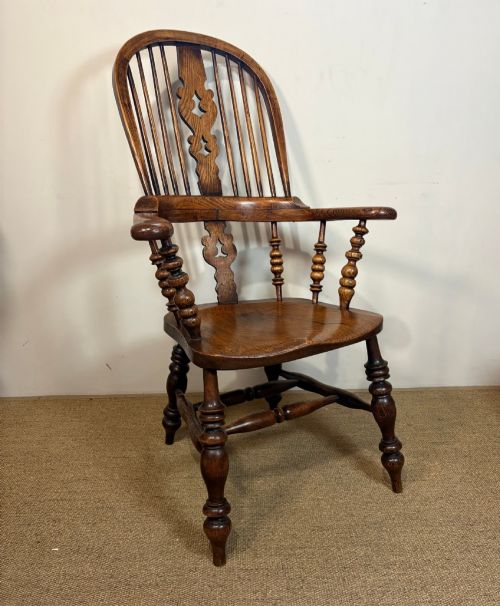
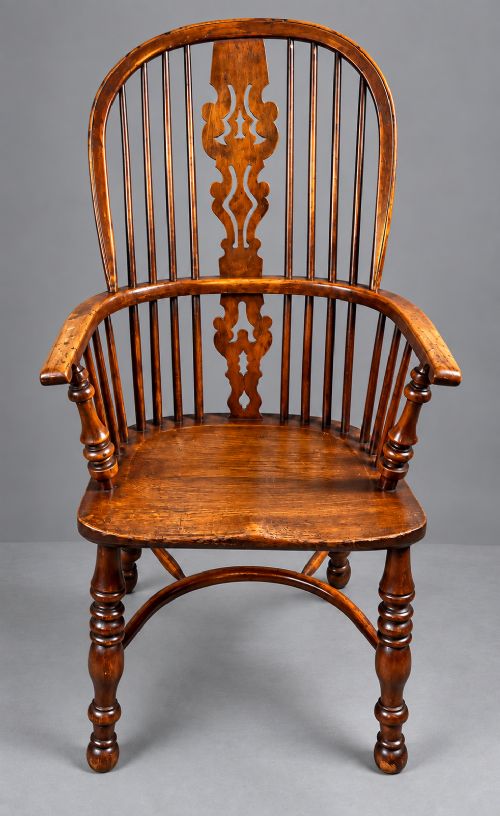
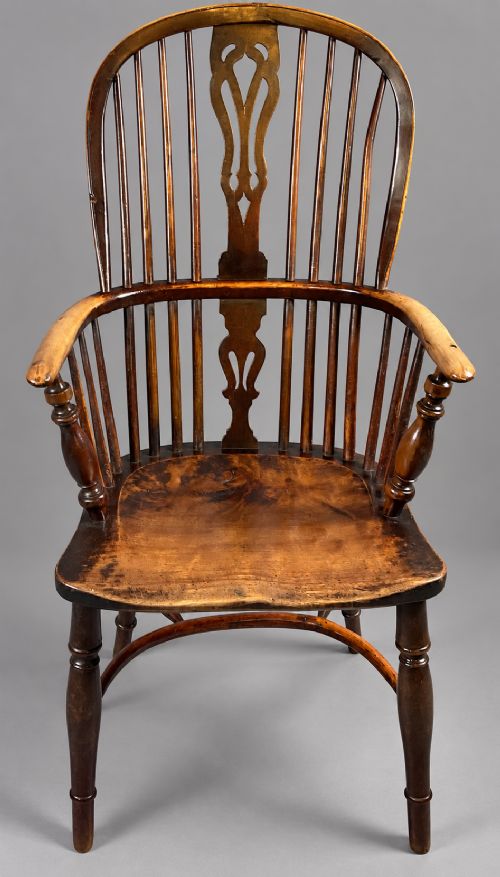
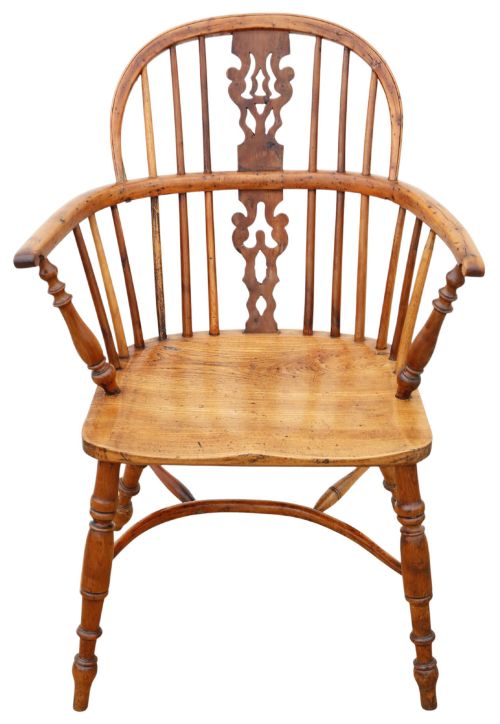
An antique yew high chair typically manifests as a high back Windsor chair fashioned from native hardwoods, often combining a rich yew wood frame with a contrasting elm seat. These seating pieces emerge predominantly from the eighteenth and nineteenth centuries, spanning Georgian and Victorian vernacular traditions.
The buyer encounters various forms ranging from comb back and hoop back designs to broad arm and pad arm variants, frequently originating from regional English workshops. Nottinghamshire makers particularly feature among these pieces, alongside Thames Valley and general English country vernacular output.
While the search specifically targets high chairs, the listings include tall farmhouse armchairs and high back Windsor seating intended for adult use alongside child-specific examples. Regional variations dictate the spindle arrangements and stretcher configurations, marking out distinct local trades.
Construction and materials
Craftsmen built these chairs using a combination of yew wood for the bentwood bows and spindles, paired with solid elm for the saddle-shaped seats, while ash and beech often formed the undercarriages and legs. This mixed timber construction utilised the natural strength and flexibility of native British hardwoods.
The traditional Windsor method involved wedging individual spindles and legs directly into bored holes within the thick wooden seat rather than employing standard mortise and tenon joinery. Steam bending shaped the continuous hooped backs and comb rails, relying on seasoned timber to hold the tension over centuries.
Antique Yew High Chair Retail Price Guide 2026
Typical asking prices for yew high chair among the pieces listed under this phrase on Sellingantiques today, from the lower quarter to the upper quarter. They describe what is for sale here now, not the wider market.
The listings span the eighteenth, nineteenth, and early twentieth centuries, featuring elm, yew wood, ash, beech, and oak across various regional English country styles.
Judging quality and proportion
Quality rests heavily on the figure of the yew wood and the depth of its grain, where richer patterns and deeper patination separate finer examples from plainer stock. The selection of timber reflects the maker's hand, with superior pieces showing careful matching between the upper framework and the solid elm seat.
Proportion and structural harmony define the better chairs, where the rake of the legs and the height of the comb or high back create a balanced silhouette. Maker attribution, through stamps or known regional characteristics from workshops in places such as Worksop, further elevates certain pieces.
Gabbitass of Worksop·Benjamin Gilling·Allsop Worksop
The Antique Yew High Chair Glossary
- Windsor chair
- A wooden chair constructed with a solid sculpted seat into which the legs and back spindles are separately inserted. This design originated in the English countryside and gained widespread popularity for its robust utility.
- Crinoline stretcher
- A bent metal or wooden arched brace connecting the legs of a chair to provide additional stability. It is often found on earlier vernacular seating.
- Broadarm
- An armchair featuring wide, flattened wooden armrests shaped from a single continuous piece of timber or thick plank. These generous surfaces were practical for writing or resting.
- Pad arm
- A regional furniture feature where the wooden armrest widens into a padded or rounded shape to accommodate the user's elbows comfortably.
Antique Yew High Chair: Frequently Asked Questions
What is an antique yew high chair?
An antique yew high chair is a traditional wooden seating piece constructed primarily from native yew wood, often featuring a tall back and a sculpted elm seat. These items date predominantly from the eighteenth and nineteenth centuries.
They represent the pinnacle of English country vernacular furniture making, built by regional craftsmen using sturdy timber combinations designed to endure decades of daily domestic use.
How do I identify a yew Windsor chair?
Yew Windsor chairs are identified by their characteristic golden-brown timber with pronounced dark figuring, combined with a distinct stick-back construction where components slot directly into a solid wooden seat.
Looking closer, you will often notice regional variations in the stretcher arrangements, such as crinoline stretchers, and differences in the shape of the armrests, ranging from broad arms to pad arms.
Where were these chairs made?
These chairs originated in various English regional workshops and rural domestic centres, with specific pieces documented from Nottinghamshire towns like Worksop.
Thames Valley makers also produced distinctive regional variations during the late eighteenth and nineteenth centuries, utilising local hardwood resources available to country carpenters and specialised chair bodgers.
How should I care for yew wood furniture?
Yew wood furniture benefits from a stable indoor environment away from direct heat sources and rapid humidity fluctuations, which can cause the seasoned timber to split or warp over time.
Routine maintenance involves applying traditional beeswax lightly and buffing with a soft cloth to preserve the natural lustre and depth of the patinated surface without sealing the wood.