


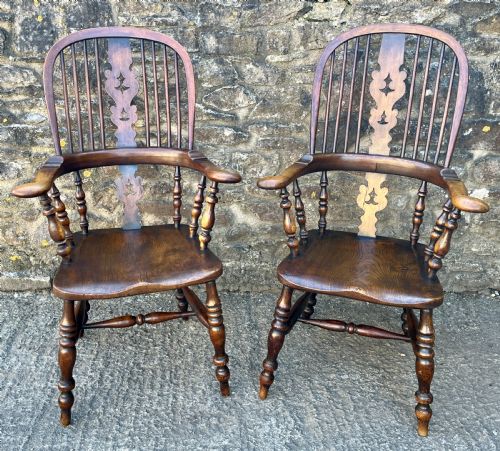


Antique Yew Elbow Chair
An antique yew elbow chair brings rich timber and vernacular character into a room, offering sturdy seating built by regional country makers.
Antique Yew Elbow Chair
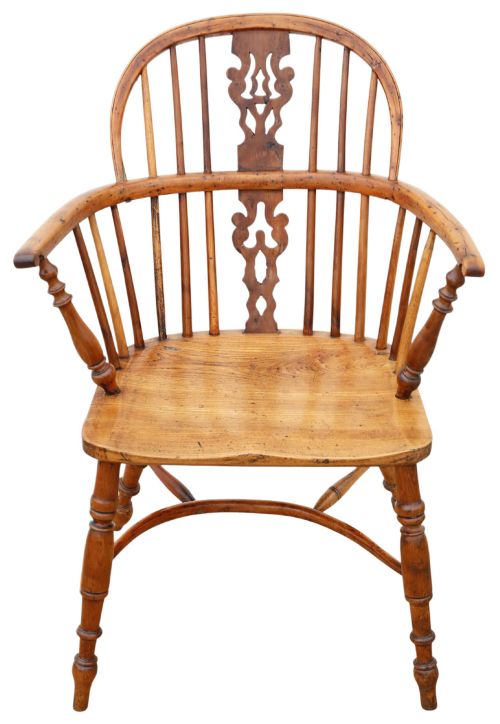
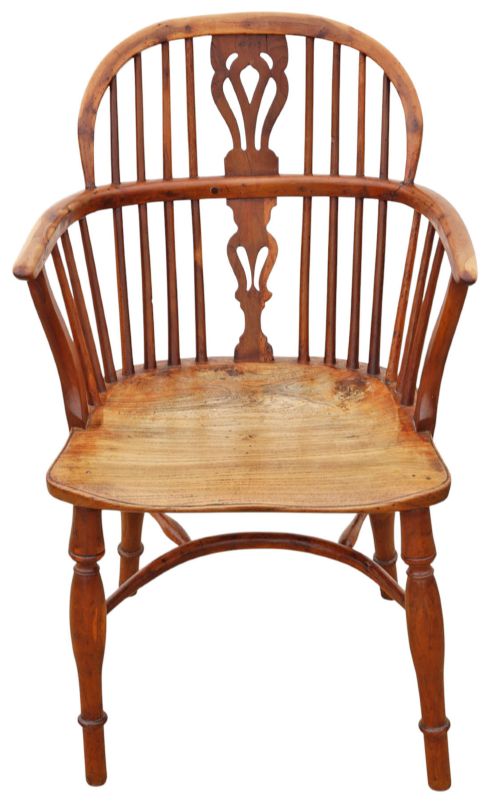
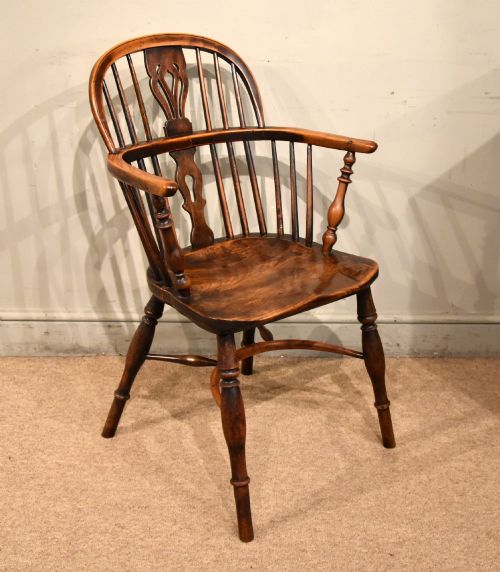
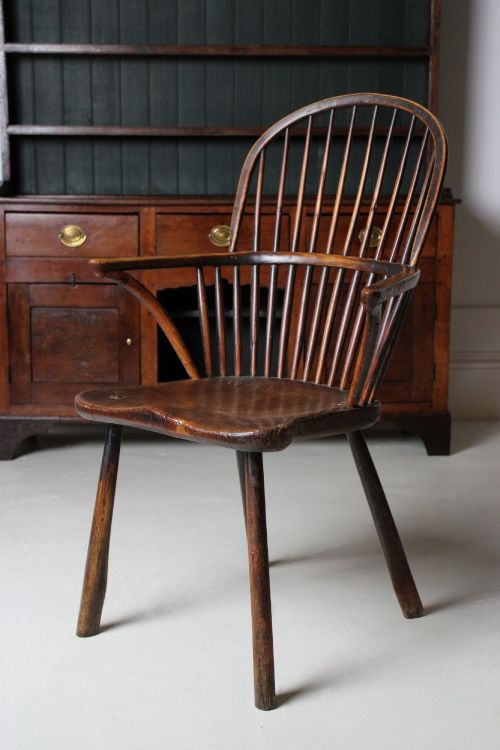
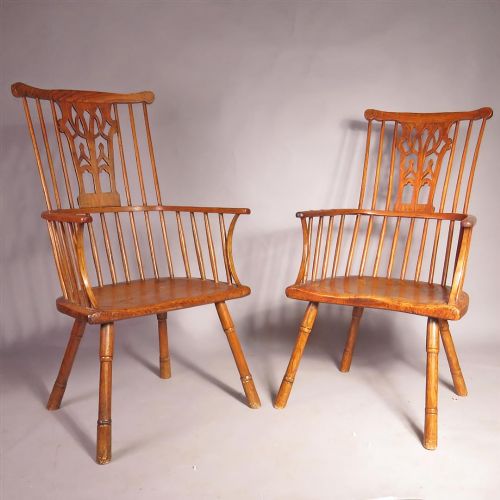
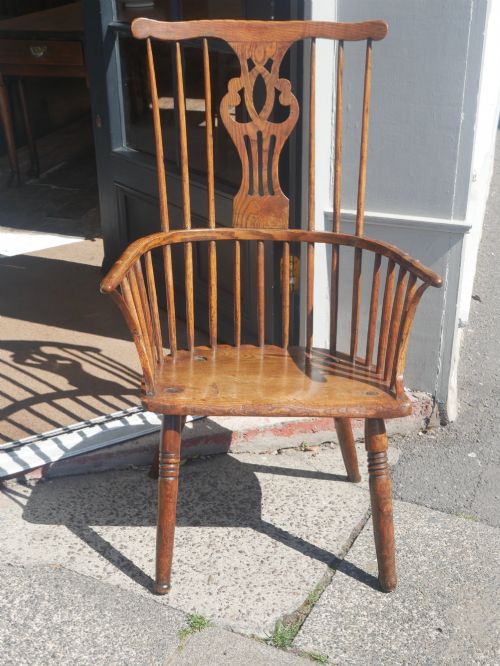
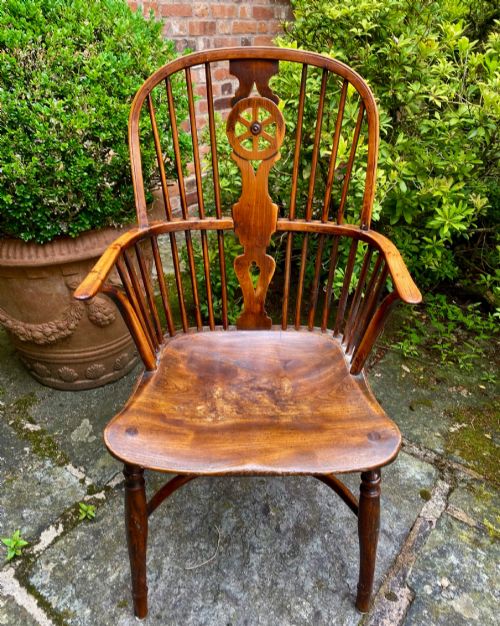
When searching for an antique yew elbow chair, buyers encounter robust Windsor armchairs and carvers rooted in English regional country traditions. These seats span the eighteenth, nineteenth and early twentieth centuries, emerging primarily from vernacular workshops.
The most common forms on this page are high-back, low-back and comb-back Windsor armchairs. Makers often combined yew with elm, ash, beech or fruitwood to construct these functional elbow chairs.
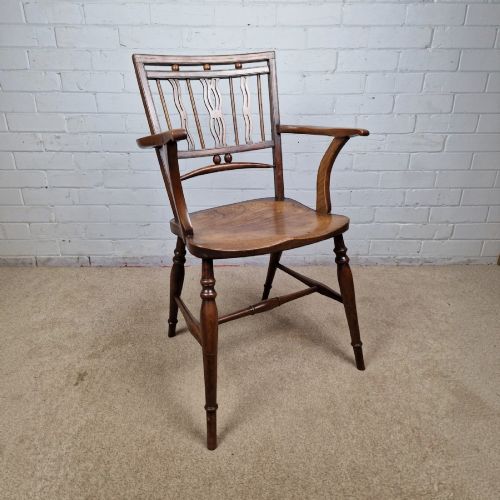
Regional variations include Yorkshire broad-arm examples and Mendlesham chairs, reflecting distinct local cabinet-making habits. Buyers also find child-sized versions alongside standard proportions.
Materials and Construction
Makers utilised yew wood for its striking grain and durability, frequently pairing it with elm seats and ash or beech spindles. Additional woods such as laburnum and fruitwood appear in more primitive or unusual constructions.
Turned legs and spindles connect to solid sculpted wooden seats using traditional pegged mortise and tenon joints. Steam-bending shaped the characteristic bowed backs and arm rails of the Windsor chairs.
Factors of Quality
The visual appeal of the timber grain and the depth of the surface patina dictate much of the standing of an antique yew elbow chair. Highly figured burr yew backs and contrasting elm seats elevate certain examples above plain counterparts.
Proportion and structural grace distinguish workshop standards, with well-balanced comb-backs or tall splats showing superior craftsmanship. Marked or stamped pieces by recorded makers add historical documentation to the physical quality.
Rockley Maker·Gabbitass of Worksop·Benjamin Gilling·John Moss Worksop
The Antique Yew Elbow Chair Glossary
- Windsor chair
- A chair built with a solid wooden seat into which the legs and back spindles are directly inserted. This construction method defines many pieces listed under this search phrase.
- Elbow chair
- An armchair designed with rests for the arms, often used as a desk or carver seat. They share space with standard armchairs in country houses.
- Comb back
- A Windsor chair design where the vertical spindles of the low back rise through a top rail to form a small comb-like crest. This style appears frequently in eighteenth-century pieces.
- Mendlesham chair
- A specific type of regional country armchair featuring a solid wood splat and crinoline stretcher. These originate from East Anglia.
- Broad arm
- An armchair featuring wide, flat wooden armrests often shaped for writing or comfort. Yorkshire makers produced notable examples of this form.
Antique Yew Elbow Chair: Frequently Asked Questions
How do I identify a yew wood chair?
Yew wood displays a distinctive warm golden-brown colour with dark streaks, intricate knots, and occasionally highly figured burr patterns. It is typically heavier and denser than common domestic fruitwoods.
Comparing the timber grain on the back splat or arms to the elm seat usually reveals the characteristic reddish-brown tones unique to yew.
Where were these chairs made?
These elbow chairs originated in various English rural regions, including Yorkshire, East Anglia, and the Midlands. Local vernacular traditions influenced the specific chair shapes.
Country joiners and specialised chairmakers utilised locally available timbers to construct sturdy seating for domestic and farmhouse use.
Are these chairs comfortable for daily use?
Solid wood saddle seats are contoured to fit the body, providing surprising ergonomic support despite the lack of upholstery. The sturdy armrests make them practical for sitting at desks or tables.
Adding a loose cushion can increase seating comfort while preserving the historic wooden surface underneath.
How do I date an antique Windsor chair?
Dating relies on construction details, tool marks, timber choice, and overall design evolution from low-back eighteenth-century forms to Victorian variations. Earlier pieces often exhibit primitive combinations of ash, elm, and fruitwood.
Makers' stamps, regional design traits, and natural wear patterns also help narrow down the period of manufacture.