


Antique Yellow Footstool
An antique yellow footstool brings warmth and useful low seating to a room, spanning periods from Regency to Edwardian.
Antique Yellow Footstool
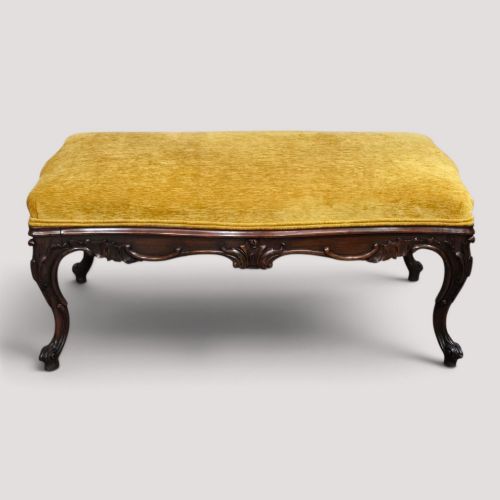
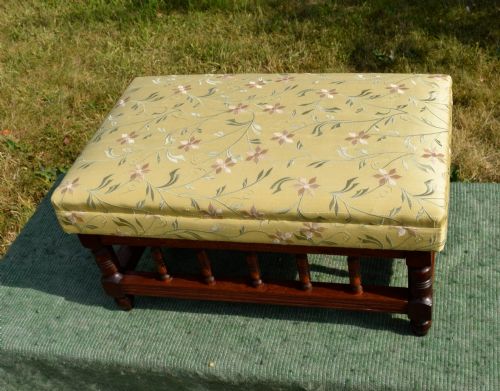
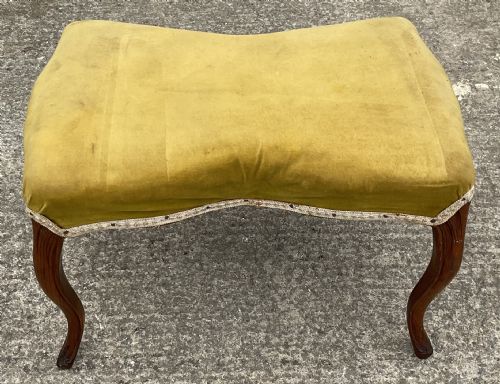
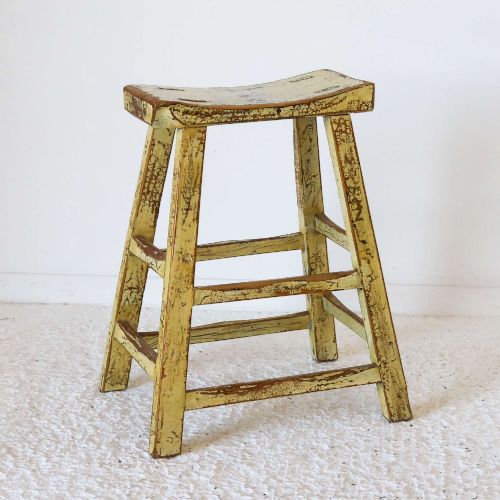
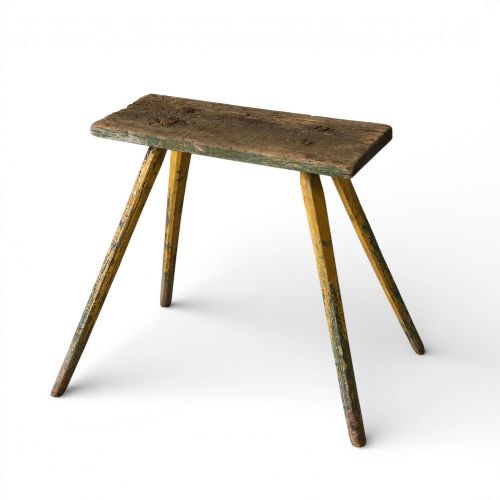
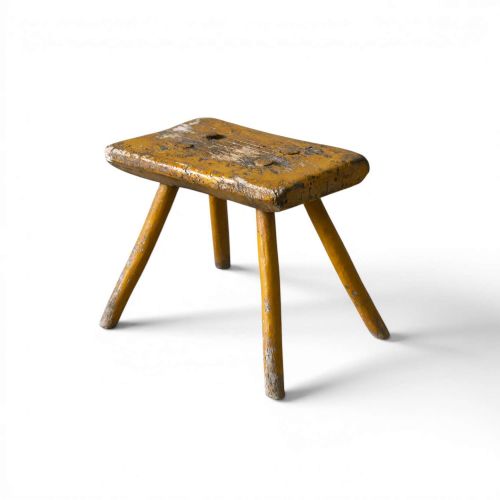
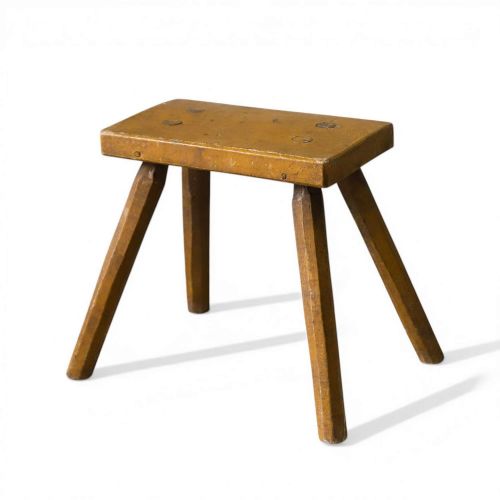
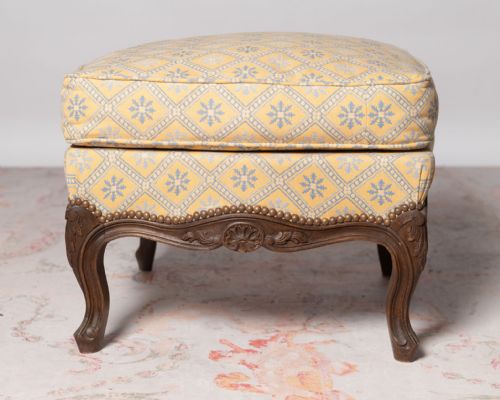
An antique yellow footstool encompasses a variety of low seating forms, ranging from country milking stools in original paint to polished walnut and mahogany dressing table stools. The selection includes Victorian upholstered frames, Edwardian long footstools, and rustic European examples featuring ochre or yellow paint.
Buyers will encounter formal pieces alongside country items, such as Chinese lacquered elm and Anglo-Indian ottoman coffee tables. These objects served diverse domestic functions, from resting feet beside a fire to seating at a dressing table.
How they were made
Timbers such as walnut, mahogany, rosewood, and elm form the structural frames of these stools, often shaped with turned legs or cabriole supports. Joinery methods reflect the period, uniting solid wood frames with traditional fixings and occasionally incorporating brass details.
Upholstered versions utilise materials like velvet, textile, and plain fabric over buttoned or padded tops. Painted examples preserve original finishes in ochre and yellow pigment, showing the hand application of historic surface coats.
Several rustic milking stools retain their original ochre paint from Eastern European farmsteads.
What varies in quality
Quality rests in the crispness of the carving upon the woodwork and the integrity of the timber framing. Finer examples display superior wood selection, such as figured mahogany or rosewood, coupled with balanced proportions.
The survival of original surface finishes, whether polished wood or authentic painted layers on country milking stools, dictates the character of the piece. Refined Victorian and Regency items depend on the precision of their joinery and upholstery execution.
The Antique Yellow Footstool Glossary
- Cabriole leg
- A furniture leg that curves out and then in, resembling an animal's leg. This form appears frequently on Victorian walnut frames.
- Ochre
- An earthy pigment producing a yellow or yellowish-brown colour. It is found on Eastern European milking stools in original paint.
- Ottoman
- A low upholstered seat or stool without a back or arms. Larger examples function as coffee tables in country house settings.
- Milking stool
- A simple three-legged wooden seat used for milking cattle. Rustic examples often retain their historic painted surface.
Antique Yellow Footstool: Frequently Asked Questions
How are antique footstools cleaned?
Dust wooden frames gently with a dry cloth to protect polished surfaces and historic paint finishes.
Vacuum upholstered textiles carefully with a soft brush attachment to remove surface dirt without pulling threads.
Can I use an antique footstool as a table?
Large upholstered ottomans and wide stools from the nineteenth century often serve as stable surfaces for trays or books.
Place a firm tray on top of the textile to prevent spills and protect the historic upholstery underneath.
What is the difference between a footstool and an ottoman?
Footstools are generally smaller items designed specifically for resting feet while seated in a chair.
Ottomans tend to be larger, sometimes functioning as independent low seats or coffee tables in larger rooms.
How do I date an antique footstool?
Examine the timber species, leg profiles, and construction methods to align the piece with documented periods like Regency or Victorian.
Check for secondary woods and upholstery tacks which offer clues regarding the manufacturing era of the frame.