



Antique Woolwork
Antique woolwork brings warmth and storied texture to interiors through intricate needle-stitched scenes crafted by past hands.
Antique Woolwork
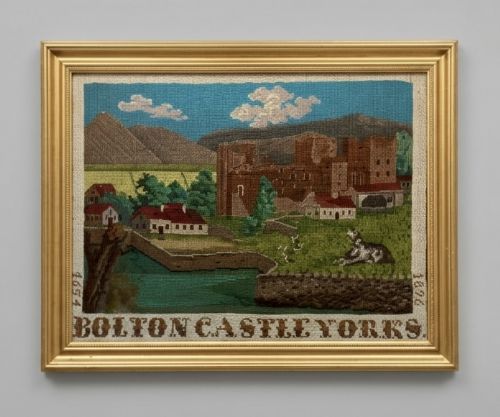
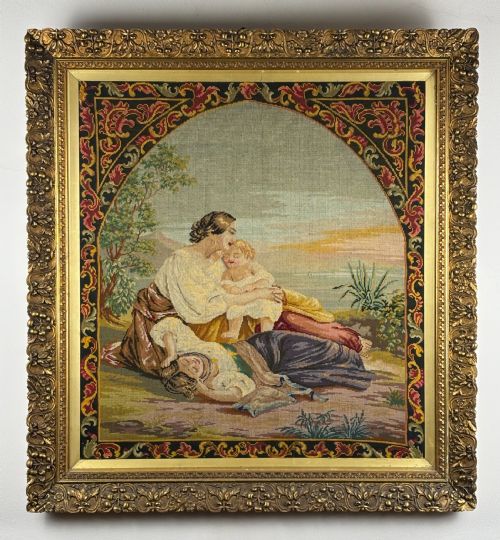
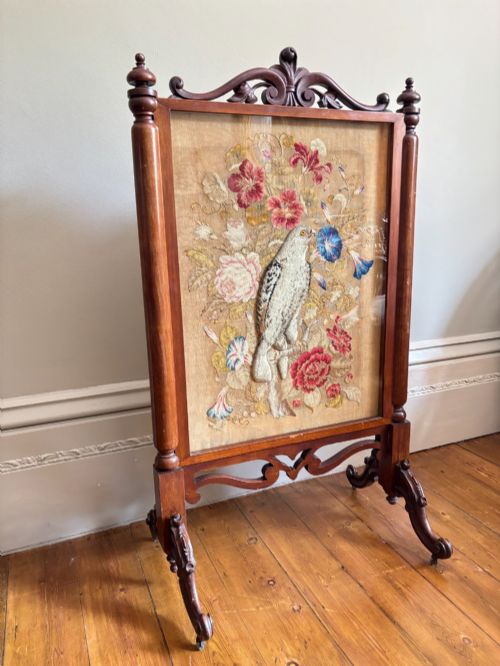
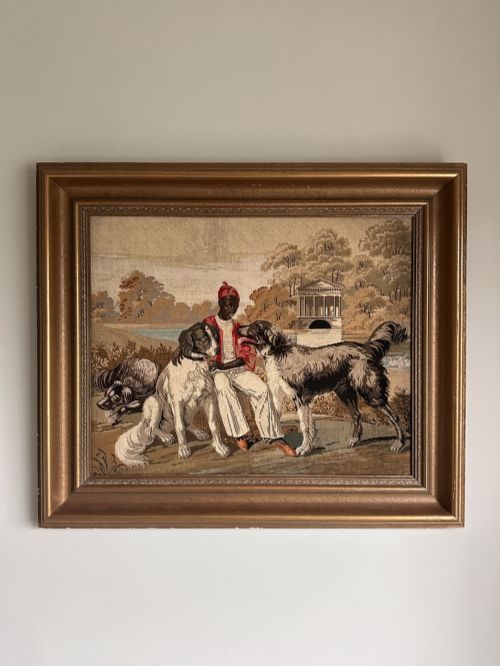
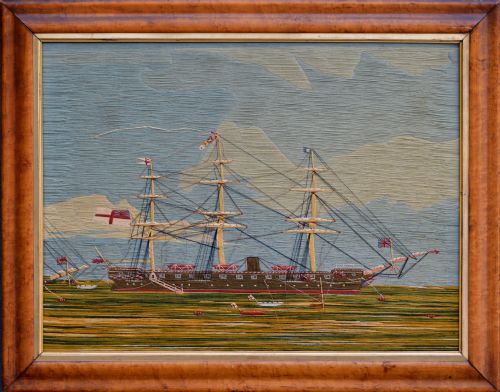
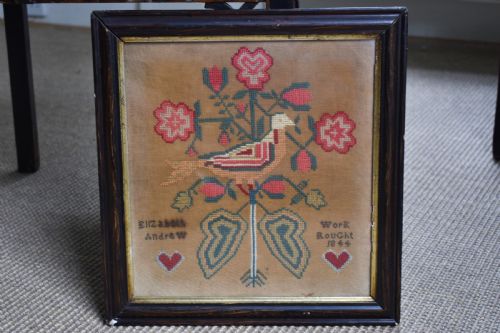
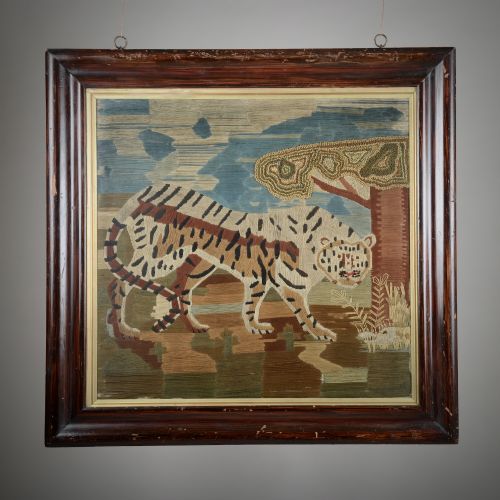
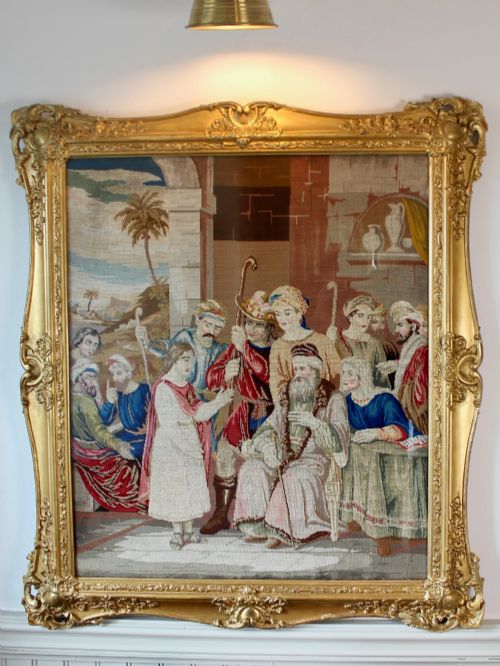
When you examine antique woolwork, you encounter framed wall art, fire screens, and textile pieces created across the nineteenth century. These needle-stitched works range from geometric samplers and religious depictions to pastoral scenes, portraits, and maritime folk art.
The most common examples on this page are Victorian framed woolwork pictures and Berlin work panels. Many arrive preserved in period frames made of mahogany, rosewood, burr maple, or giltwood, sometimes retaining original glass or Verre Églomisé surrounds.
Materials and construction
These pieces are constructed using wool, silk, and felt stitched onto a woven canvas foundation. Makers utilised various needlepoint techniques, including gros point, petit point, plushwork, and carpet mosaic methods, to build textured surfaces.
Finished textiles were stretched and housed within wooden frames of mahogany, oak, walnut, or giltwood, frequently protected behind glass to shield the delicate fibres from dust and light.
Antique Woolwork Retail Price Guide 2026
Typical asking prices for woolwork among the pieces listed under this phrase on Sellingantiques today, from the lower quarter to the upper quarter. They describe what is for sale here now, not the wider market.
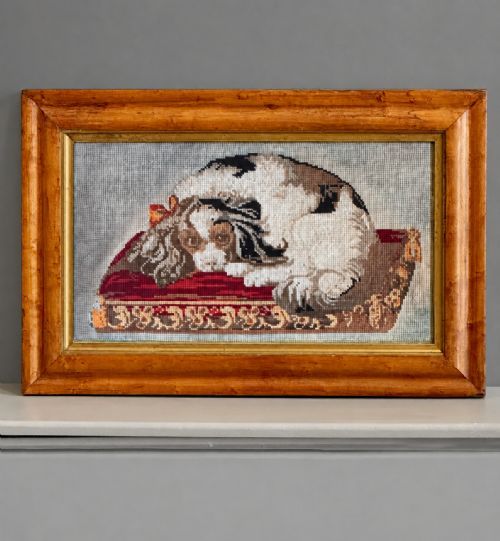
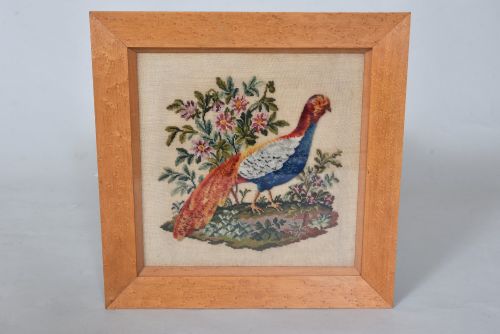
King Charles spaniels and stiffly rendered pheasants appear to watch over the room with permanent, woolly vigilance.
What separates the best examples
Quality in antique woolwork rests on the fineness of the stitchery and the complexity of the design. Pieces executed in detailed petit point display smoother tonal gradations and sharper facial expressions than coarser needlepoint works.
The choice of framing elevates certain pieces above standard examples. Original housing such as burr maple or Verre Églomisé glass surrounds indicates superior period preservation compared to later replacement frames.
The Antique Woolwork Glossary
- Berlin work
- A popular nineteenth-century style of needlepoint worked on canvas from printed, coloured grid patterns. It allowed domestic makers to create elaborate pictorial compositions.
- Gros point
- A coarse needlepoint stitch used for the background or main body of a tapestry. It creates a robust, textured surface.
- Plushwork
- A variant technique where loops of wool are cut to create a velvety, three-dimensional pile. It frequently highlights elements like animal coats.
- Verre Églomisé
- A process of applying design and gilding to the reverse side of glass. It provides a reflective, decorative border to period pictures.
Antique Woolwork: Frequently Asked Questions
How do I hang antique woolwork safely?
Keep textile pieces away from direct sunlight and damp walls to protect the wool fibres and canvas backing. Hang them securely using appropriate fixings suited to the weight of the wooden frame.
Ensure the room maintains a stable temperature to prevent the historic wood and glass from expanding or contracting excessively over time.
How do I clean antique woolwork?
Dust the glass and frame gently with a soft, dry cloth. Avoid applying water or chemical cleaners directly to the exposed textile surface.
Professional textile conservators should handle any deeper cleaning or structural repairs to prevent damage to the historic threads.
Are these pieces Victorian?
Many examples date from the Victorian era, spanning the nineteenth century and the early twentieth century. Styles range from Regency and Gothic Revival to Victorian folk art.
Examining the frame construction, canvas type, and framing materials helps determine the specific period of origin.