



Antique Wooden Wellington Chest
An antique wooden wellington chest is a tall, narrow set of drawers secured by a locking side pilaster, prized for storing papers or specimens in minimal floor space.
Antique Wooden Wellington Chest
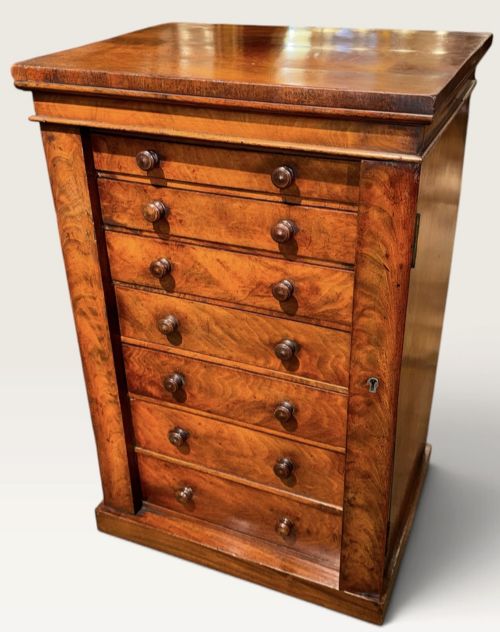
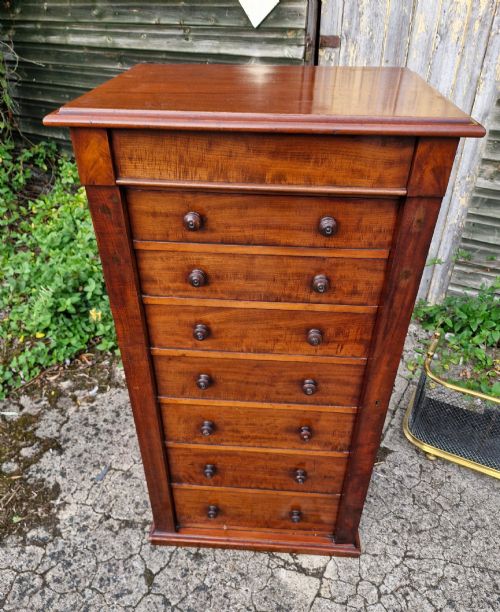
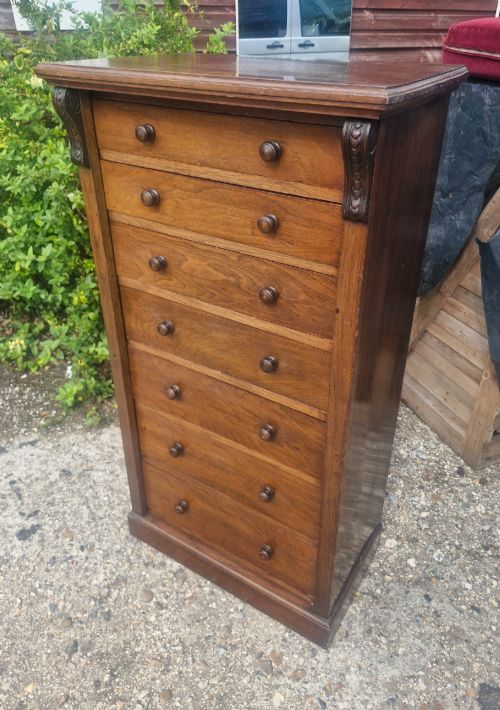
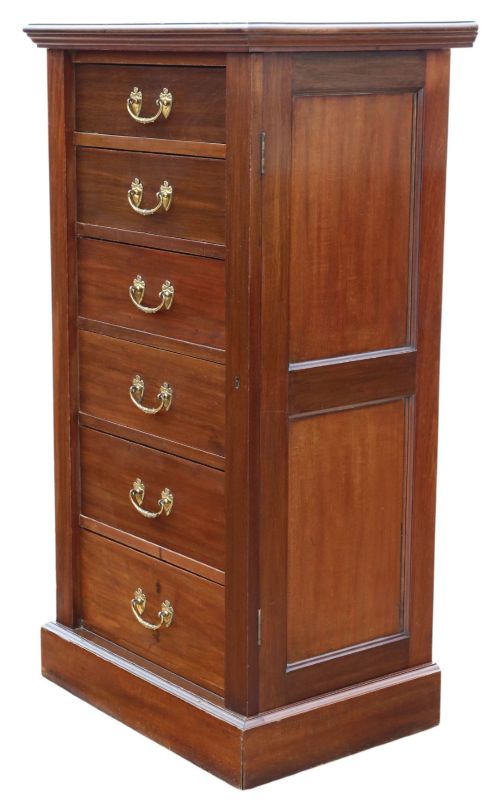
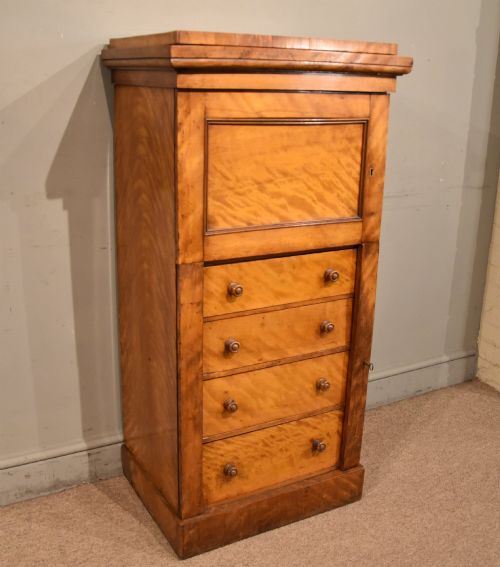
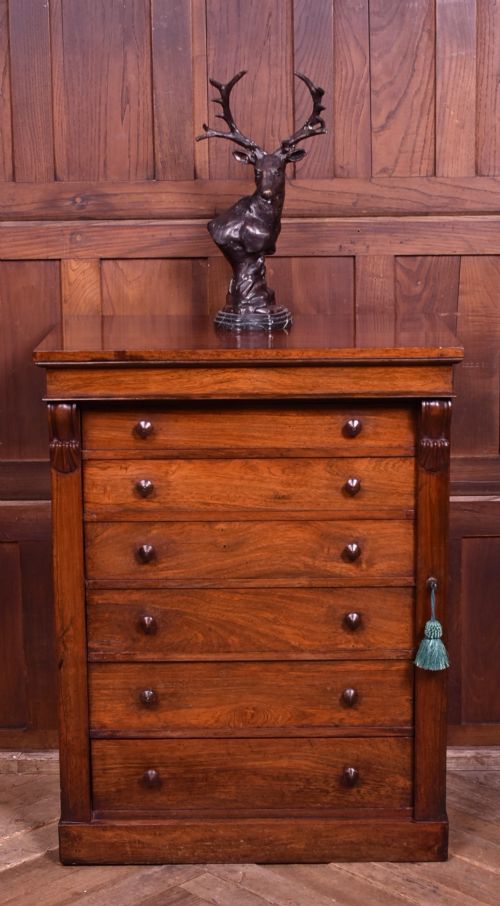
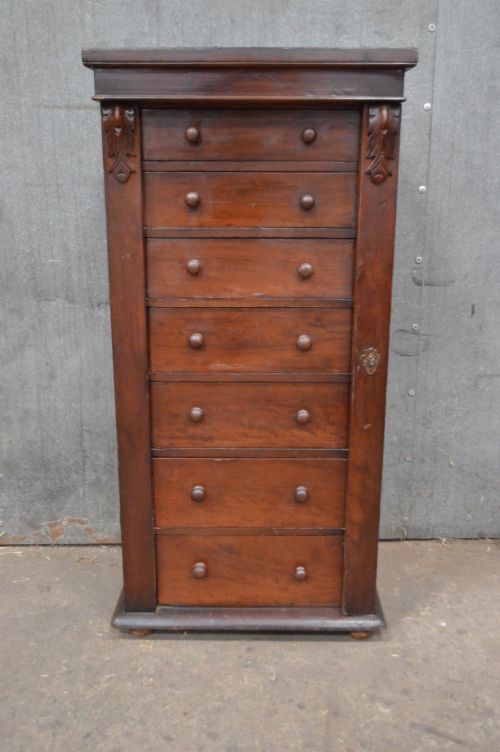
When searching for an antique wooden wellington chest, buyers encounter tall, slender case pieces typically fitted with six or seven graduated drawers. The defining characteristic is a hinged vertical locking stile on the right side that fastens over the drawer edges, secured by a small brass key.
Most examples appearing on this page originate from the Victorian and nineteenth-century periods, spanning the decades from Regency to late Victorian eras. Mahogany and walnut dominate the offerings, occasionally accompanied by burr walnut, rosewood, satin birch, and ash.
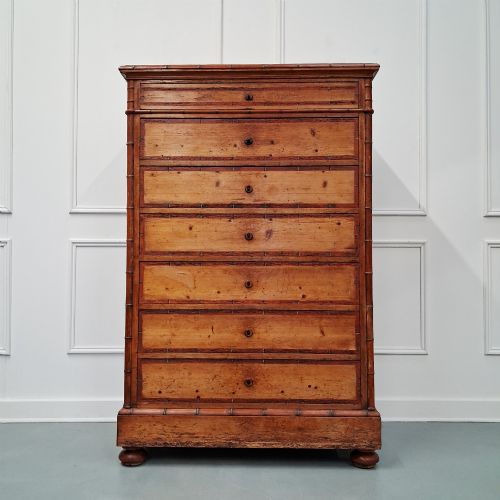
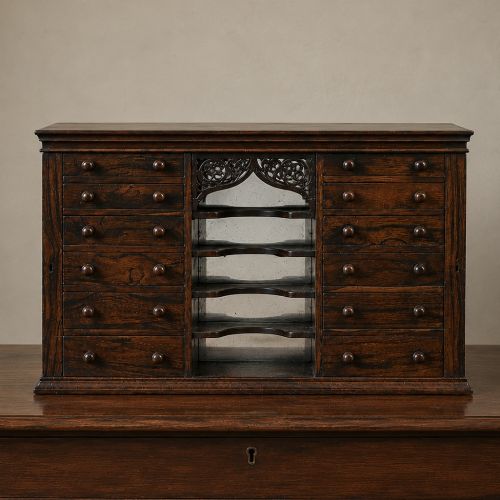
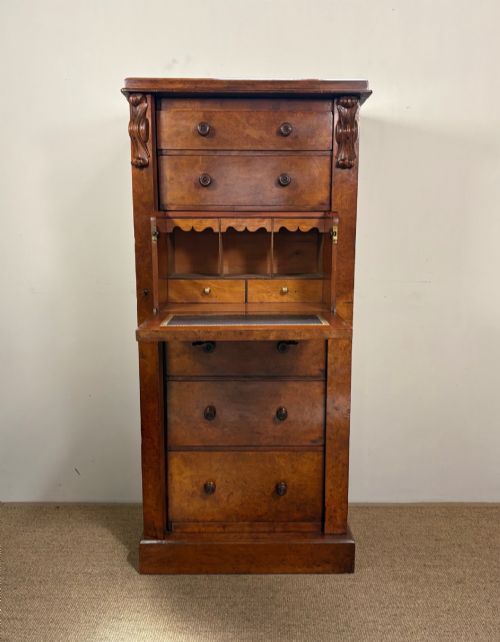
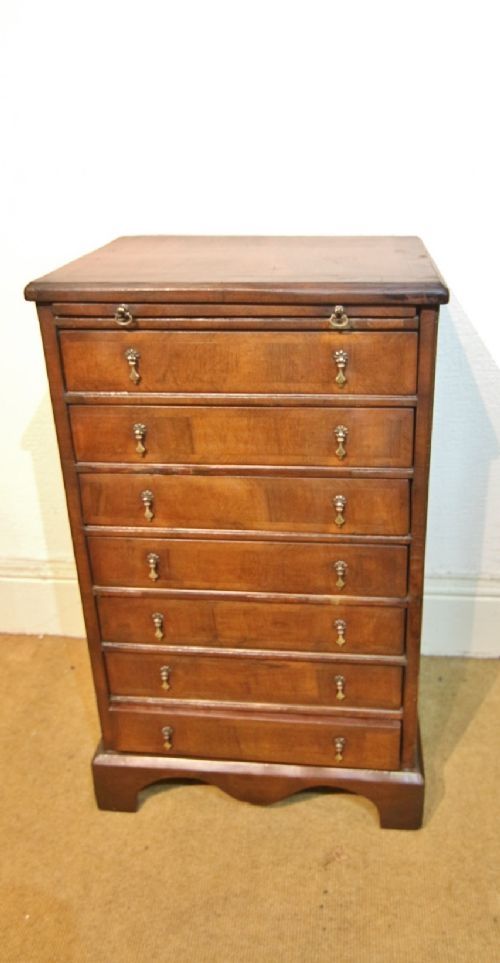
While the standard form stands tall with numerous narrow drawers, variations include bedside chests, miniature versions, secretaire compartments, and specialist collectors cabinets or specimen chests. These pieces offer substantial storage capacity while maintaining a remarkably compact footprint against a wall.
Materials and construction methods
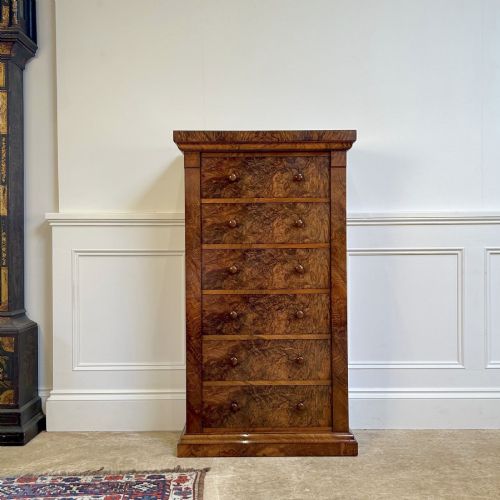
Cabinetmakers utilised dense timbers such as mahogany, walnut, and rosewood for the primary carcases, often selecting highly figured veneers for the drawer fronts. Burr walnut and satin birch were applied to create striking visual grain patterns across the front elevation.
The distinctive locking mechanism requires precise joinery, with a hinged wooden side pilaster that engages with rebates on the drawer sides when locked. This locking arm must be swung open before any drawer can be pulled out, demanding exact tolerances in the cabinet construction.
Antique Wooden Wellington Chest Retail Price Guide 2026
Typical asking prices for wooden wellington chest among the pieces listed under this phrase on Sellingantiques today, from the lower quarter to the upper quarter. They describe what is for sale here now, not the wider market.
Listings feature mahogany, walnut, burr walnut, rosewood, satin birch, and ash timbers across Victorian, Regency, and Edwardian periods.
Separating the ordinary from the exceptional
Quality rests significantly upon the choice of timber and the dexterity of the veneer work displayed on the drawer fronts. Highly figured burr walnut or well-matched mahogany grains elevate a piece far above plain timber carcases.
The precision of the locking mechanism and the survival of the original brass hardware and locking key distinguish superior examples. Smooth drawer operation and tight joints indicate expert nineteenth-century cabinetmaking.
Gillows·S. Mordan & Co·Gillows of Lancaster
The Antique Wooden Wellington Chest Glossary
- Wellington chest
- A tall, narrow chest of drawers featuring a locking side pilaster or stile. The design originates from the early nineteenth century.
- Pilaster
- A vertical architectural member projecting from the cabinet side to lock the drawers. It swings on hinges to release the drawer stack.
- Secretaire
- A desk drawer fitted with a drop-front writing surface and small interior compartments. This hybrid form appears within taller cabinet carcases.
- Specimen chest
- A specialised cabinet designed to hold natural history collections or small valuables in shallow drawers. These often feature dust-proof internal partitions.
Antique Wooden Wellington Chest: Frequently Asked Questions
What is a wellington chest?
A wellington chest is a tall, narrow set of drawers characterised by a hinged locking flap on one side. This wooden pilaster secures all the drawers simultaneously when locked with a key.
The design emerged in the early nineteenth century and became a staple of Victorian bedroom and study furniture. Its slender proportions make it ideal for rooms with limited wall space.
How do you open the drawers?
To open the drawers, you must first unlock and swing the right-side vertical locking bar outward. Once this side pilaster is moved, the individual drawers can be pulled out freely.
Closing the drawers requires returning them fully into the carcase before swinging the locking bar back into place and turning the key. This clever mechanism provided secure storage for valuables and documents.
What woods were used?
Cabinetmakers primarily built these chests using mahogany and walnut, frequently selecting timbers with rich grain patterns. Variations in the evidence also showcase rosewood, satin birch, ash, and burr walnut veneers.
Secondary woods such as oak or pine were typically employed for the interior drawer linings and carcase backs. The exterior timber choice dictated the overall tone and status of the piece.