








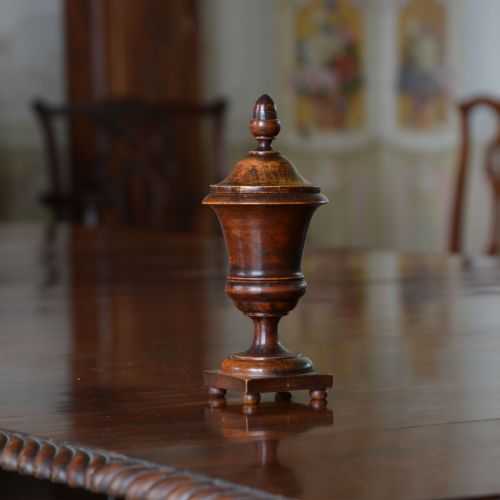
Antique Wooden Vase
These antique wooden vase selections bring carved warmth and turned grain into a room, offering tactile presence through centuries of domestic display.
Antique Wooden Vase
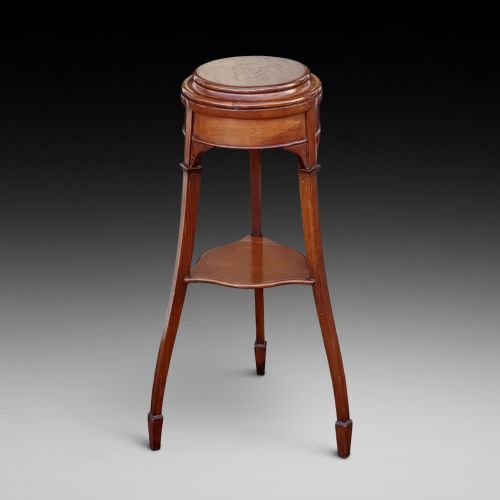
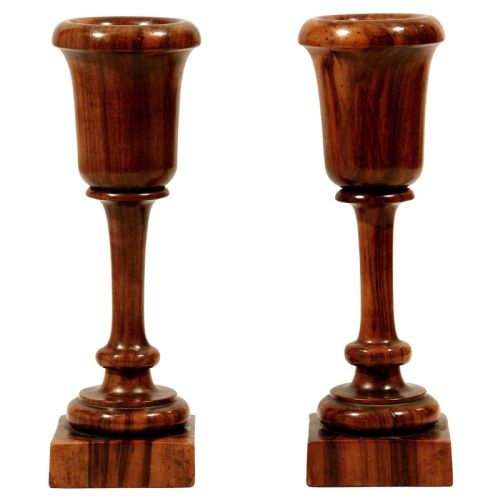
When hunting for an antique wooden vase, buyers encounter turned treen vessels, campana urns, and spill stems alongside larger carved display pieces. The items recorded here span the eighteenth and nineteenth centuries, taking forms such as fruitwood campana shapes, yew wood vessels, and turned lignum vitae stems. Plant stands and jardiniere supports also appear frequently alongside these hollow vessels.
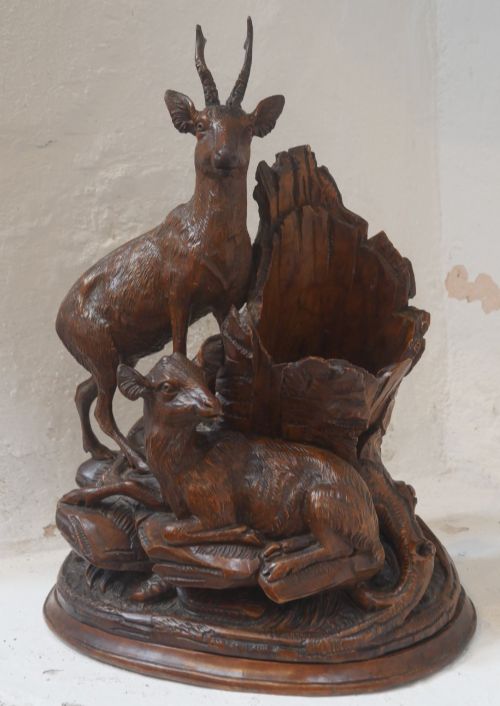
The material palette moves from native hardwoods like oak, walnut, and mahogany to dense exotics and treen formations. Pieces from the Georgian and Victorian eras dominate the selection, often showing simple turned profiles or deep carving associated with treen and Black Forest workshop traditions. These objects served utilitarian and decorative roles in period interiors, holding tapers, spills, or dried stems.
Materials and turning techniques
Wood selection dictated the weight and finish of each vessel, with turners utilising dense timbers like fruitwood, lignum vitae, yew, and walnut. These hardwoods allowed for sharp detailing on turned rims and slender stems without risking structural split during the shaping process.
Lathe work formed the primary method for hollow vessels and urns, creating symmetrical profiles through steady cutting and polishing. Carved surfaces relied on hand chisels, particularly in treen workshop output and plant stand production.
Antique Wooden Vase Retail Price Guide 2026
Typical asking prices for wooden vase among the pieces listed under this phrase on Sellingantiques today, from the lower quarter to the upper quarter. They describe what is for sale here now, not the wider market.
The recorded material range spans native British hardwoods like oak and walnut alongside dense exotics used in treen production.
Assessing quality in turned wood
Quality rests in the crispness of the turning and the proportional balance of the vessel's foot, body, and rim. Superior examples display clean tool marks and timber selection that highlights natural grain patterns without artificial staining.
The integrity of the timber surface defines longevity, where dry, unblemished wood with patination outperforms over-finished or heavily restored alternatives.
The Antique Wooden Vase Glossary
- Treen
- Small handmade wooden objects for domestic use. This term covers everything from carved bowls to spill vases turned on a lathe.
- Campana
- A bell-shaped vessel profile derived from classical pottery forms. It appears frequently in eighteenth-century fruitwood and mahogany urns.
- Spill vase
- A small container designed to hold wooden tapers used for lighting fires or candles. These often take slender turned forms in oak or lignum vitae.
- Lignum vitae
- A dense, heavy tropical hardwood used for turned treen and utilitarian items. Its natural oils give the turned surface a subtle lustre.
Antique Wooden Vase: Frequently Asked Questions
What is an antique wooden vase used for?
These vessels historically held dried stems, tapers, or spills beside domestic hearths and living spaces. Today they function as decorative objects that showcase period turning and timber patination.
Their scale suits mantelpieces, side tables, and cabinets where natural wood grain adds warmth to an interior.
How do I date an antique wooden vase?
Dating relies on timber species, tool marks left by the lathe, and stylistic cues from periods like the Georgian or Victorian eras. Examining the base and interior hollow reveals manufacturing methods typical of eighteenth or nineteenth-century workshops.
Wear patterns and surface finish also offer strong clues to the age of the piece.
Are wooden vases waterproof?
Most antique turned vessels and treen pieces were not sealed for standing water. Using them for fresh flowers requires a concealed glass or metal insert to protect the historic wood from moisture damage.
Dry display remains the safest method for preserving nineteenth-century and earlier wooden containers.
What is treen?
Treen encompasses small household objects carved or turned from wood. The category includes vases, bowls, boxes, and spill holders produced across centuries.
Collectors prize treen for its tactile quality and the evidence of regional turning techniques.