



Antique Wooden Tea Container
An antique wooden tea container holds the dry leaves securely, bringing tactile warmth and period craftsmanship to a modern room.
Antique Wooden Tea Container
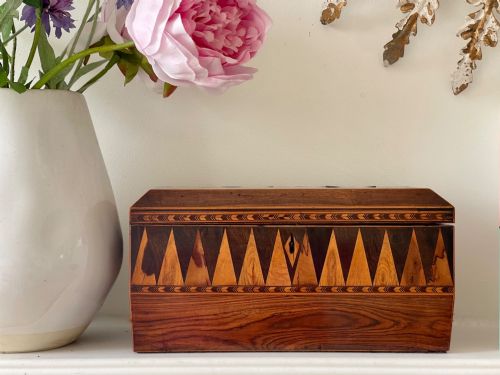
An antique wooden tea container, commonly catalogued as a tea caddy, teapoy, or tea and coffee caddy, is a small lidded box designed to store precious tea leaves safely away from damp air. Collectors encounter forms ranging from simple oval boxes to grand sarcophagus shapes and architectural chests dating from the eighteenth century through to the Victorian era.
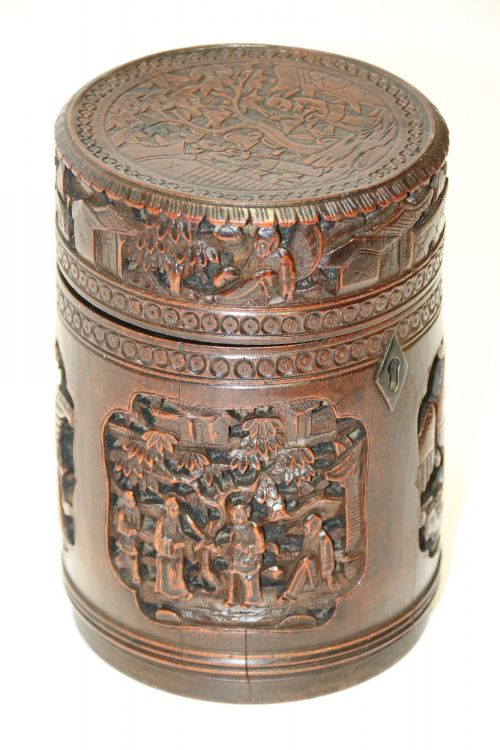
The pieces on this page span the Georgian, Regency, and Victorian periods, with materials extending beyond basic timber to include exotic veneers and bone inlay. Buyers meet examples originating from British workshops as well as carved Chinese bamboo work, showing how global trade influenced domestic habits across the nineteenth century.
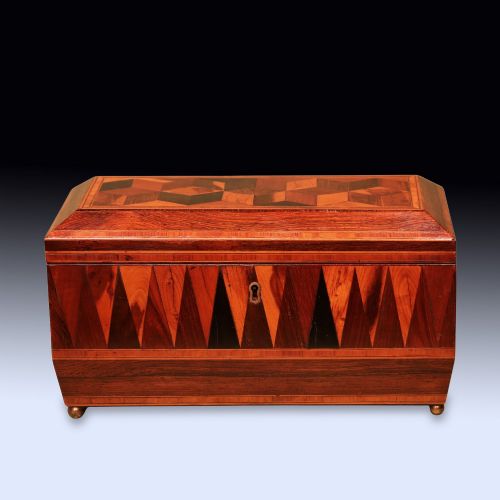
Makers shaped these containers as tea caddies, larger tea poys, or matched pairs for tea and coffee, utilising woods like mahogany, rosewood, walnut, and partridge-wood. Each item reflects the historical status of tea, serving as a functional luxury that sat upon the dining table or sideboard.
How they were made
Cabinetmakers constructed these containers using dense hardwoods such as mahogany, walnut, and rosewood, often applying decorative veneers like flame mahogany or intricate parquetry and Tunbridge Ware patterns. Boxwood stringing and bone details frequently provide crisp contrast against the darker body timbers.
Specialist techniques involved precise joinery to keep the interior compartments stable, alongside metalwork fitting for locks, hinges, and escutcheons in brass. Carved elements appear on Chinese bamboo pieces, whilst other workshops applied lacquer and gilt chinoiserie decoration during the Regency period.
Tea was once so valuable that boxes needed secure brass locks and keys to stop guests from helping themselves to the leaves.
What varies in quality
The refinement of the timber selection dictates much of the visual merit, distinguishing plain stock from richly figured flame mahogany, partridge-wood, or complex parquetry and Tunbridge Ware mosaics. Finer examples maintain crisp edges to their mouldings and intricate decorative inlays without excessive loss or replacement.
Interior completeness separates standard domestic boxes from superior examples that retain their original fitted mixing bowls, inner lids, and functioning brass locks with matching keys. The structural harmony of specialised forms like sarcophagus caddies or freestanding teapoys also marks the distinction between ordinary production and master craftsmanship.
Gillows
The Antique Wooden Tea Container Glossary
- Tea caddy
- A small box or container made to hold loose tea leaves securely. These vessels often feature internal lids or compartments.
- Teapoy
- A larger stand or heavy box for holding tea, frequently raised on a pillar and claw base or designed as an elaborate table caddy.
- Sarcophagus form
- A box shape featuring a domed or steep-sided profile resembling a classical stone coffin, popular for large Regency and Victorian caddies.
- Tunbridge Ware
- A type of decorative woodwork characterised by tiny mosaic tiles assembled from different coloured woods to create pictorial or geometric designs.
- Parquetry
- A geometric mosaic of wood pieces used for adorning surfaces, seen on Regency and nineteenth-century boxes.
Antique Wooden Tea Container: Frequently Asked Questions
How were tea caddies used?
Tea caddies were kept locked because tea was an expensive luxury commodity in the eighteenth and nineteenth centuries. The head of the household held the key and doled out the leaves for each pot.
Many examples feature internal compartments or mixing bowls where different varieties of black and green tea could be blended together before brewing.
How do I date a wooden tea container?
Dating relies on observing the prevailing style, timber choices, and construction methods characteristic of specific eras. Georgian pieces often display clean classical lines, whilst Regency examples favour sarcophagus shapes, brass feet, and bold rosewood veneers.
Victorian containers frequently introduce heavier proportions, ornate carving, or detailed mother-of-pearl and bone inlay alongside fitted interiors with glass mixing bowls.
How do I style a tea caddy at home?
Antique tea containers suit placement on sideboards, coffee tables, or open shelving where their rich wood grains and polished brass fittings add warmth. Their compact size makes them versatile display objects that bring historic character to modern interiors.
They also function practically for storing small modern items such as keys, jewellery, or trinkets inside their divided internal compartments.