


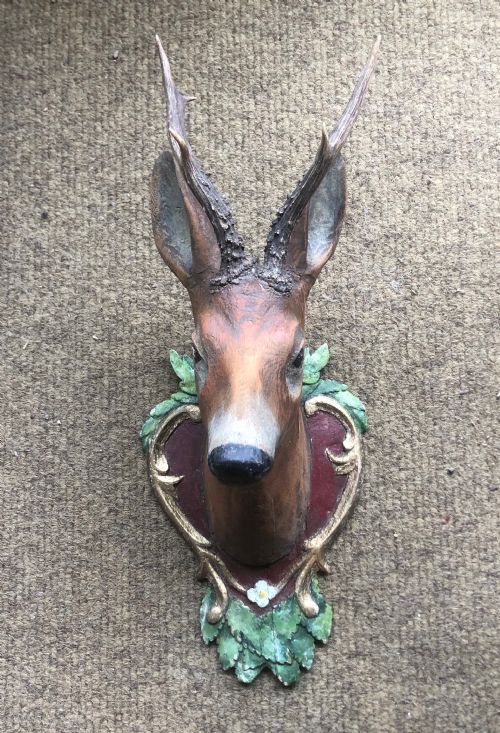


Antique Wooden Stag Head
These antique wooden stag head pieces bring rugged Highland character and Continental craft into a room, combining carved timber with real natural antlers.
Antique Wooden Stag Head
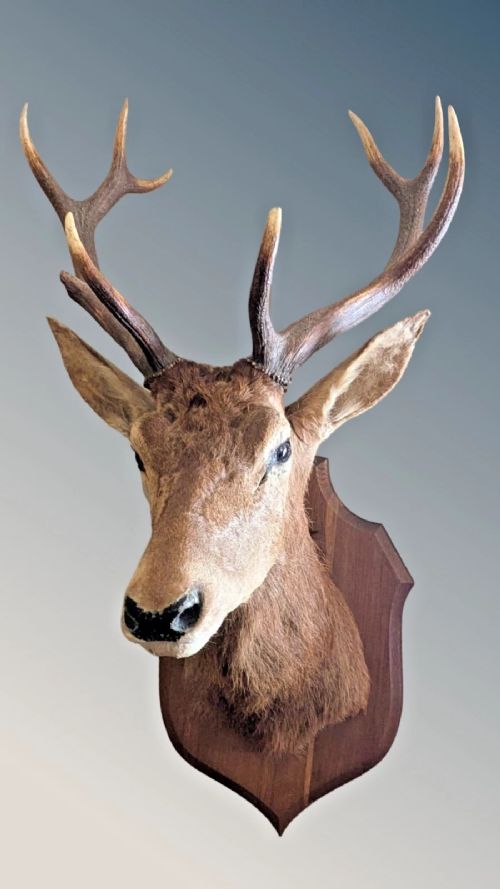
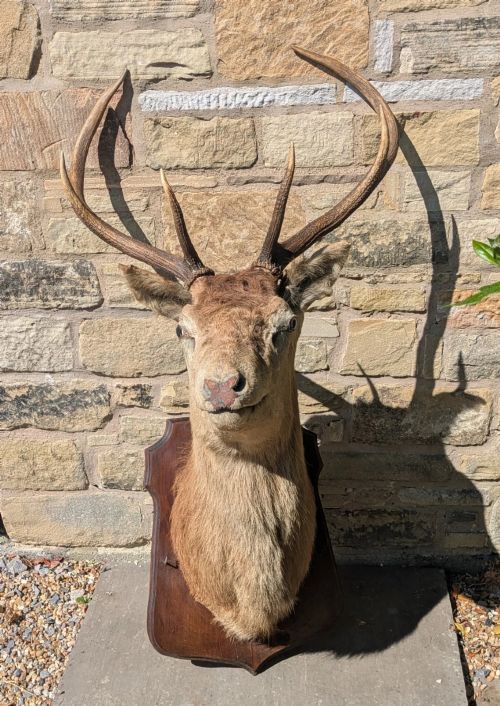
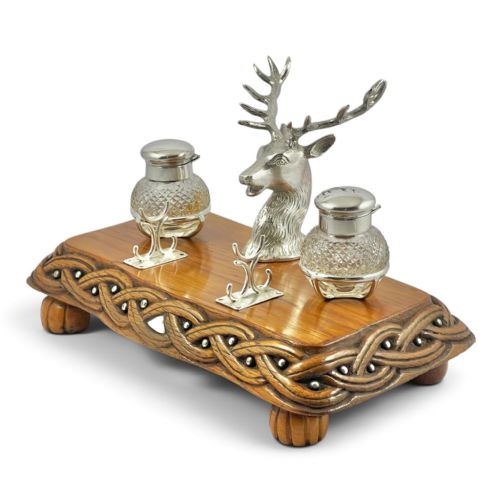
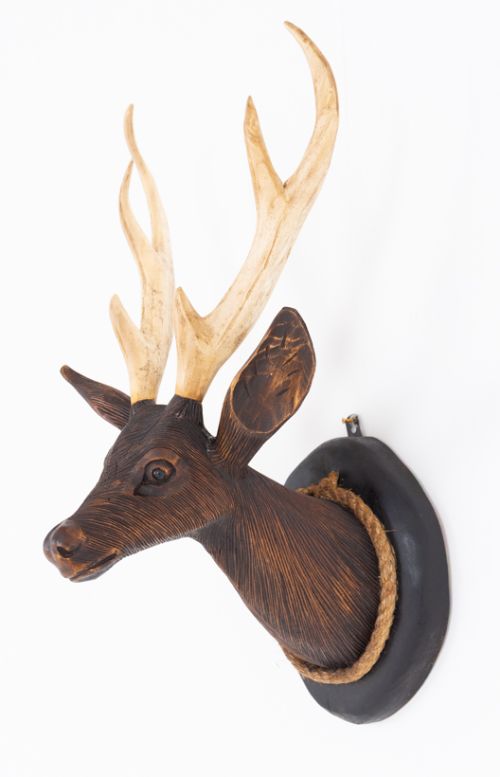
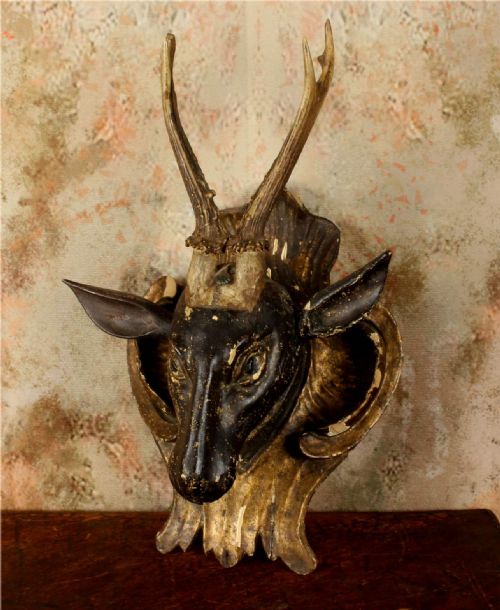
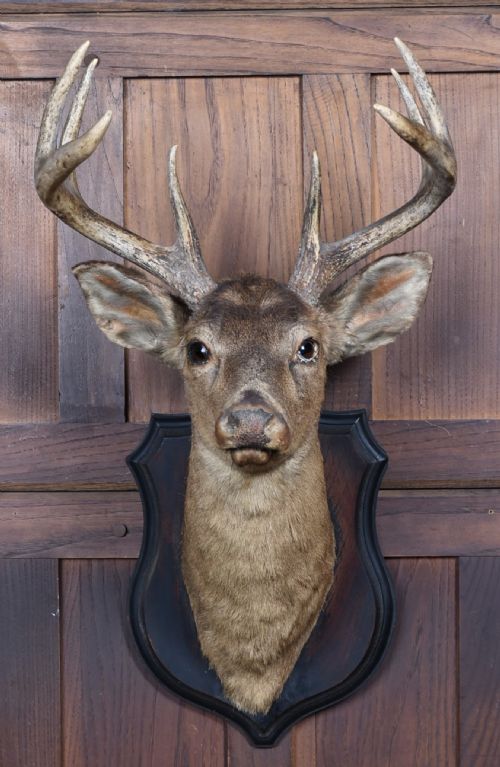
An antique wooden stag head combines carved timber shields or bodies with natural antler mounts, originating from periods such as the nineteenth century and the early twentieth century. Buyers seeking an antique wooden stag head encounter taxidermy mounts alongside carved wooden wall sculptures and Black Forest style carvings.
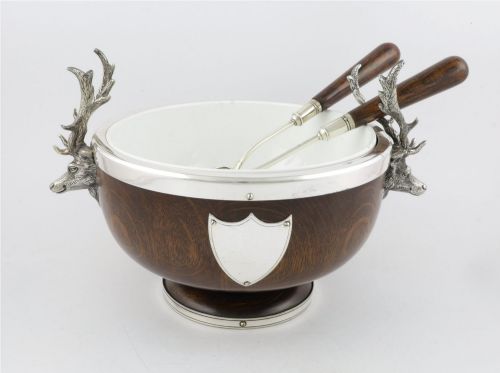
The objects span several distinct regional traditions, including Highland traditional pieces and continental Black Forest or folk art examples. Surviving items range from large red deer trophies to smaller carved walnut clock cases and inkstands incorporating bone, glass, and metal elements.
Victorian and Edwardian sporting rooms frequently utilised these mounted trophies to project a rustic aesthetic. Pieces on this page represent both British country house taxidermy and European carved wood ateliers from the 1880s to the 1930s.
How they were made
Many Black Forest items relied on layered pine or walnut, finished with dark wax to highlight deep relief carving around the animal's neck and ears. Folk art variants often incorporated painted surfaces, bone details, and inset glass eyes to complete the lifelike appearance of the stag.
Antique Wooden Stag Head Retail Price Guide 2026
Typical asking prices for wooden stag head among the pieces listed under this phrase on Sellingantiques today, from the lower quarter to the upper quarter. They describe what is for sale here now, not the wider market.
Listings feature items spanning the 1800s to the 1930s, utilising carved wood, natural antlers, oak, walnut, bone, paint, and glass.
What varies in quality
The anatomical accuracy of the carved wood and the symmetry of the natural antlers dictate the distinction between ordinary and superior specimens. Finer examples display meticulous attention to muscle structure, ear position, and the intricate texturing of the hair.
The integration between the carved wooden mount and the skull bone or antler base determines structural integrity. Master carvers achieved seamless transitions where wood and horn met, whereas lesser pieces show visible joins or mismatched proportions.
The Antique Wooden Stag Head Glossary
- Black Forest
- A nineteenth-century Swiss and German wood-carving style known for realistic depictions of animals and foliage, particularly stags and bears. These items often used walnut and featured deep relief work.
- Taxidermy mount
- The preserved skin and head of an animal fitted over a carved or moulded form, frequently mounted on a wooden shield for wall display. In this category, heads are paired with genuine antlers.
- Folk art
- Utilitarian or decorative objects created by self-taught or non-professional makers using traditional local techniques. These pieces often show idiosyncratic interpretations of natural subjects.
- Shield
- The wooden backplate, sometimes carved with oak leaves or Celtic motifs, upon which animal heads and antlers are secured for hanging. They provide both structural support and decorative framing.
Antique Wooden Stag Head: Frequently Asked Questions
How do I hang a heavy wooden stag head?
These pieces require secure fixing directly into wall studs or masonry using heavy-duty brackets suited to the weight of the timber and antlers. Given the leverage exerted by large antler spreads, professional installation ensures the wall can bear the load safely.
Position the mount at a height where the piece can be viewed from below, mimicking the natural elevation of a trophy displayed in a country house hall or library.
Are the antlers real?
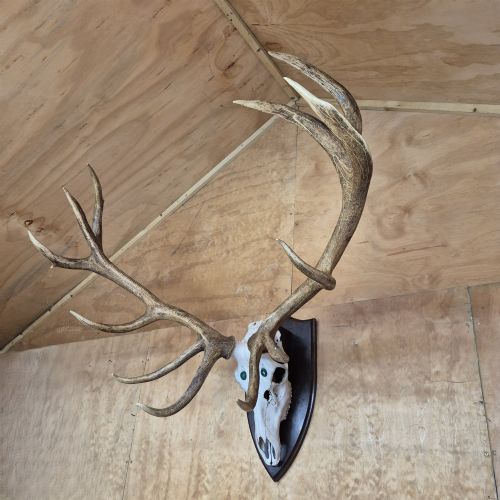
Most pieces combine genuine natural deer antlers with carved wooden heads or taxidermy mounts. Red deer and whitetail antlers were sourced from natural shedding or hunting trophies.
Examine the surface texture of the antlers for natural grain, small ridges, and organic irregularities that distinguish real horn from cast resin or carved wood.
How do I clean an antique wooden stag head?
Dust the carved wooden elements gently with a dry, soft-bristled brush or a microfibre cloth to remove surface particles. Avoid liquid cleaners, oils, or polishes, which can damage aged patinated wood and discolour natural bone or horn.
Keep the mount away from direct sunlight and strong heat sources to prevent the wood from splitting and the natural antlers from becoming brittle over time.
How do I tell Black Forest carvings from British pieces?
Black Forest pieces from the nineteenth and twentieth centuries typically employ rich walnut and feature deeply undercut foliage, oak leaves, and distinctively expressive animal faces. British Highland traditional items often rely on actual taxidermy mounts or simpler oak shields with Scottish silver or carved Celtic Revival details.
Examining the carving depth, wood species, and mounting hardware helps reveal whether a piece originated in a Swiss workshop or a British country estate.