



Antique Wooden Pole
These antique wooden pole pieces unite the clever mechanics of adjustable screens and support items with the warmth of period timber.
Antique Wooden Pole
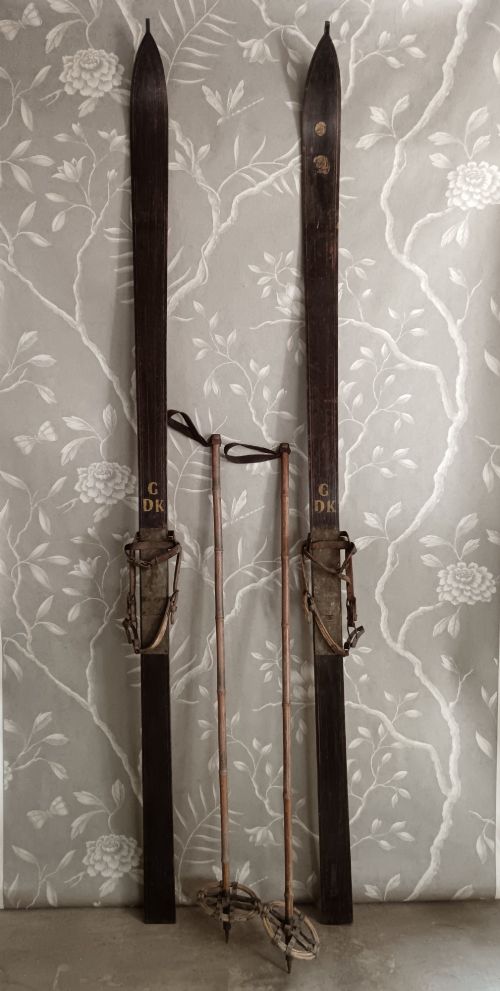
When you search for an antique wooden pole, you encounter items designed around a central vertical shaft, most commonly seen in adjustable firescreens, standard lamps, and sporting equipment like skis with bamboo poles. These objects span periods from the Georgian and Regency eras through to the early twentieth century, reflecting domestic and functional needs of past interiors.
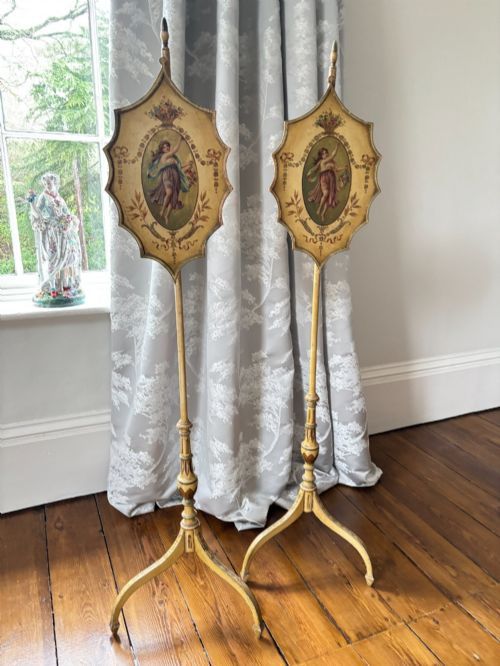
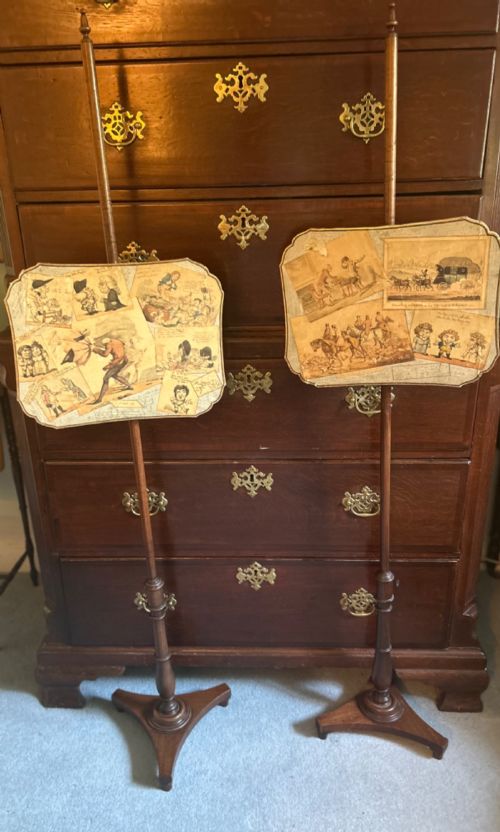
The most frequent examples on this page are pole screens, featuring upright wooden shafts that carry adjustable panels of needlepoint, embroidery, tapestry, or satirical prints. Alongside these, library steps and standard lamps utilise the vertical pole format to provide height and utility in period rooms.
Materials and construction
Cabinet makers utilised dense hardwoods such as mahogany, oak, rosewood, walnut, and satinwood to turn and shape the upright poles and supporting frames. These timbers were selected for their strength and ability to take a fine polish, ensuring the vertical shafts remained stable under the weight of adjustable screens or lamps.
Metal components in brass and gilt brass frequently accompany the timber, forming sliding mechanisms, finials, and conversion fittings. Additional details incorporate leather, fabric, and needlepoint panels held within the wooden frames to control heat or light.
Antique Wooden Pole Retail Price Guide 2026
Typical asking prices for wooden pole among the pieces listed under this phrase on Sellingantiques today, from the lower quarter to the upper quarter. They describe what is for sale here now, not the wider market.
Listings feature mahogany, oak, rosewood, walnut, and satinwood across periods from Georgian to the early twentieth century.
Assessing quality in pole pieces
The refinement of the turning on the wooden shaft and the precision of the sliding adjustment mechanism distinguish finer examples. Superior pieces display crisp carving, well-proportioned tripod or platform bases, and smoothly operating brass ratchets or thumbscrews.
The quality of the mounted panel, whether finely worked needlepoint, tapestry, or original poker work, dictates the visual merit of firescreens. Furthermore, items retaining their original hardware without later adaptations hold a distinct character compared to standard lamp conversions.
L.H. Hagen & Co
The Antique Wooden Pole Glossary
- Pole screen
- A firescreen featuring a vertical wooden pole that allows the protective panel to slide up and down to block radiant heat from a fireplace. The panel is typically mounted on a tripod base.
- Poker work
- A decorative technique using a heated metal point to burn designs into wood or leather. This method appears on adjustable panels within firescreens.
- Library steps
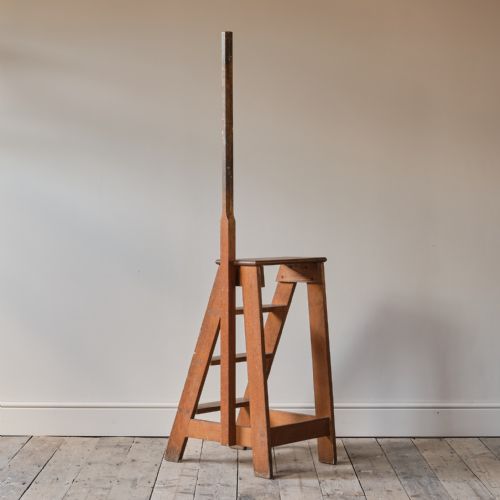
- A set of portable steps used to reach high bookshelves, sometimes incorporating pole-related vertical framing or sturdy timber construction.
- Standard lamp
- A tall floor lamp utilising a vertical wooden pole or standard to elevate the light source. Many examples originate from lamp conversions of earlier poles.
- Turn-of-the-century
- A chronological descriptor referring to the transition period around nineteen hundred, seen in items from the early twentieth century.
Antique Wooden Pole: Frequently Asked Questions
What is an antique wooden pole used for?
These items primarily served practical domestic purposes, such as protecting the face from fireplace heat using adjustable screens or providing elevated lighting through standard lamps.
Other variations include library steps for reaching high bookshelves and sporting equipment like skis paired with bamboo poles.
How do you adjust a pole screen?
A pole screen operates via a sliding collar or internal mechanism that grips the vertical wooden shaft. This allows the embroidered or printed panel to be raised or lowered to the desired height.
Users simply slide the panel along the pole, where friction holds it in place.
What woods were used for these poles?
Cabinet makers turned these vertical shafts from dense hardwoods including mahogany, oak, rosewood, walnut, and satinwood. These materials provided the necessary structural rigidity and weight at the base.
Brass components frequently complement the timber for fittings and adjustment mechanisms.
How do I date a pole screen?
Dating relies on the style of the base, such as Regency sabre legs or Georgian tripod supports, alongside the technique used on the panel. Needlepoint, tapestry, and satirical prints each align with distinct stylistic periods.
Construction methods and timber selection further help narrow down the decade of manufacture.