

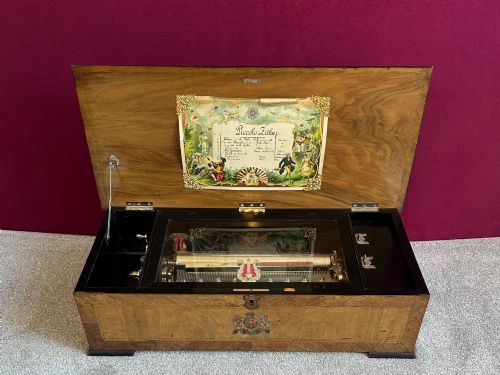


Antique Wooden Musical Chest
An antique wooden musical chest brings the mechanical parlour music of the nineteenth century straight into your room.
Antique Wooden Musical Chest
An antique wooden musical chest is primarily represented here by Victorian music boxes dating from the middle to the late nineteenth century. These pieces encompass Swiss mechanisms housed in wooden boxes, sometimes featuring bells in view or marquetry decoration. The examples span simple wooden cases to large formats playing multiple airs.
Most items you encounter belong to the Victorian period, with specific dates clustering around the eighteen seventies and eighteen eighties. Alongside standard wooden cases, certain variations include inlaid fruitwood, rosewood, and burr walnut construction. Nicole Freres appears among the listed makers, denoting Swiss cylinder box production.
How they were made
The construction relies heavily on dense hardwoods like rosewood, walnut, and burr walnut, frequently ornamented with marquetry or inlaid fruitwood details. Brass components form the internal gears and combs, while steel provides the tuned teeth that pluck the revolving cylinder pins.
Glass is incorporated into internal protective dust lids or casing windows to keep the mechanism visible. Ebonised wood also appears as a dark finish framing the primary timber surfaces of the chest.
Antique Wooden Musical Chest Retail Price Guide 2026
Typical asking prices for wooden musical chest among the pieces listed under this phrase on Sellingantiques today, from the lower quarter to the upper quarter. They describe what is for sale here now, not the wider market.
Some Victorian models include miniature brass bells in view, letting you watch tiny hammers bounce in time to the tune.
What varies in quality
Quality differences emerge in the complexity of the musical arrangement and the craftsmanship of the wooden enclosure. Boxes featuring twelve airs or visible bells demonstrate more elaborate manufacturing ambition than single-tune baseline models.
The choice of cabinet timber creates distinction, moving from plain wooden construction to figured burr walnut, rosewood, or detailed marquetry work. Internal engineering precision dictates how cleanly the steel teeth strike the brass cylinder pins.
Nicole Freres
The Antique Wooden Musical Chest Glossary
- Cylinder
- The rotating brass barrel set with tiny pins that dictate the tune by striking the tuned steel comb. This is the central mechanical driver of the music box.
- Comb
- The tuned steel plate with multiple teeth that vibrate when struck by the cylinder pins to produce notes. Each tooth is hand-tuned to a specific pitch.
- Air
- A single musical tune or melody played during one rotation of the pinned cylinder. Boxes are often described by how many airs they hold.
- Marquetry
- Decorative veneer work using various tinted wood pieces to form pictorial patterns on the lid or sides. This technique highlights the visual artistry of the wooden chest.
- Ebonised
- Wood treated with a dark finish to mimic expensive ebony. It provides a sharp visual contrast against lighter inlay work.
Antique Wooden Musical Chest: Frequently Asked Questions
How do I wind a musical chest?
Most nineteenth-century boxes use an internal spring mechanism wound via a side lever or a key inserted into the case exterior. Turn the winding mechanism smoothly until you feel firm resistance, avoiding forced over-winding.
Once wound, release the stop-start lever to let the cylinder revolve and the comb play the pinned tunes.
What is an eight air box?
An eight air box contains a pinned cylinder programmed to play eight distinct musical melodies in sequence before the cycle repeats. The cylinder shifts laterally after each rotation to engage a fresh set of pins.
Boxes with more airs require longer cylinders and more complex internal pin placement.
Where were these music boxes made?
The majority of these musical chests originate from Swiss workshops, which dominated precision mechanical music production during the Victorian era. Switzerland was the global centre for cylinder box manufacturing and export.
These imported movements were then housed in decorative wooden cases fashioned from walnut, rosewood, or fruitwood.
How should I clean the wooden case?
Dust the exterior wooden surfaces gently with a dry, soft cloth to prevent particle buildup on the rosewood or walnut grain. Avoid commercial liquid polishes or moisture, which can damage delicate marquetry and fruitwood inlay.
Keep the internal brass and steel mechanism free from household oils and professional intervention unless handled by a specialist.