

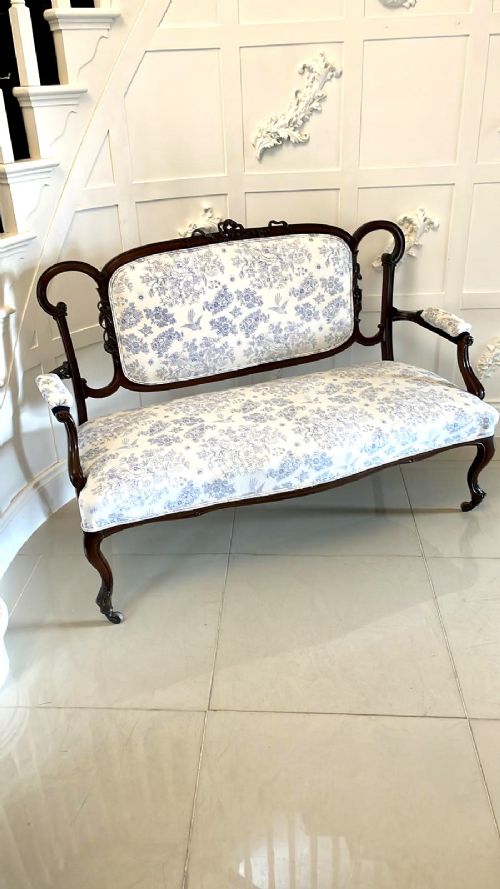
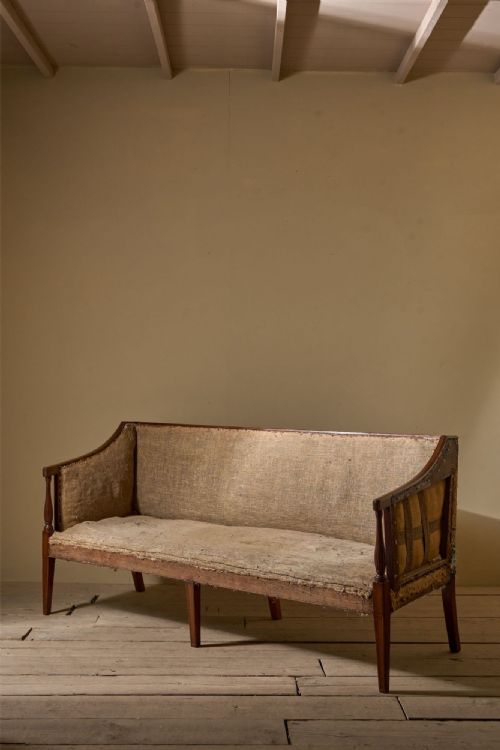

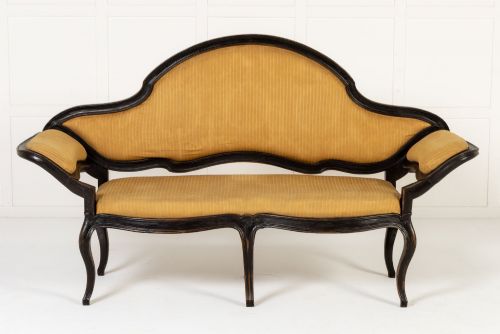


Antique Wooden Frame Settee
An antique wooden frame settee brings centuries of craftsmanship into a room, offering a functional seat with distinct period character.
Antique Wooden Frame Settee
The selection on this page relies heavily on nineteenth-century and eighteenth-century pieces, alongside Edwardian and early twentieth-century variations. Common forms include country house sofas, salon settees, and hall seat sofas.
Most pieces show traditional timber frames paired with fabric, leather, or hessian upholstery. These seating options served formal reception rooms and grand hallways alike.
Materials and construction methods
Cabinet makers utilised hardwoods such as mahogany, walnut, and satinwood to build sturdy structural frames. Many of these timbers received carved details, giltwood finishes, or ebonised treatments.
Upholstery materials combined traditional stuffing techniques with textiles like patterned fabric, leather, and hessian support webbing. Brass accents occasionally appeared on castors or decorative mounts.
Antique Wooden Frame Settee Retail Price Guide 2026
Typical asking prices for wooden frame settee among the pieces listed under this phrase on Sellingantiques today, from the lower quarter to the upper quarter. They describe what is for sale here now, not the wider market.
Common structural forms include salon settees, country house sofas, and hall seats with upholstered or cane panels.
Factors of construction and design
The calibre of timber carving and the precision of joinery separate standard examples from finer commissions. Sharp detail in carved foliage or moulded frames indicates skilled handwork by period artisans.
The integrity of the structural timber and the retention of original surface patination influence the standing of each piece. Frames that maintain their original finish without excessive alteration preserve their historical context.
The Antique Wooden Frame Settee Glossary
- Ebonised wood
- Timber treated to imitate ebony through a dark staining or painting process. This finish was popular across various nineteenth-century seating designs.
- Giltwood
- Wood coated with a thin layer of gold leaf or gilt pigment. It frequently appears on formal salon and French-style frames.
- Show frame
- A wooden structure left exposed around the upholstered sections of a sofa or settee. It highlights the timber grain and carved decoration.
- Scroll-end
- An arm design curving outward in a tight scroll formation. This silhouette defines many Regency and nineteenth-century seating pieces.
Antique Wooden Frame Settee: Frequently Asked Questions
How do I date an antique wooden frame settee?
Dating relies on stylistic markers, timber choices, and construction methods characteristic of specific periods like the Georgian era or Victorian times.
Comparing the carved motifs and frame shapes to documented examples from the same decade clarifies the timeline.
Where should I place a settee in my home?
These settees fit well in living rooms, large hallways, or bedrooms where the exposed wooden frame remains visible.
Positioning the piece away from direct heat sources protects the antique timber and upholstery fabrics from premature drying.
Can I use a settee for daily seating?
Most antique wooden frame settees support regular sitting, provided the internal webbing and joints remain stable.
Pieces designated for re-upholstery require professional restoration of the interior support before heavy daily use.
What is a hall seat sofa?
A hall seat sofa is a narrower or firmer seating form historically placed in entrance halls rather than private parlours.
These pieces often feature minimal upholstery and pronounced wooden frames designed to handle transitional traffic.