
Antique Wooden Chiffonier Cabinet
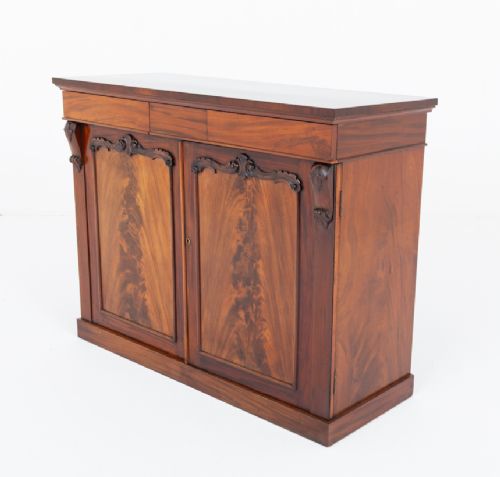
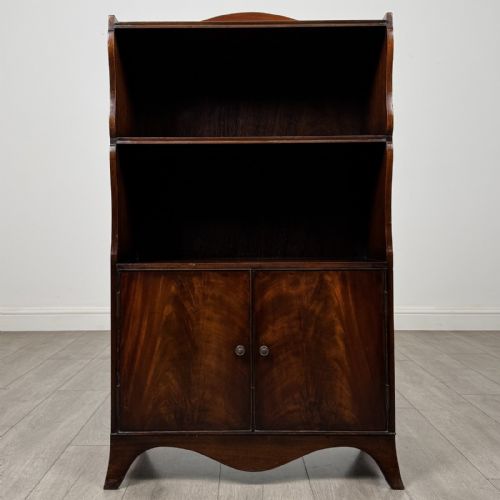
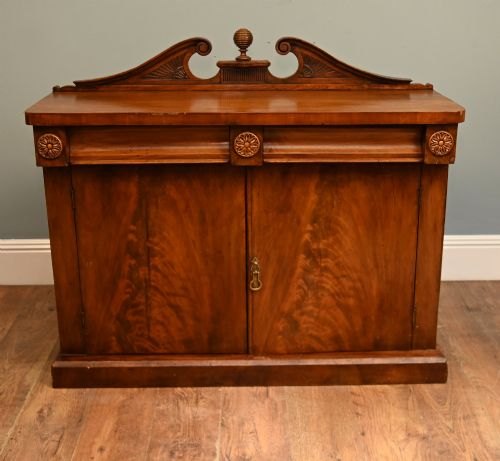
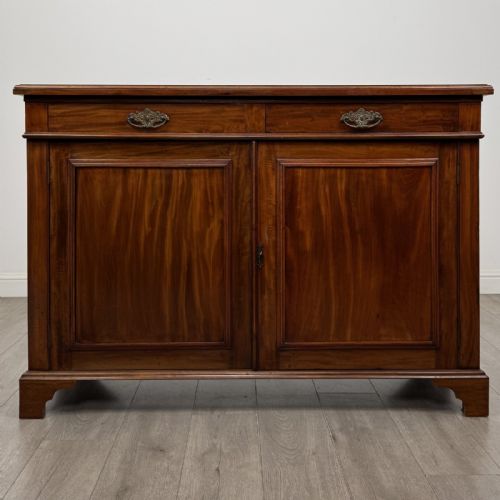
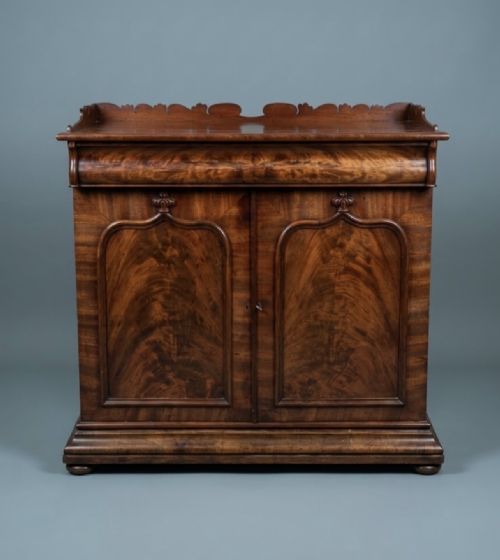
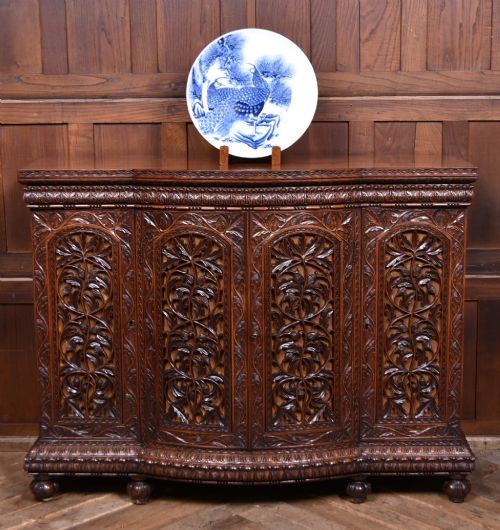
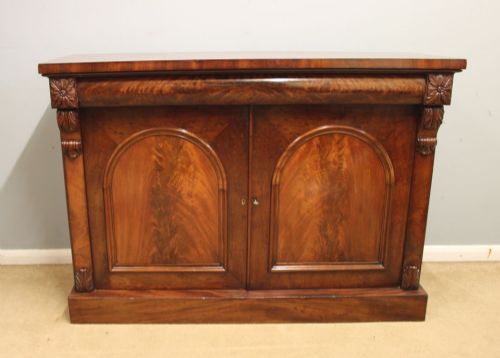
An antique wooden chiffonier cabinet offers enclosed lower storage and display shelving, bringing disciplined timber craftsmanship to a dining room or parlour.
Antique Wooden Chiffonier Cabinet
The search phrase antique wooden chiffonier cabinet encompasses low sideboards, enclosed cupboards, and tiered server units designed for nineteenth-century domestic interiors. Buyers encounter numerous mahogany and rosewood examples from the Regency, William IV, and Victorian periods.
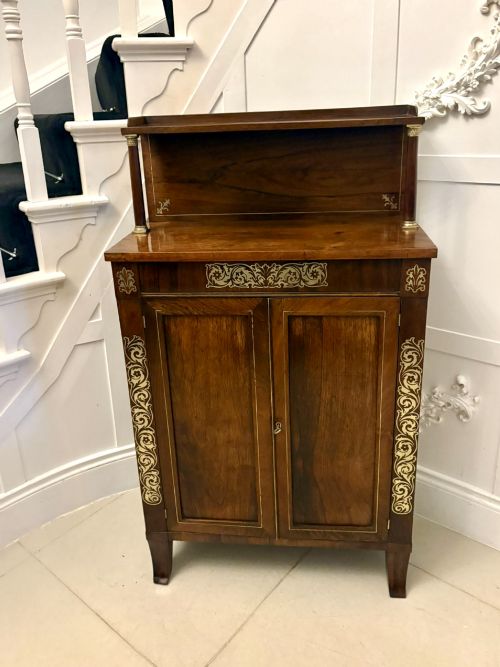
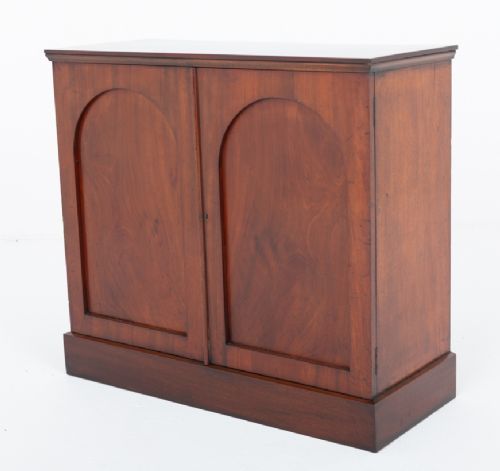
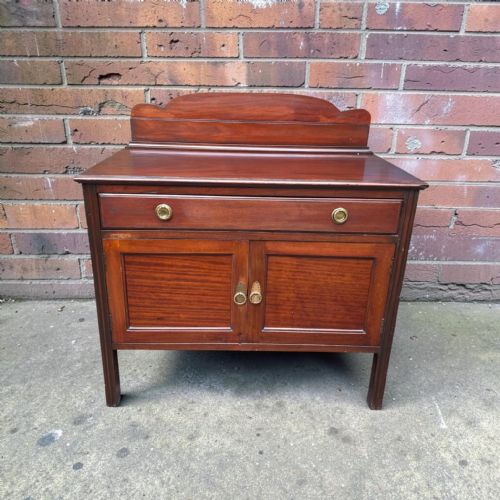
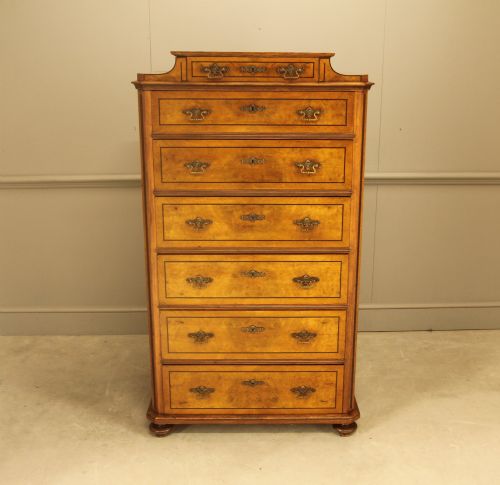
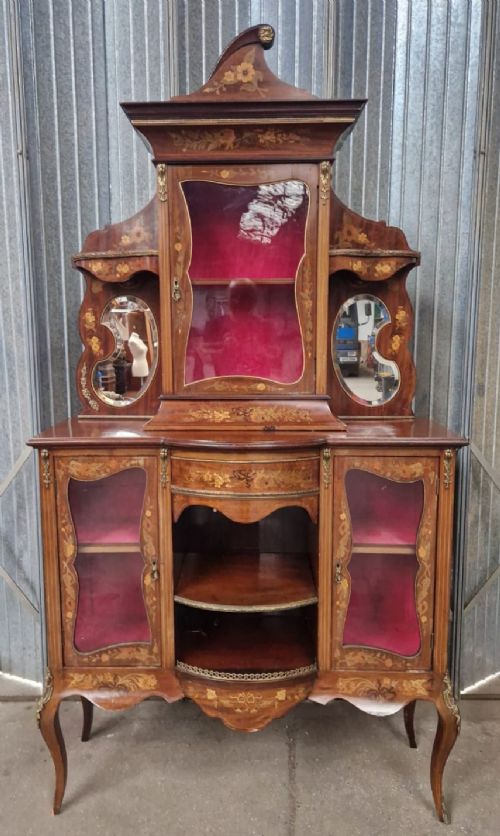
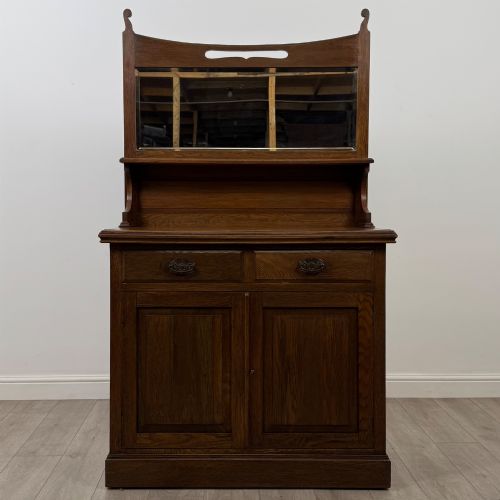
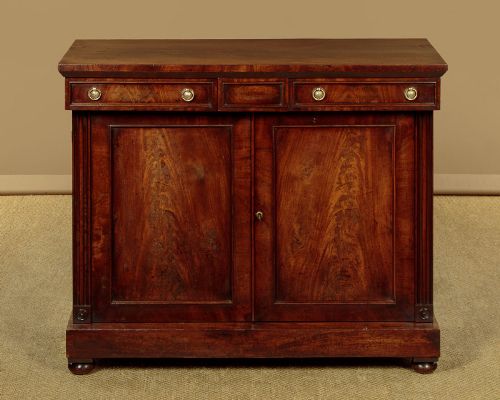
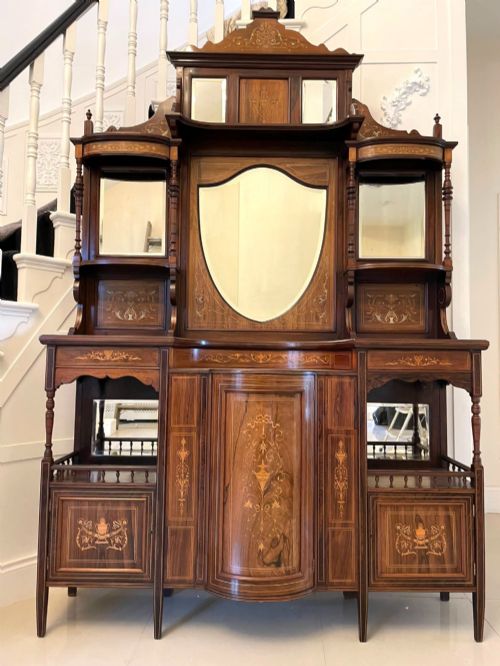
Most pieces combine a lower cabinet enclosed by panelled doors with an upper tier or raised shelf supported by turned columns. Variants range from plain Georgian low cupboards to ornate Victorian rosewood pieces featuring brass inlay and mirror backs.
Materials and construction methods
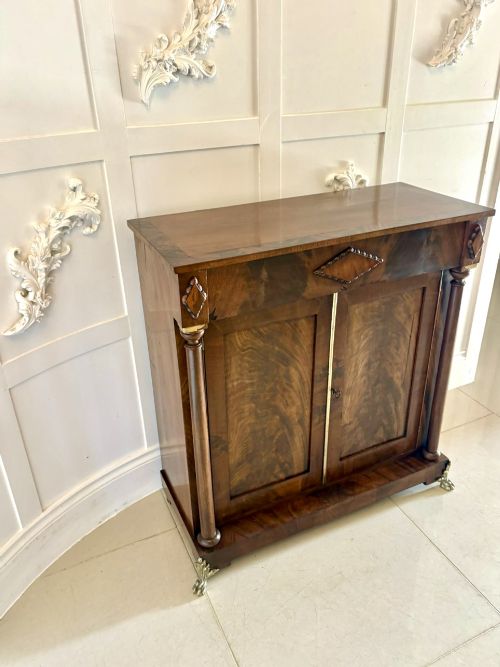
Cabinetmakers utilised dense native and exotic hardwoods, frequently applying flame mahogany veneer, burr walnut, and rosewood over secondary timbers to achieve striking grain patterns. Structural integrity relied on traditional joinery, dovetail drawers, and solid brass fittings.
Surface ornamentation often incorporated intricate brass marquetry inlay, delicate stringing, and turned wooden supports. Polish and wax finishes were hand-rubbed to protect the timber while accentuating the natural figure of the wood.
Some nineteenth-century makers secreted clever secret drawers behind column capitals, giving startled owners a hidden spot for small valuables.
Assessing cabinet quality
Superior examples display exceptional selection of figured veneer matched symmetrically across the door panels and drawer fronts. The crispness of carved mouldings and the precision of brass inlay differentiate workshop output.
Original hardware, sound internal shelving, and stability in the tiered superstructure indicate careful preservation. Lesser pieces show mismatched timber selections or replacement components that alter the historical profile.
Gillows
The Antique Wooden Chiffonier Cabinet Glossary
- Chiffonier
- A low sideboard or cabinet featuring an enclosed lower section, often topped with a shelf superstructure. It evolved during the nineteenth century to serve dining and drawing rooms.
- Flame mahogany
- A veneer cut from the branch junction of the mahogany tree, producing a distinctive flickering flame pattern. Cabinetmakers prized this timber for principal display surfaces.
- Marquetry
- The art of applying decorative pieces of wood, brass, or other materials to a structure to form geometric or floral designs. Regency pieces frequently employ brass inlay.
- Superstructure
- The raised shelving or mirror tier mounted above the main cabinet body on columns. This feature distinguishes many chiffoniers from standard low cupboards.
- Goncalo Alves
- A dense exotic hardwood with distinctive contrasting grain markings, utilised in high-status Regency cabinets. It provides a striking alternative to traditional mahogany.
Antique Wooden Chiffonier Cabinet: Frequently Asked Questions
What is a chiffonier used for?
These cabinets served primarily to store dining porcelain, glassware, and silver while providing a surface for serving food or displaying decorative items. The lower doors kept everyday items concealed.
In modern rooms, they function well as sideboards, media consoles, or hallway storage pieces that anchor a space without dominating the floor area.
How do I date a chiffonier?
Dating relies on stylistic markers, timber choice, and construction techniques visible in the cabinetwork. Regency and William IV pieces tend to feature bold mahogany veneers and brass inlay, whilst Victorian examples often incorporate mirror backs and heavier mouldings.
Examining the drawer linings and internal fixings provides further evidence of the manufacturing period, distinguishing early nineteenth-century work from later Victorian revivals.
Are chiffoniers and sideboards different?
A chiffonier is generally smaller and more compact than a traditional sideboard, frequently incorporating a raised shelf or bookcase tier at the back. They were designed for smaller formal rooms.
While both offer enclosed cupboard storage, the chiffonier places greater emphasis on display space through its upper galleries and tiered architecture.
Where should I place a chiffonier?
These pieces suit dining rooms, living spaces, and wide hallways where a shallow profile allows them to sit comfortably against a wall. Their low height prevents them from overwhelming smaller rooms.
Pairing the top surface with a mirror or artwork creates a balanced focal point in a traditional or eclectic interior.