

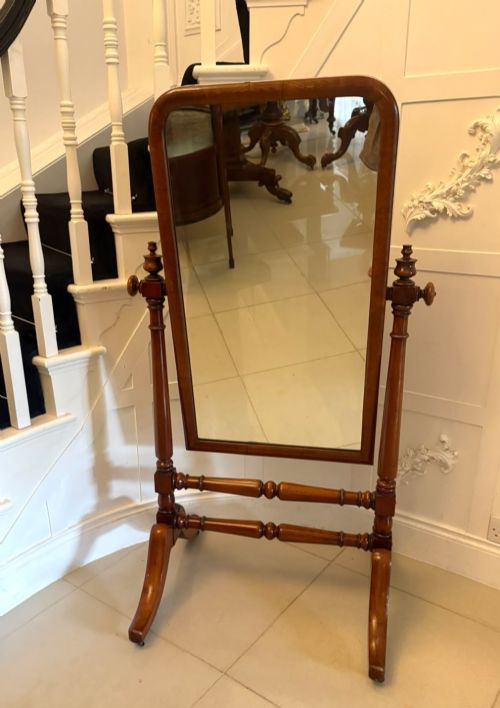
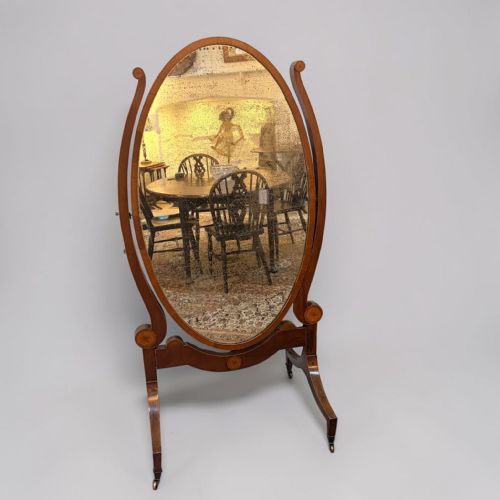
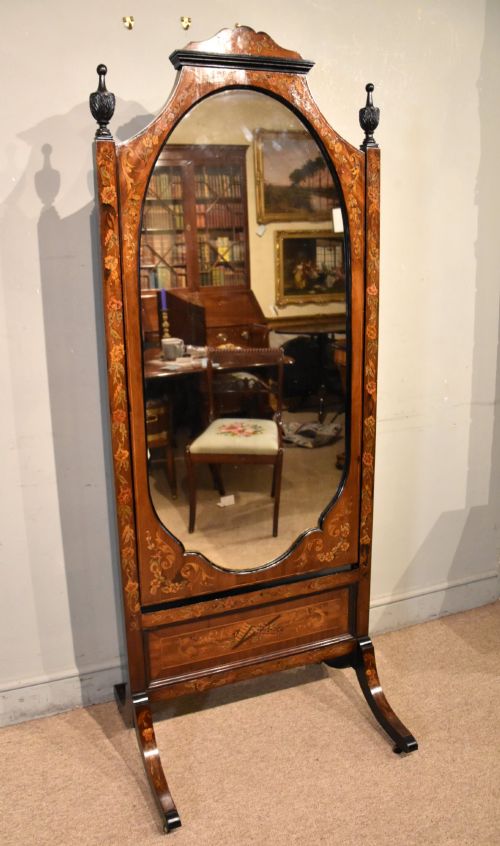
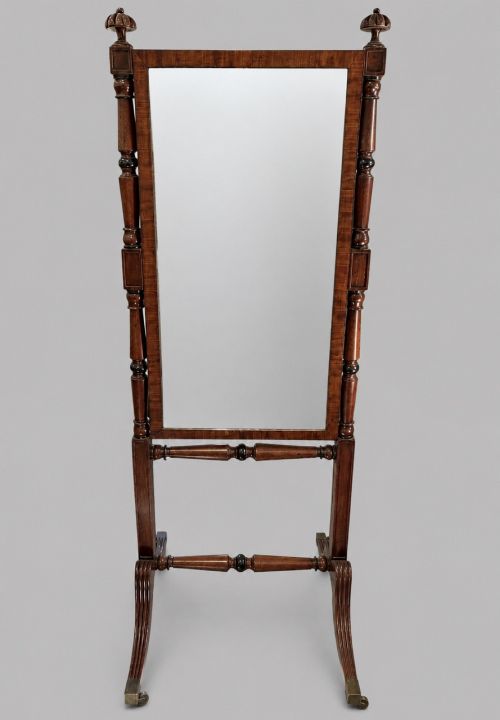
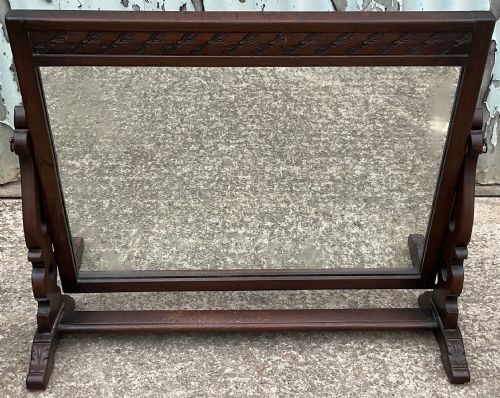


Antique Wooden Cheval Glass
An antique wooden cheval glass brings a grand, full-length presence to a room, offering both practical reflection and traditional craftsmanship.
Antique Wooden Cheval Glass
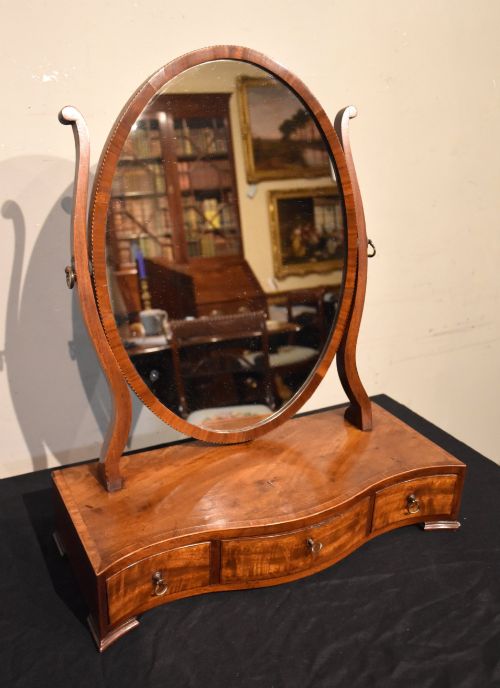
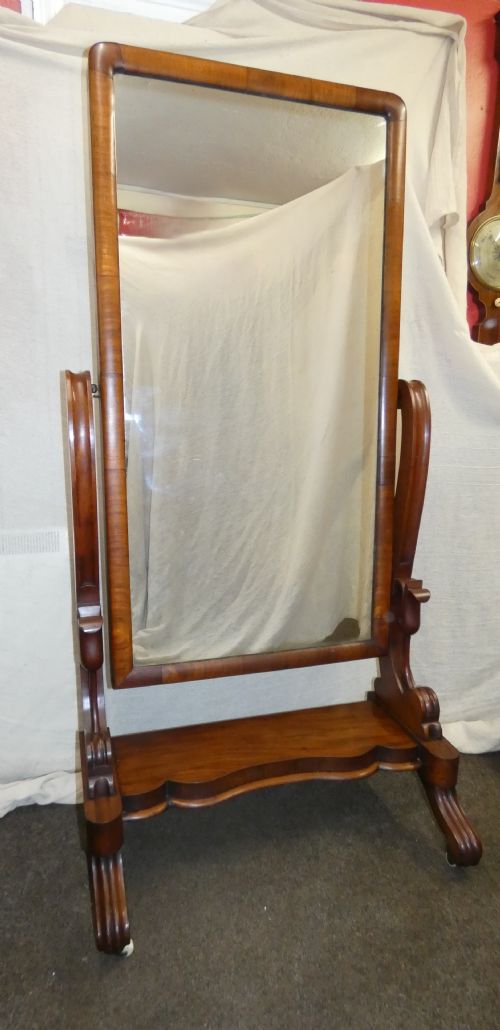
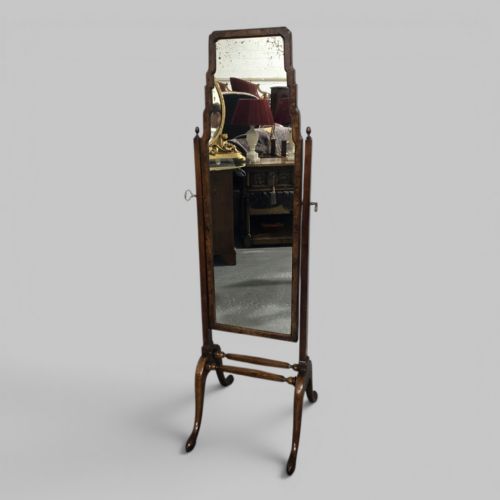
An antique wooden cheval glass is a freestanding, full-length floor mirror mounted within a pivoted wooden frame, designed for dressing and grooming. When searching for an antique wooden cheval glass, buyers encounter various forms ranging from tall floor-standing frames to smaller table-top dressing mirrors.
Most examples found on this page date from the nineteenth century, reflecting the Victorian and Regency preference for substantial bedroom furniture. These pieces combine functional mirror glass with decorative woodwork designed to anchor a traditional interior scheme.
How they were made
Cabinetmakers constructed these frames using solid hardwoods like mahogany, walnut, and oak, often applying veneers and marquetry inlay for decorative contrast. Timber selection dictated the structural stability required to support heavy pivoting mirror plates.
Brass fittings, including adjustable pivots, brackets, and candle sconces on early examples, facilitated the movement of the glass. The mirrors themselves utilise traditional silvered glass held securely within rebated wooden frames.
One listed Art Deco cheval dressing mirror originates directly from a gents outfitters.
What varies in quality
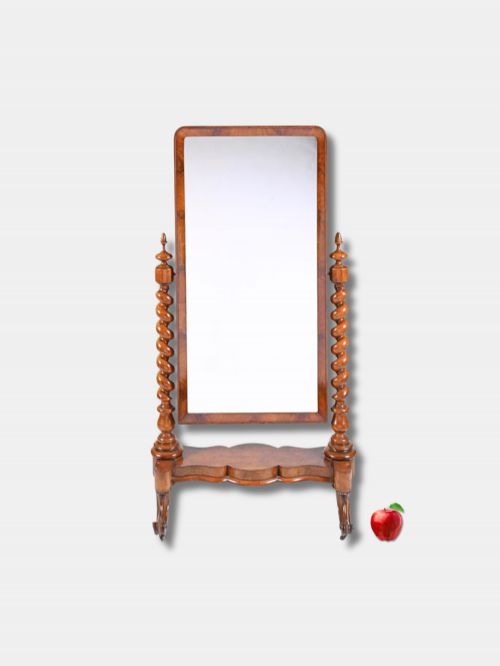
Quality reveals itself in the choice of timber and the precision of the joinery within the frame and support pillars. Finer examples utilise dense flame mahogany or figured walnut with meticulous attention paid to carved details such as barley twist columns.
The mechanism of the pivots determines how securely the mirror holds its angle during daily use. Superior pieces employ well-engineered brass hardware that allows smooth adjustment without sagging.
Gillows
The Antique Wooden Cheval Glass Glossary
- Cheval glass
- A tall, freestanding mirror mounted in a frame with pivots that allow it to swing. This design originated in France and became popular in English bedrooms during the Georgian period.
- Serpentine front
- A furniture front curved with a convex centre flanked by concave ends. This contour appears on the base boxes of finer dressing mirrors.
- Barley twist
- A carved wooden support shaped in a helical screw pattern. This decorative turning style is frequently seen on Victorian mirror uprights.
- Toilet mirror
- A smaller mirror designed to sit on a dressing table or chest of drawers. These often feature small drawers incorporated into the base plinth.
- Marquetry inlay
- Decorative patterns formed by inserting thin pieces of contrasting wood into a solid wood surface. This technique highlights the panel work on selected Edwardian and Victorian frames.
Antique Wooden Cheval Glass: Frequently Asked Questions
What is a cheval glass?
A cheval glass is a full-length mirror held within a freestanding wooden frame on pivots. This allows the user to tilt the glass to various angles.
The word cheval derives from the French for horse, referring to the four-legged frame or trestle supports typical of early designs.
Where were these mirrors placed?
These mirrors stood in bedrooms and dressing rooms to provide a full view of an outfit. They offered nobility and the wealthy a practical tool for daily attire.
Because they are freestanding, they required no permanent wall mounting and could be repositioned around the room to catch the light.
How do I date a mirror?
Dating relies on timber choices, construction methods, and stylistic details associated with periods like Regency or Victorian. Mahogany was prevalent in earlier centuries, while oak and walnut appear across multiple eras.
Turned supports, brass hardware, and inlay styles also provide clear chronological markers for identification.
How do I care for the wood?
Maintenance involves keeping the timber nourished with appropriate wax polishes and avoiding direct sunlight. Excessive heat can dry out old veneers and cause cracking.
Hardware requires gentle cleaning to preserve the natural patina of the brass components without abrasive materials.