
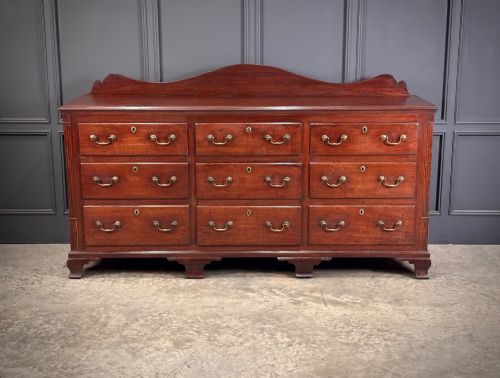
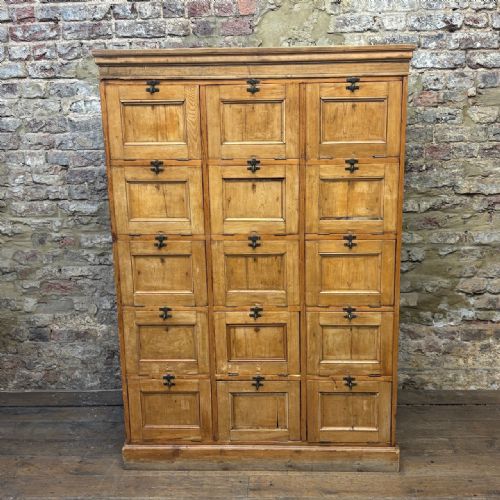
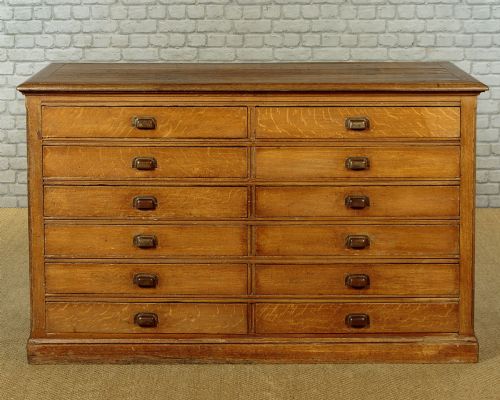
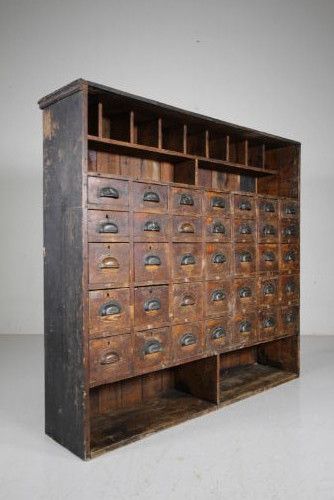


Antique Wooden Bank Drawers
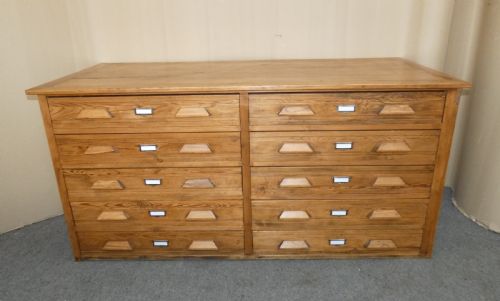
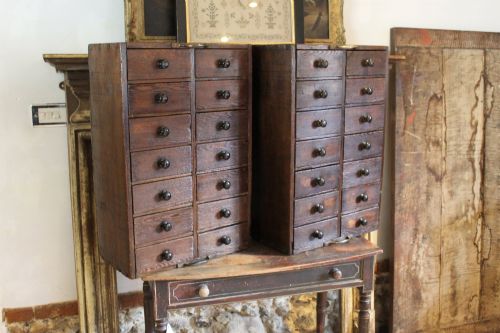
Antique wooden bank drawers are multizoned storage units originating from commercial and institutional life, prized today for their dense configuration and rich timber patination.

Antique Wooden Bank Drawers
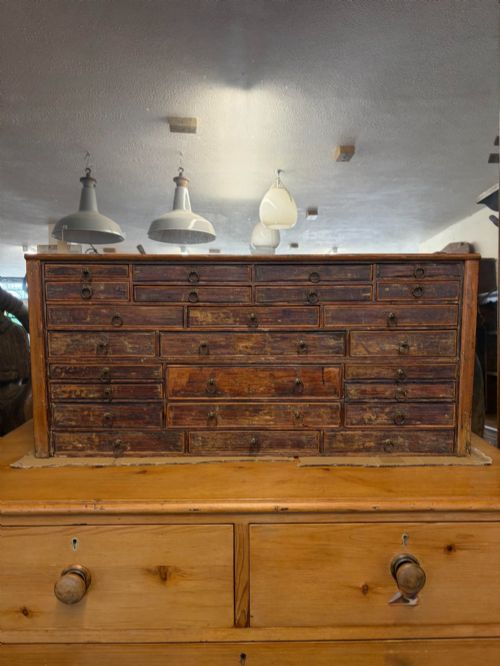
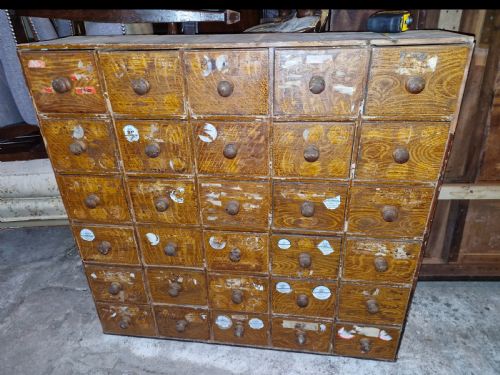
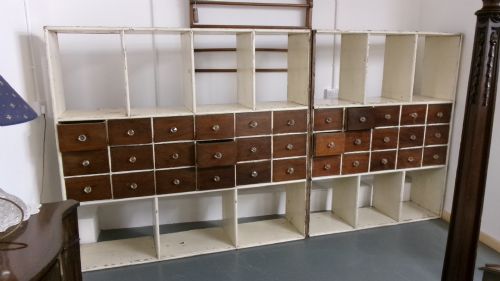
These pieces encompass multi-drawer configurations designed for commercial, apothecary, and workshop environments, often catalogued under terms like bank of drawers, chemist shop fittings, and drapers chests. When exploring antique wooden bank drawers, a buyer encounters configurations ranging from compact office cabinets to substantial multi-drawer units spanning fifteen to over sixty compartments.
The material palette is anchored in durable timbers such as pine, mahogany, walnut, and oak, frequently paired with functional metal or brass hardware. Pieces span eras from the 18th century through the Victorian period, Edwardian era, and into 1920s and 1930s industrial utilities.
Originating from commercial settings including chemist shops, draperies, ironmongers, and workshops, these units served practical sorting functions. Today, they transition into domestic interiors as statement storage for collections, paperwork, and studio supplies.
Materials and construction methods
Construction relies heavily on sturdy timbers such as pine for utilitarian workshop pieces and polished mahogany, walnut, or oak for retail and merchant interiors. Carcasses are joined to withstand repetitive daily pulling, often housing numerous small drawers designed for precise inventory control.
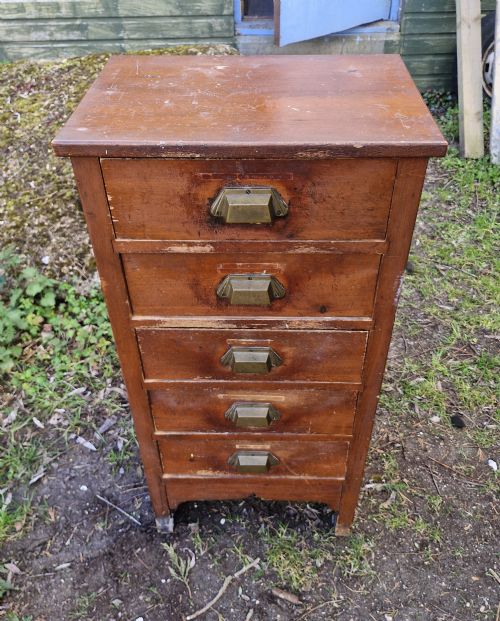
Hardware consists principally of brass drop handles, brass card holders, and metal pulls that facilitate rapid identification of contents in busy commercial settings. Secondary elements include iron fittings and painted wood finishes seen in specialised drapers and ironmongers furniture.
The listings on this site encompass pine, mahogany, walnut, oak, and painted wood, spanning the Georgian period through the 1930s.
Distinguishing quality across pieces
Quality reveals itself in the integrity of the timber, the uniformity of the drawer runners, and the retention of original commercial hardware such as brass label holders and drop handles. Finer examples exhibit carefully selected mahogany, walnut, or fruitwood veneers and solid carcass construction.
Provenance and original commercial context also elevate a piece, with specialist chemist fittings, apothecary units, and named workshop origins carrying particular distinction. The balance between utilitarian robustness and refined cabinet-making separates standard office storage from exceptional merchant furniture.
Luxmore's of Ilfracombe·D Napier & Sons·Amberg
The Antique Wooden Bank Drawers Glossary
- Bank of drawers
- A modular chest featuring a high density of small drawers arranged in tiers, originally utilised for commercial storage and sorting.
- Apothecary chest
- A specialised cabinet with numerous small compartments designed to store medicinal herbs, powders, and pharmacy supplies securely.
- Haberdashery cabinet
- A wide shop fitting featuring shallow glazed or panelled drawers used to display and store textiles, ribbons, and sewing notions.
- Drapers chest
- A commercial storage unit with multiple graduated drawers engineered for a drapery or cloth merchant's inventory.
- Patent letter file
- An office filing system incorporating specialised mechanical locking or indexing mechanisms, such as Amberg's patent designs.
Antique Wooden Bank Drawers: Frequently Asked Questions
What were antique wooden bank drawers used for originally?
These units served as intensive storage systems in commercial shops, pharmacies, watchmakers' workshops, and administrative offices. Merchants and clerks stored small inventory items, textiles, apothecary ingredients, and correspondence in the numerous compartments.
Their modular layout allowed businesses to keep large quantities of distinct items organised and accessible in a compact footprint. This functional heritage accounts for their robust build and utilitarian practicality.
How do I identify a chemist or apothecary bank of drawers?
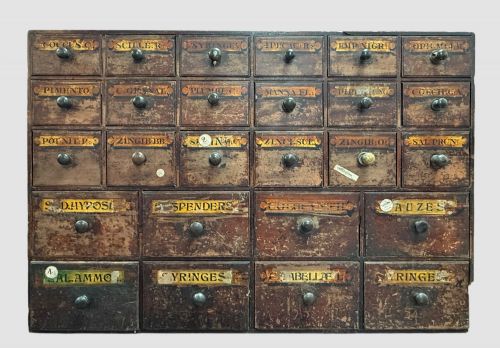
Chemist and apothecary units typically feature numerous small, uniform drawers equipped with brass label holders for identifying specific medicinal ingredients or powders. They often originate from 19th-century Victorian pharmacies and display dense groupings of compartmentalised storage.
These pieces frequently utilise quality timbers like mahogany or walnut and may retain remnants of pharmaceutical labelling or specialised interior dividers.
Can I use a drapers chest in a modern home?
Drapers chests and haberdashery cabinets adapt readily to domestic spaces as kitchen islands, hallway storage, or studio organisers for art supplies and collectables. Their shallow, wide drawers provide efficient separation for items that are easily lost in deep cupboards.
Placing these units in contemporary rooms adds textual warmth through exposed grain and period brass hardware while offering practical sorting solutions.