



Antique Wood Weather Glass
An antique wood weather glass brings domestic prediction into the room through carved mahogany, walnut and oak housings.
Antique Wood Weather Glass
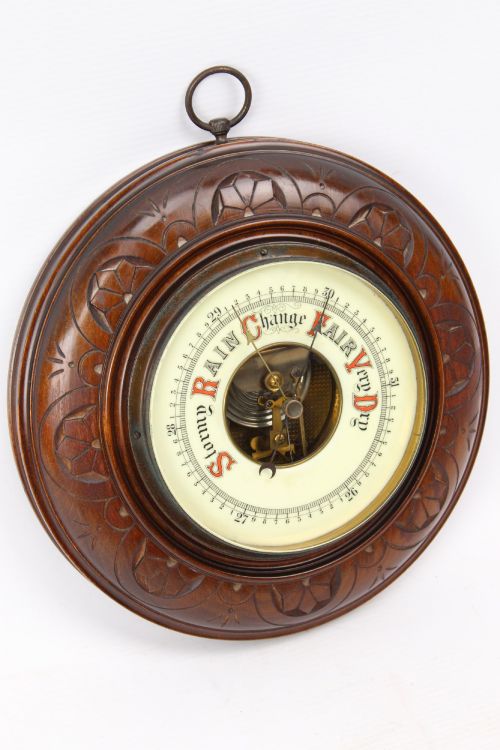
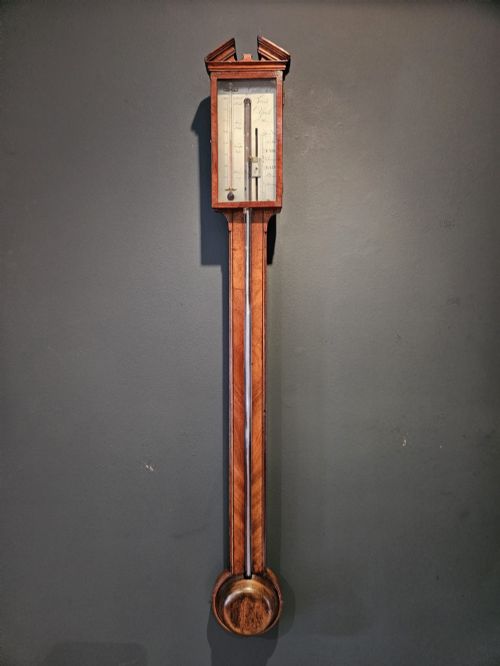
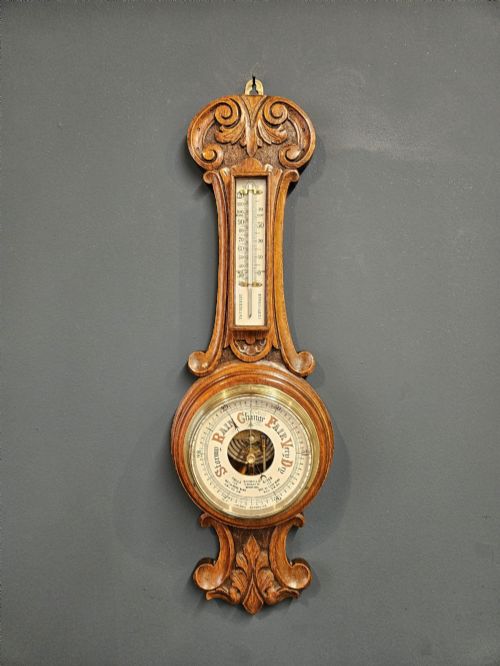
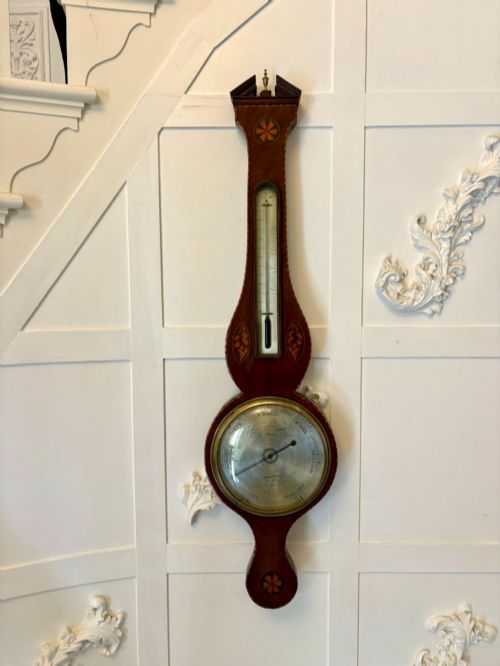
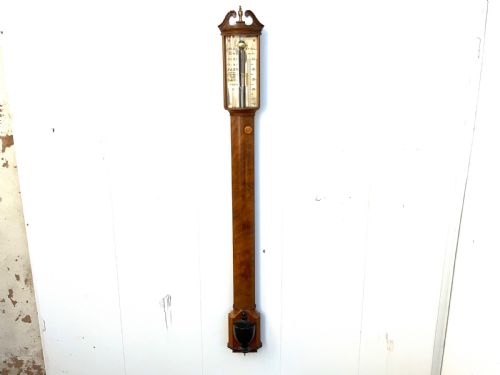
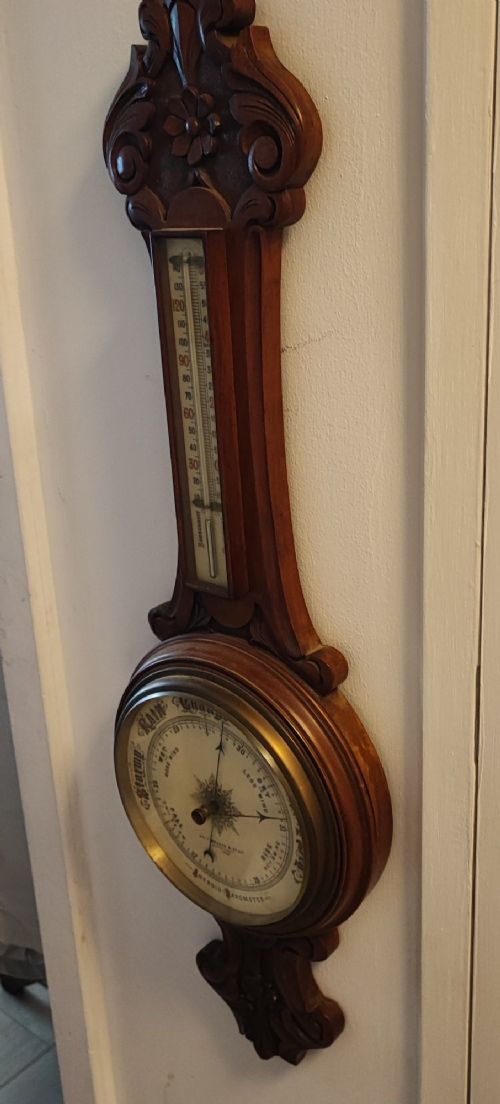
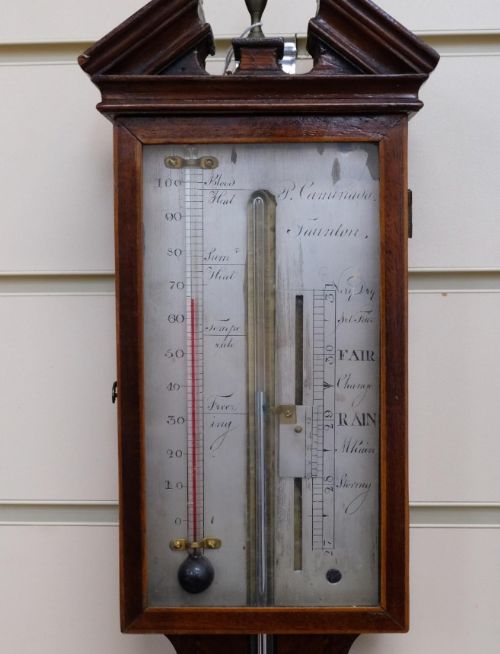
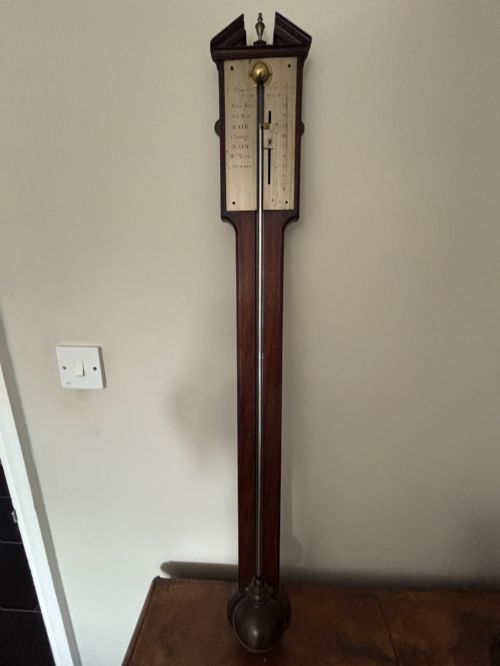
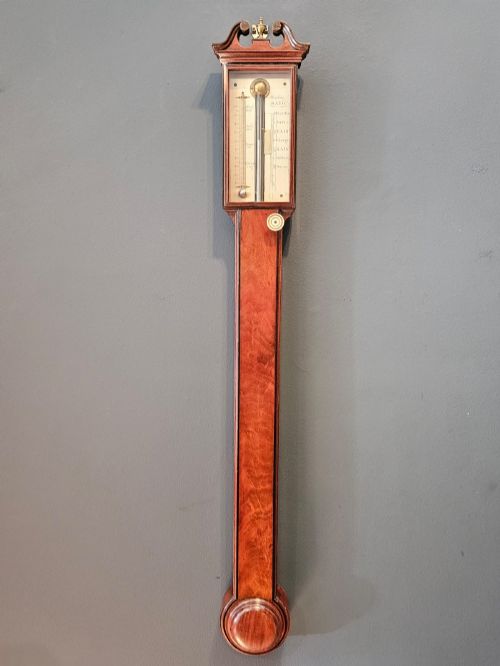
An antique wood weather glass encompasses mercurial stick barometers and aneroid dial models housed in timber frames, designed to measure atmospheric pressure inside homes from the Georgian period onward. You encounter stick barometers most frequently in Georgian and Regency styles, alongside Victorian and Edwardian banjo formats featuring domestic thermometers.
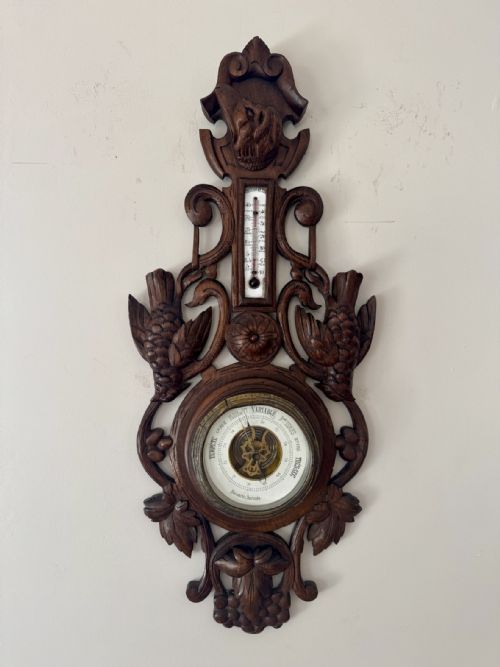
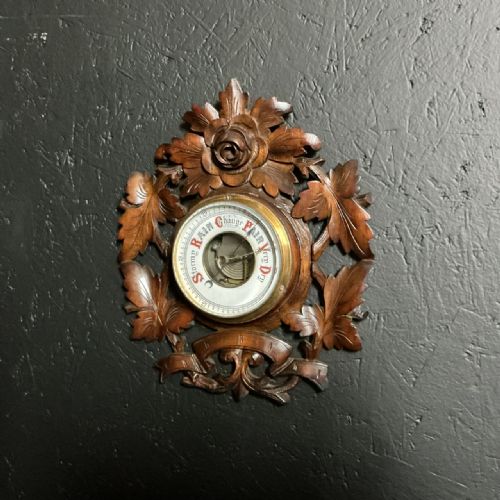
The objects span wall barometers, ships barometers and Black Forest carvings, utilising woods such as mahogany, rosewood, oak and walnut. Makers built these instruments to hang in hallways or libraries, combining utilitarian science with cabinetmaking craftsmanship.
How they were made
Cabinetmakers constructed the primary housings using dense timbers like mahogany, walnut, rosewood and oak, often incorporating shell inlays, satinwood banding or mother-of-pearl decoration. Carved wood examples, particularly from the Black Forest style, showcase elaborate foliage and animal motifs worked directly into the solid timber.
Internal mechanisms combined glass tubes filled with mercury or sealed aneroid metal chambers linked to brass dials and silvered scales. Makers mounted bone or porcelain thermometer plates alongside the main dial to record ambient room temperatures.
Antique Wood Weather Glass Retail Price Guide 2026
Typical asking prices for wood weather glass among the pieces listed under this phrase on Sellingantiques today, from the lower quarter to the upper quarter. They describe what is for sale here now, not the wider market.
Listings demonstrate wood weather glasses spanning the eighteenth, nineteenth and early twentieth centuries, constructed in mahogany, oak, walnut, rosewood and satinwood.
What varies in quality
The refinement of the cabinetwork and the sophistication of the timber selection set examples apart, ranging from plain functional oak cases to architecturally inspired mahogany tops with detailed marquetry. Signed instrument scales by notable makers demonstrate higher workshop investment than anonymous retail pieces.
The crispness of the wood carving, especially in Black Forest and Victorian carved walnut frames, defines the upper tier of production. Intact glass tubes, original mercury columns and well-preserved silvered brass scales maintain the integrity of the piece.
P Caminada Taunton·George Adams London·JB Bergna Newcastle·Negretti and Zambra·W Watson and Sons·Jenkins Of Old Swindon·Fagioli of Clerkenwell London
The Antique Wood Weather Glass Glossary
- Aneroid barometer
- An instrument measuring atmospheric pressure by the expansion and contraction of a flexible metal box, operating without liquid mercury. This design gained widespread popularity during the Victorian era.
- Stick barometer
- A tall, narrow wall instrument containing a vertical glass tube filled with mercury to show barometric changes. Georgian and Regency makers favoured this clean architectural format.
- Banjo barometer
- A wall barometer shaped like a banjo, featuring a circular dial at the base and a long stem holding a thermometer or hygrometer. These became common in Victorian and Edwardian homes.
- Silvered scale
- A brass plate treated with silver powder to create a matte white reading surface for engraved numbers and weather descriptions. Makers engraved these scales with sharp graduation lines.
- Skeletonised movement
- A clock or barometer mechanism with open framework plates that expose the inner gears and levers. This stylistic choice reveals the mechanical operation of the instrument.
Antique Wood Weather Glass: Frequently Asked Questions
What is the difference between a stick barometer and a banjo barometer?
A stick barometer uses a long, narrow wooden trunk to house a vertical mercury tube, presenting a restrained profile common in the Georgian period. A banjo barometer widens at the base into a circular dial, offering a larger face for domestic reading during the Victorian era.
Both serve the same atmospheric function, but their cabinet forms reflect changing interior fashions across the eighteenth and nineteenth centuries.
How do I read an antique weather glass?
You read the instrument by observing the height of the mercury column in stick models or the position of the pointer on aneroid dials. Rising indicators point towards fair weather, while falling levels signal approaching rain or storm conditions.
Most barometers include descriptive text engraved on the silvered scale, such as rain, change or set fair, to guide interpretation.
Where should I hang a wall barometer?
You should hang a wall barometer on an interior partition wall away from direct sunlight, central heating radiators and heavy drafts. Stable room temperatures ensure the internal mechanism or mercury column responds accurately to atmospheric changes rather than local heat sources.
Ensure the hanging bracket securely supports the weight of dense timber housings like mahogany, oak or carved walnut.
How do I date a wood weather glass?
You date the piece by examining the timber species, architectural style, dial materials and cabinet construction techniques. Georgian pieces often feature plain mahogany stick cases, while Victorian examples introduce aneroid dials, rosewood inlays and Black Forest carvings.
Signatures engraved on the brass scales or paper maker labels pasted inside the case provide direct attribution to specific workshops.