



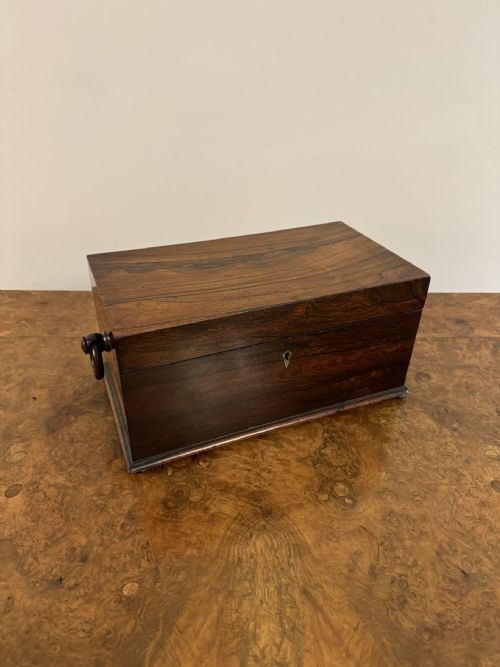

Antique Wood Tea Box
An antique wood tea box brings centuries of domestic ritual onto a table, housing the precious leaves once kept under lock and key.
Antique Wood Tea Box
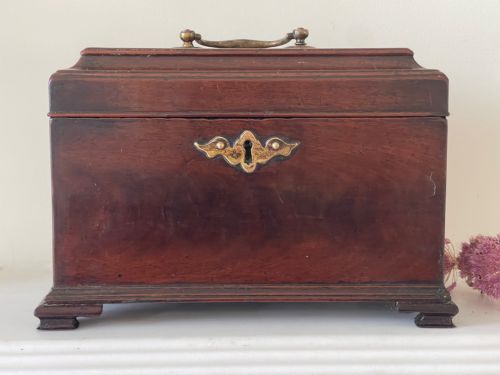
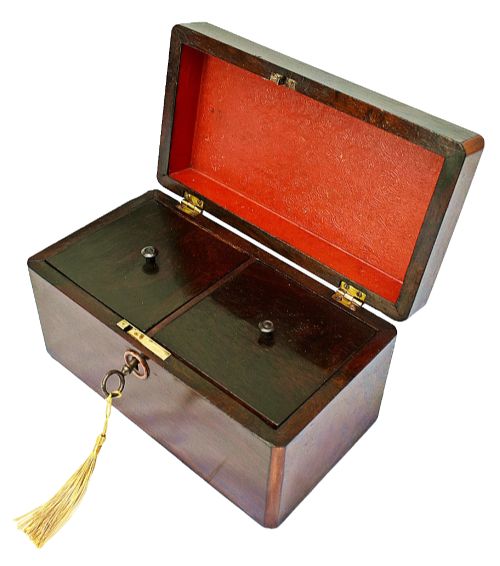
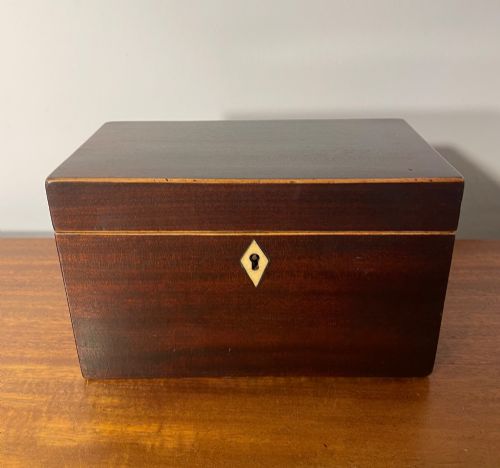
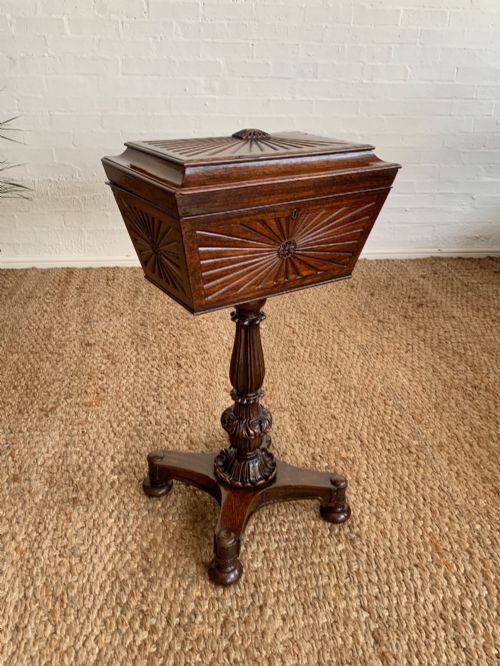
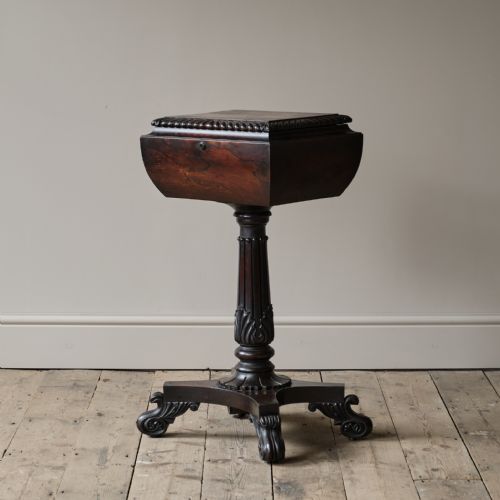
An antique wood tea box encompasses both compact tabletop caddies and larger freestanding teapoys designed for the formal parlour.
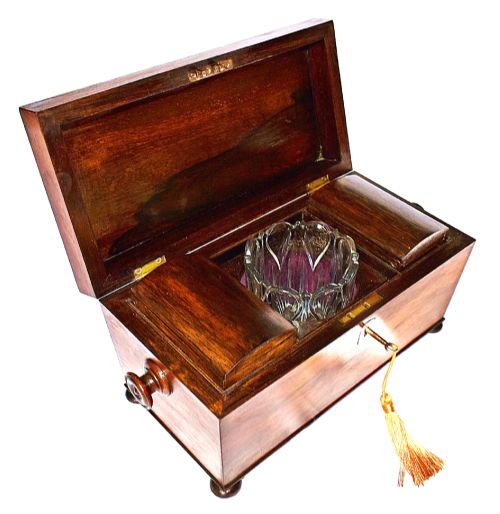
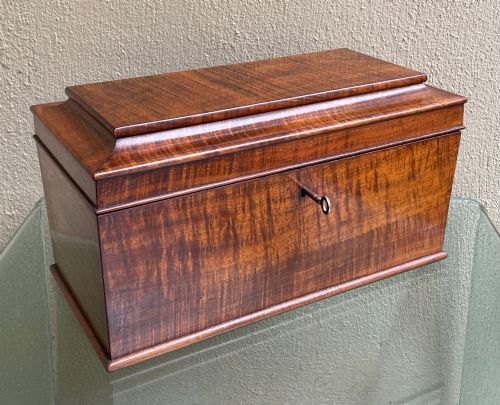
Examples on this page span the Georgian, Regency, and Victorian eras, taking rectangular, sarcophagus, and semi-circular forms.
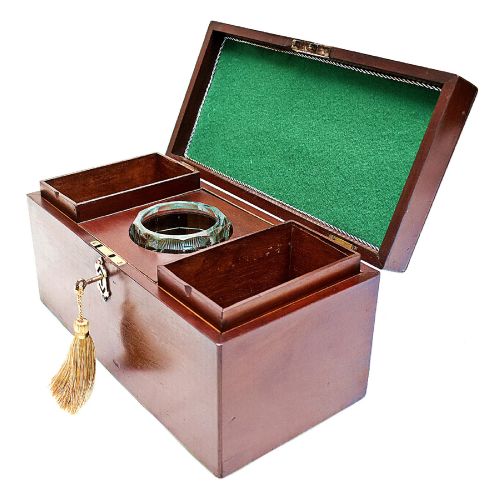
Most pieces function as lidded containers with internal compartments, occasionally retaining original glass mixing bowls or working keys.
Materials and construction methods
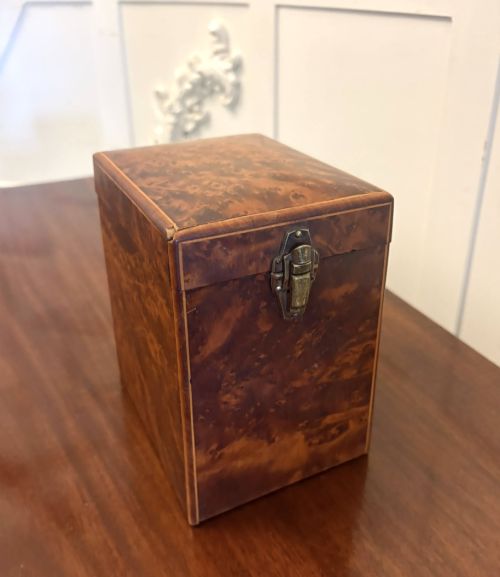
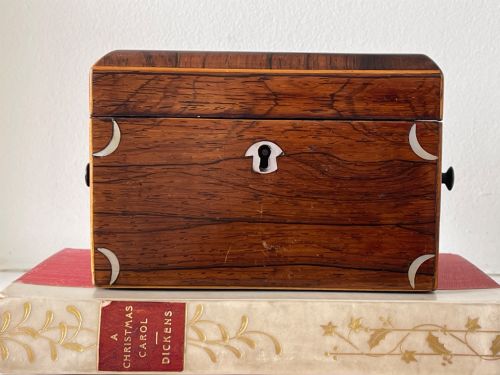
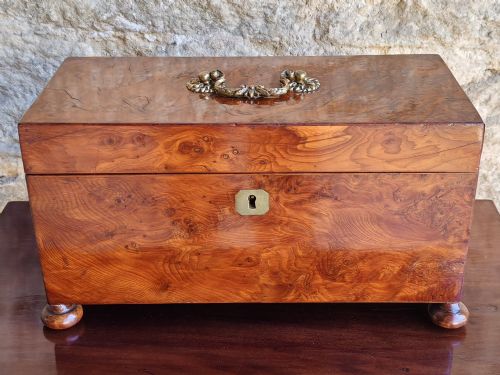
Cabinetmakers utilised dense tropical hardwoods such as rosewood, mahogany, and padouk, alongside decorative veneers including satinwood, burr yew, and amboyna.
Surface enrichment often involved contrasting stringing, brass inlay, parquetry, and mother-of-pearl or bone details.
Internal elements frequently incorporated tightly fitted wooden lids over individual canisters to preserve the aroma of the loose leaves.
Antique Wood Tea Box Retail Price Guide 2026
Typical asking prices for wood tea box among the pieces listed under this phrase on Sellingantiques today, from the lower quarter to the upper quarter. They describe what is for sale here now, not the wider market.
Some nineteenth-century boxes include secret compartments for tiny teaspoons, keeping the tools of the ritual hidden within the grain.
Distinctions in craftsmanship
Superior pieces display meticulous timber selection, matching grain patterns across the exterior surfaces and aligning stringing with precision.
The sophistication of internal joinery and the integrity of brass hardware, such as lion mask handles or escutcheons, separate standard boxes from exceptional commissions.
Henry Hollamby
The Antique Wood Tea Box Glossary
- Tea caddy
- A box or container specifically made for storing tea leaves. The term derives from catty, a Chinese unit of weight.
- Teapoy
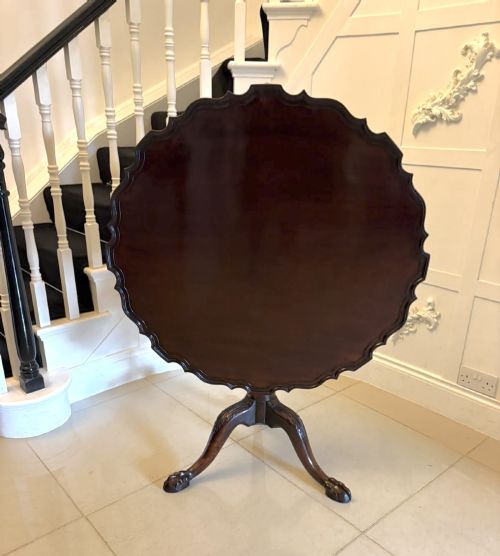
- A freestanding table with a lidded box compartment on top, used for serving tea. They often feature pillar and claw bases.
- Sarcophagus form
- A box shape featuring a domed or peaked lid and a tapering body, popular during the Regency and William IV periods.
- Tunbridge ware
- Small wooden decorative objects adorned with mosaic patterns made from tiny segments of various coloured woods.
- Padouk
- A heavy, durable tropical hardwood with reddish tones, utilised in fine cabinet making and colonial furniture.
Antique Wood Tea Box: Frequently Asked Questions
What were antique tea boxes used for?
These boxes stored expensive imported tea leaves safely under lock and key in wealthy households.
Servants or the mistress of the house portioned out the leaves for each sitting using small spoons or internal canisters.
How do I date an antique tea box?
Dating relies on architectural styles, timber choices, and construction techniques visible in the carcass and lining.
Georgian examples lean towards satinwood and mahogany with delicate inlay, while Regency pieces often feature bold rosewood veneers and brass work.
What is the difference between a caddy and a teapoy?
A tea caddy is a portable tabletop box designed to be lifted and moved between rooms or stored away.
A teapoy is a larger piece of furniture standing on its own legs, functioning as a complete tea station in the parlour.
How do I care for wood tea boxes?
Keep wooden boxes away from direct sunlight and radiators to prevent the delicate veneers and boxwood stringing from drying out and lifting.
Occasional light application of appropriate wax helps maintain the lustre of historical polished surfaces.