






Antique Wood Platter
An antique wood platter brings warmth and practical service to a table, offering solid mahogany, walnut or sycamore shaped by centuries of use.
Antique Wood Platter
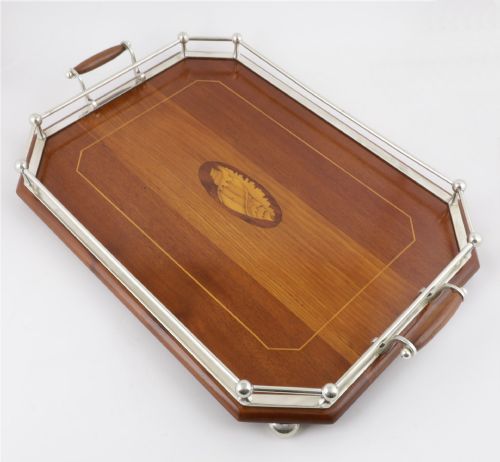
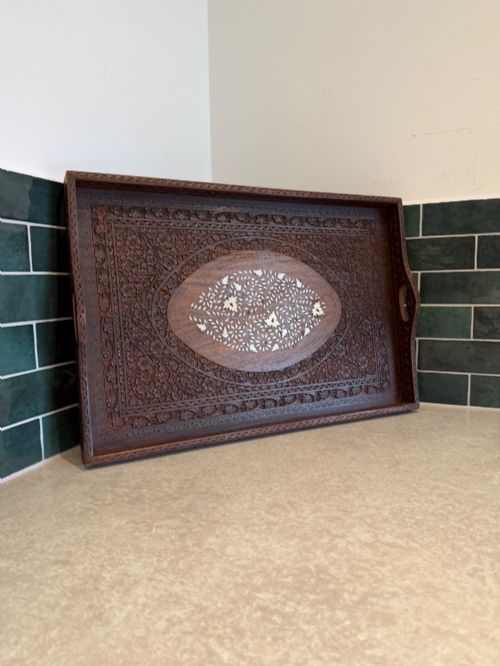
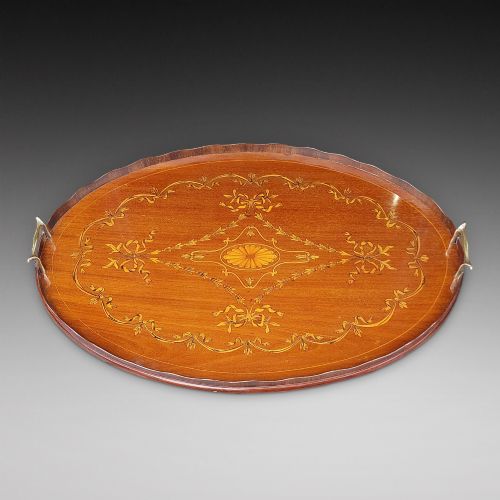
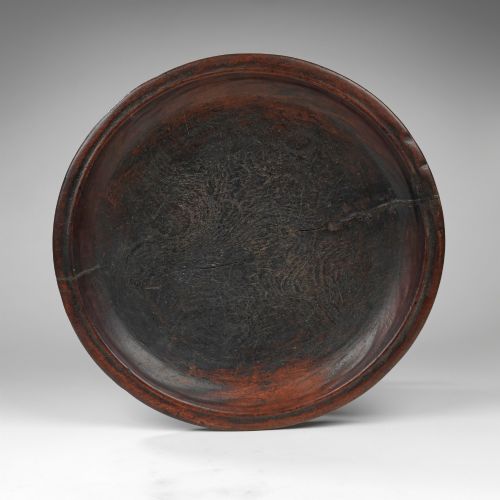
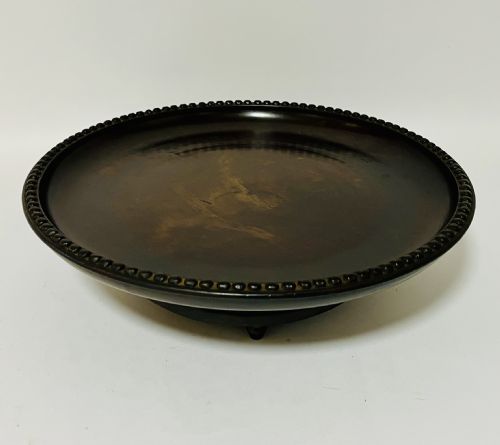
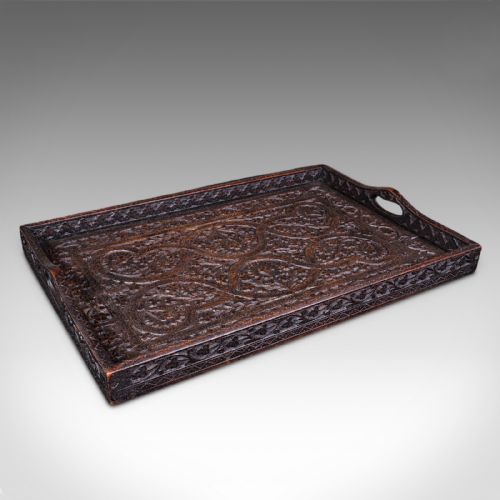
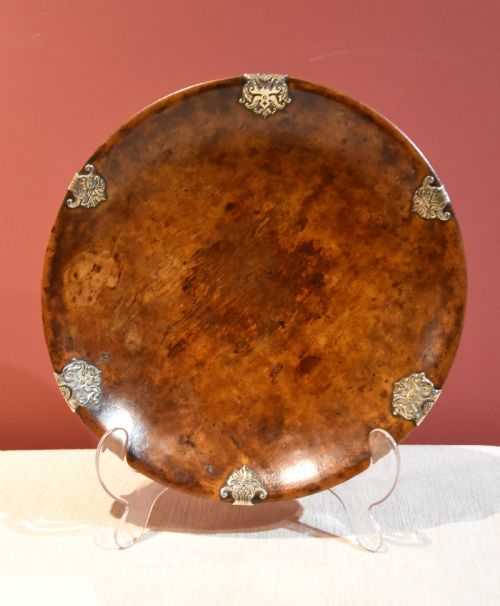
When you search for an antique wood platter, you encounter a varied selection of serving trays, treen bowls, platters, and chargers spanning the Georgian, Victorian, and Edwardian eras. These objects range from simple turned dairy bowls in sycamore or ash to elaborately inlaid mahogany gallery trays and carved Anglo-Indian serving pieces.
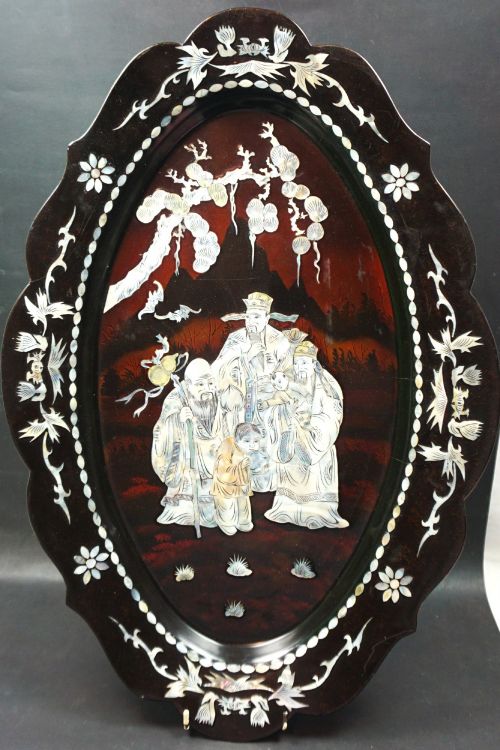
The assortment on this page leans heavily towards practical serving vessels and display pieces, including lazy susans, Edwardian butler's trays, and lacquered imported platters. You will find both British vernacular pieces in elm or birch and more decorative imported items featuring bone inlay, brass handles, or map decorations.
How they were made
Maker's hands shaped these items using traditional carpentry methods, often turning wood on a lathe to create symmetrical bowls or joining seasoned timber for flat trays and platters. Woods such as mahogany, walnut, teak, satinwood, and golden elm provide the structural foundation for these objects.
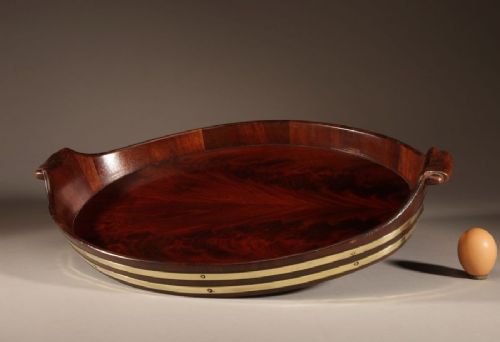
Many examples incorporate decorative flourishes beyond simple woodwork, utilising brass galleries, bone inlay, mother of pearl, and intricate marquetry or oyster veneering. Coopered construction appears on specialised vessels, requiring tight stave alignment reinforced with metal bands.
Antique Wood Platter Retail Price Guide 2026
Typical asking prices for wood platter among the pieces listed under this phrase on Sellingantiques today, from the lower quarter to the upper quarter. They describe what is for sale here now, not the wider market.
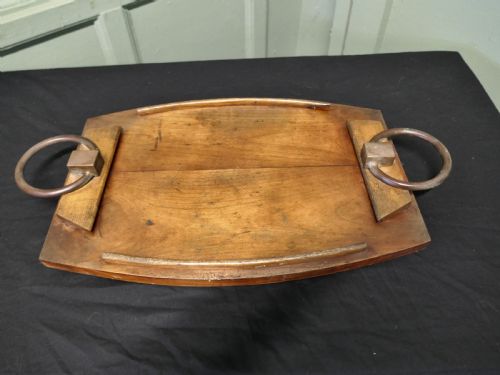
The documented pieces cover multiple design traditions, incorporating Arts and Crafts simplicity alongside Anglo-Indian and Chinese decorative motifs.
What varies in quality
Quality rests in the selection of the timber grain and the precision of the joinery or turning. Highly figured woods like burr walnut or satinwood elevate a piece, while crispness in hand-carved details or inlay distinguishes finer workshops from standard production.
The integrity of the construction dictates longevity, particularly where brass galleries meet wooden bases or where coopered staves join. Pieces that retain their original surface patination and structural firmness without excessive timber shrinkage represent the better end of the range.
The Antique Wood Platter Glossary
- Treen
- Small domestic wooden objects made by turning or carving. This encompasses items like bowls, plates, and platters used in daily life.
- Gallery
- A raised rim or surrounding rail made of wood, brass, or silver plate. It prevents items from sliding off the edge of a tray.
- Coopered
- Constructed using staves of wood fitted together side by side and bound by hoops. This technique is typical of heavy serving vessels.
- Marquetry
- The art of applying pieces of veneer to a structure to form decorative patterns. It frequently appears on formal mahogany and satinwood trays.
- Oyster veneer
- Slices of wood cut transversely from small branches to show the circular growth rings. Edwardian makers utilised this for distinctive surface patterns.
Antique Wood Platter: Frequently Asked Questions
What is an antique wood platter used for?
These items served various practical functions in the home, from carrying afternoon tea and cheeses to displaying fruit on a sideboard. Many functioned as daily serving trays or dairy vessels.
Today, they lend themselves well to similar domestic uses or serve purely as decorative centerpieces on tables and walls.
How do I care for antique wood platters?
Maintain the wood by keeping it away from direct heat sources and sudden humidity changes to prevent timber splitting. Regular gentle dusting preserves the surface condition.
Avoid submerging these pieces in water or using harsh cleaning chemicals, treating them instead with appropriate natural waxes when the timber appears dry.
How can I tell the period of a wooden tray?
Dating relies on observing the timber species, construction methods, and decorative styles typical of specific eras like the Georgian or Victorian periods. Georgian items often feature simpler mahogany or elm forms, while Edwardian pieces sometimes show complex veneers and brass galleries.
Examining tool marks on the underside and the type of fixings used also helps establish the approximate age of the object.
Are all antique wooden trays British?
While many pieces originate from English workshops, the selection includes international items reflecting global trade and travel. You will find Anglo-Indian carved teak platters, Chinese lacquered pieces, and Swiss folk art bowls.
Each regional tradition brings distinct materials, such as shisham wood or mother of pearl inlay, to the overall category of wooden servers.