



Antique Wood Pew
An antique wood pew brings immediate character and solid seating to a hallway or kitchen, offering enduring utility shaped by centuries of domestic and public life.
Antique Wood Pew
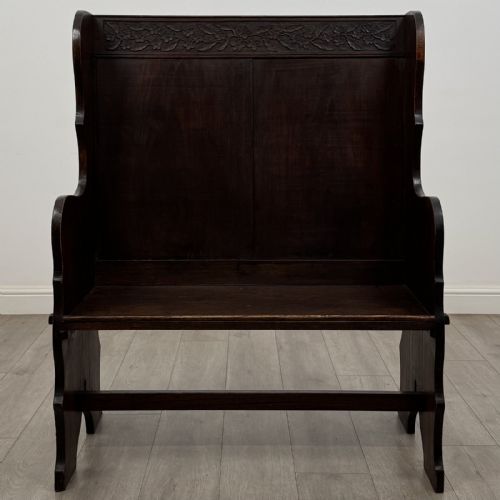
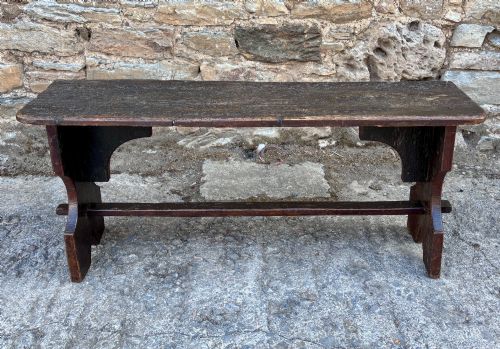
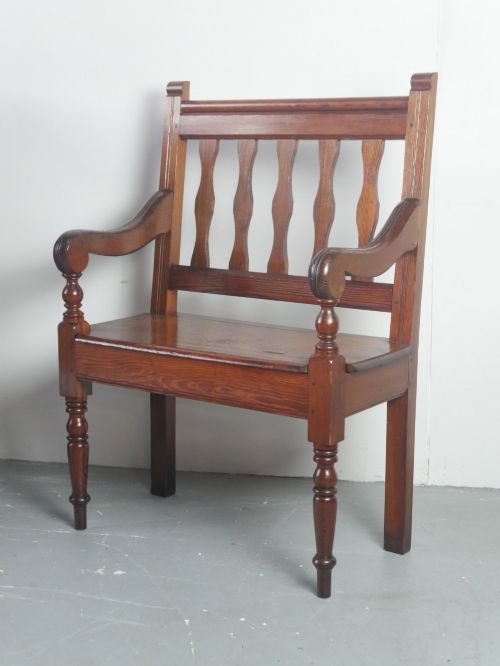
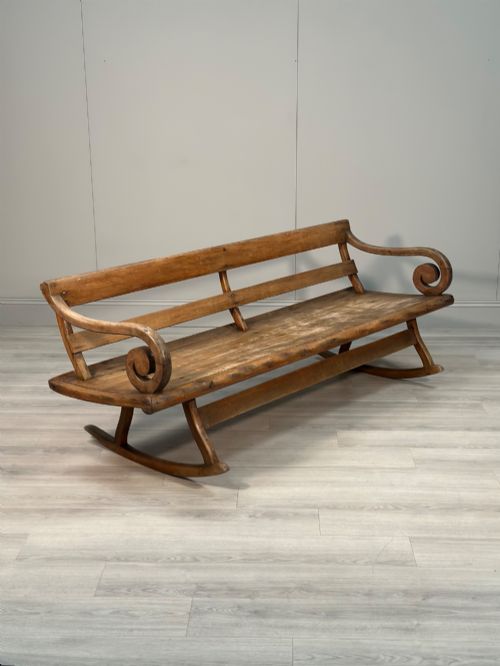
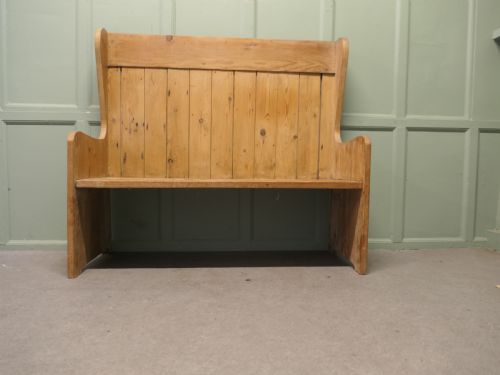
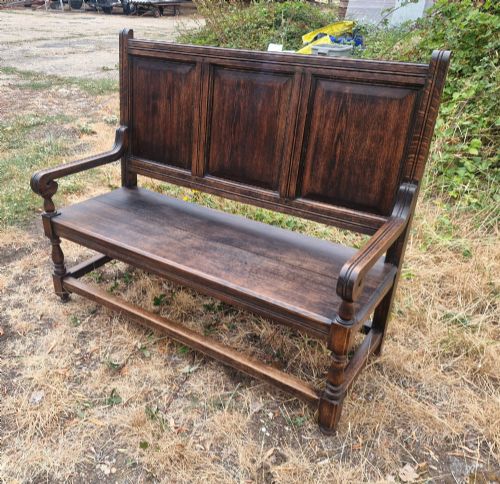
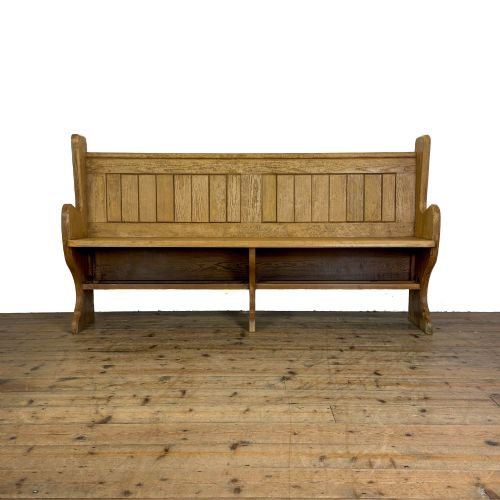
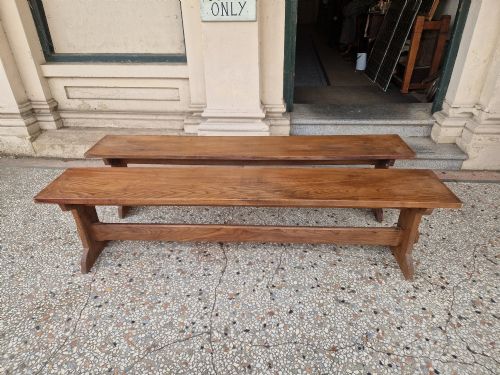
When you search for an antique wood pew, you encounter robust seating ranging from domestic settles to chapel and pub benches spanning the seventeenth century through to the Edwardian era. These pieces frequently appear as high-back pine settles, oak hall benches, and rustic country seating designed to block draughts and anchor a room.
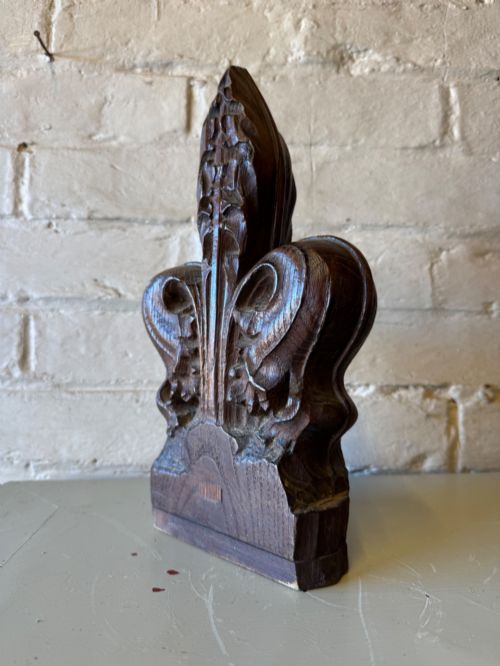
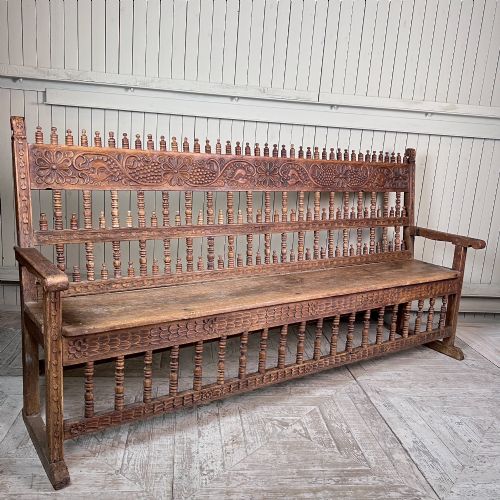
The selection on this page leans heavily toward nineteenth-century pine and oak examples, alongside earlier seventeenth and eighteenth-century panelled settles and architectural fragments. You also meet French country dining benches in ash and elm, Spanish colonial hardwood benches, and Austrian painted pieces.
Originating from diverse settings including village churches, country houses, and local pubs, these benches serve equally well today as practical hallway furniture or fireside seating. Their forms vary from simple boarded pine constructs to elaborately carved oak settles featuring floral motifs and poppy head finials.
Materials and construction
Carpenters built these settles and benches using native timbers such as sturdy oak, resilient pine, pitch pine, ash, and elm, selecting each wood for its local availability and structural strength. Hardwoods provided the durability required for heavy public or domestic use, while softer woods like pine suited simpler vernacular forms.
Joinery methods relied on traditional techniques including panel construction, pegged joints, and solid board assembly to withstand generations of sitting. Surfaces often retained their original paint, natural waxed finishes, or the deep patination acquired through decades of daily handling.
Antique Wood Pew Retail Price Guide 2026
Typical asking prices for wood pew among the pieces listed under this phrase on Sellingantiques today, from the lower quarter to the upper quarter. They describe what is for sale here now, not the wider market.
Listings span periods from the 17th century through to the Edwardian era, incorporating pine, oak, pitch pine, ash, and elm.
Evaluating quality and character
The finest examples display integrity of structure and timber selection, where original boards, untouched patination, and robust joinery remain intact without heavy modern intervention. Proportion and scale also dictate worth, as neat hall benches or exceptionally long dining benches serve specific architectural spaces better than altered pieces.
Carving detail and period-specific design elements elevate certain settles, distinguishing simple utility furniture from masterwork vernacular pieces featuring floral panels or poppy head finials. The depth of surface wear and the preservation of original paint layers speak directly to the authenticity and age of the seating.
The Antique Wood Pew Glossary
- Settle
- A wooden bench with a high back, solid arms, and often a storage box beneath the seat, designed to keep out cold draughts in domestic interiors. These pieces formed the central gathering point by the hearth in older houses.
- Poppy head
- An ornamental carved finial topping the end of a bench or pew end, shaped somewhat like a poppy seed head or leaf scroll. This Gothic architectural detail appears frequently on early church and chapel seating.
- Hardwood
- Timber derived from broad-leaved deciduous trees such as oak, ash, and elm, prized for exceptional density and durability. Such woods formed the structural backbone of fine seventeenth and eighteenth-century seating.
- Softwood
- Timber sourced from coniferous trees, predominantly pine and pitch pine, utilised widely for vernacular furniture and painted country settles. It offered a lighter, more accessible material for regional cabinetmakers.
- Panelled
- Construction method utilising framed wooden panels fitted into grooves within stiles and rails to allow for seasonal wood movement. This technique prevents warping in large oak settle backs.
Antique Wood Pew: Frequently Asked Questions
How were settle benches used originally?
Settles served primarily as fireside seating in farmhouses and public inns, where their high wooden backs and solid enclosed bases blocked cold draughts from sweeping across stone floors.
Over time, they doubled as storage chests or sleeping quarters when the lower compartment held bedding or provisions for the household.
Are chapel pews comfortable for daily use?
Chapel pews and church benches were built with upright wooden backs and shallow seats intended for attentive posture during services rather than lounging.
Placing loose woollen cushions or sheepskins along the seat softens the rigidity while preserving the historic appearance in a modern hallway or dining space.
How do I tell an 18th-century settle apart from later revivals?
Eighteenth-century settles display authentic hand-planed surfaces, pegged mortise and tenon joints, and timber shrinkage patterns consistent with age and natural use. Later nineteenth-century Jacobean or Gothic revival pieces often feature machine-sawn components and stylised carvings applied to mimic earlier centuries.
Examining the underside and the interior of panel construction reveals the tool marks and construction methods characteristic of the period.
Where should I place a long wooden bench at home?
Long wooden benches and refectory dining benches fit naturally alongside large dining tables, providing communal seating reminiscent of historic country house dining halls. Alternatively, placing a neat hall bench near an entryway creates a practical spot for removing shoes while displaying rich timber grain.