
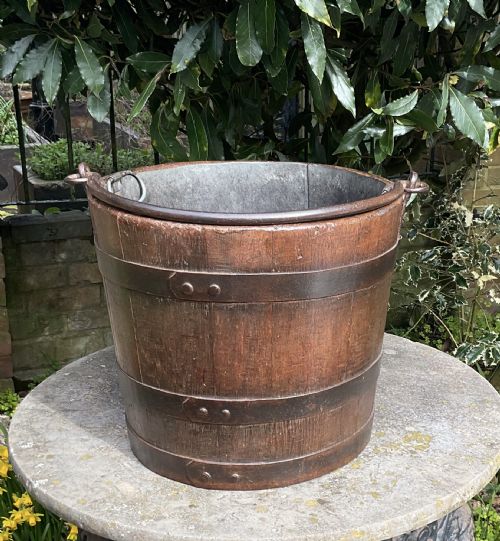


Antique Wood Peat Bucket
An antique wood peat bucket brings sturdy domestic warmth and tactile grain to a fireside, serving as a handsome container for fuel.
Antique Wood Peat Bucket
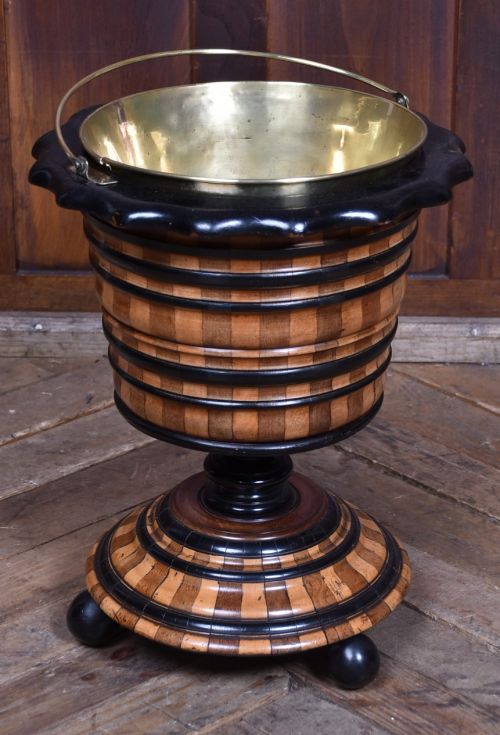
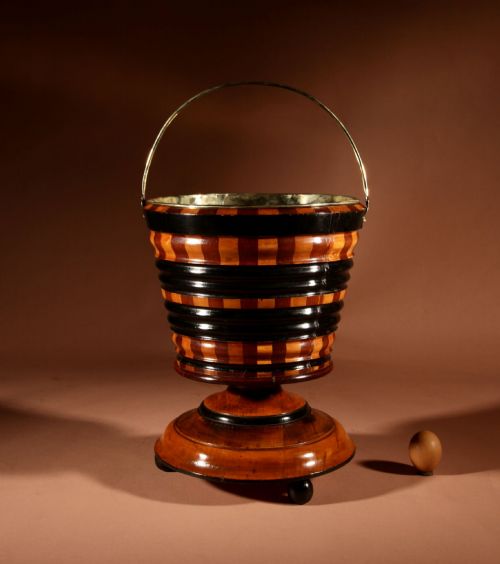
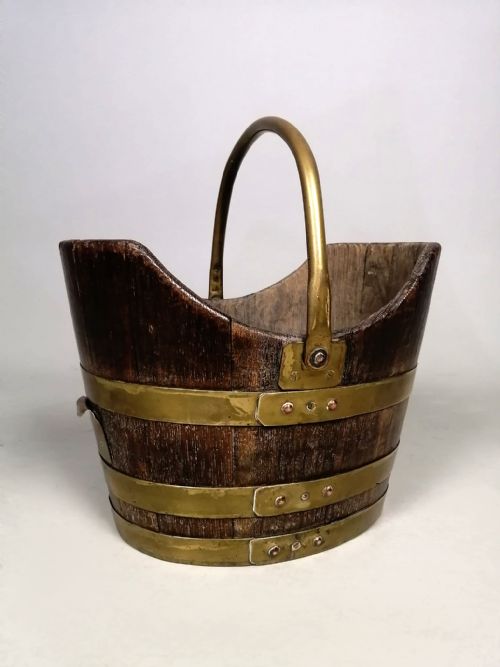
An antique wood peat bucket is a traditional fireside container designed to hold peat, coal, or logs for domestic hearths. The pieces gathered under the phrase antique wood peat bucket range from Georgian brass-bound vessels to Victorian coopered examples and Dutch teestoofs.
The form frequently overlaps with planters, jardinières, and log bins, reflecting how owners repurposed these sturdy wooden containers over time. Mahogany, oak, walnut, and fruitwood appear regularly across the inventory, often shaped with staves and metal hoops.
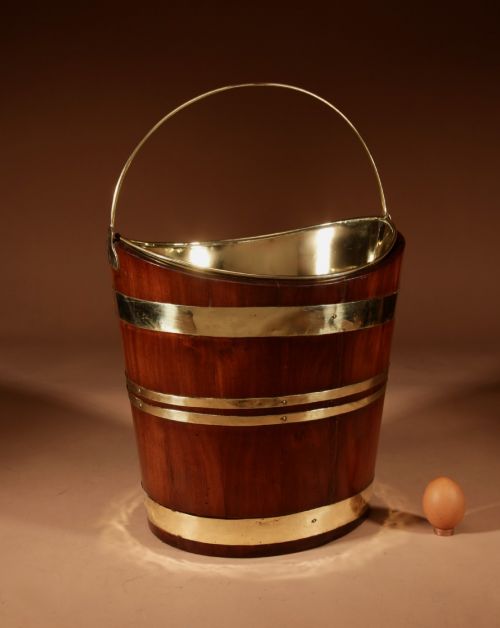
Examples span the eighteenth, nineteenth, and early twentieth centuries, encompassing English, Scottish, and Dutch traditions. Buyers encounter everything from boat-shaped schuitjes to classical oval cylinders fitted with drop handles and liners.
How they were made
Traditional cooperage forms the structural basis of these vessels, where individual wooden staves are shaped, fitted edge-to-edge, and secured with tensioned metal bands. Blacksmiths and metalworkers hammered and riveted brass or iron bands to hold the timber tightly together against shrinkage and daily wear.
Cabinetmakers selected dense hardwoods like mahogany, oak, walnut, and fruitwood, sometimes incorporating ebonised wood or mixed hardwoods for visual contrast. Interiors frequently retained metal liners to protect the timber from moisture and ash when holding peat or damp fuel.
Several buckets moonlighted as knitting baskets or foot warmers before ending up on duty as dignified plant pots.
What varies in quality
Quality rests upon the crispness of the cooperage and the richness of the timber selection, such as figured mahogany or rich grain in walnut. The weight and finish of the brass bands and drop handles distinguish utilitarian vessels from those commissioned for formal reception rooms.
Integrity of construction defines the finer pieces, particularly where staves remain flush and liners survive intact. Pieces showing deliberate shaping like boat forms or ribbed surfaces command attention for their sculptural ambition.
The Antique Wood Peat Bucket Glossary
- Coopered
- Constructed from curved wooden staves bound together with metal hoops, much like a traditional barrel. This technique provided immense strength for holding heavy loads of fuel.
- Teestoof
- A Dutch foot warmer or small stove, often taking a bucket form and lined to hold glowing embers or peat. These pieces frequently feature fine brass fittings and decorative woodwork.
- Schuitje
- A boat-shaped vessel or container, describing the distinctive curved profile seen in certain Dutch peat buckets and jardinières. The silhouette tapers gracefully toward each end.
- Jardinière
- An ornamental pot or stand designed to hold plants and flowers, a role that many surviving peat buckets assumed in later decades. They protect household surfaces with fitted metal liners.
Antique Wood Peat Bucket: Frequently Asked Questions
What were peat buckets used for?
These vessels sat by the hearth to store dry peat, coal, or logs within easy reach of the fire. Their sturdy construction handled the heavy weight of solid fuel daily.
Over time, many found new life holding dried arrangements or plants, functioning as decorative planters in nineteenth-century parlours.
How do I date an antique wood bucket?
Dating relies on timber choice, construction methods, and the style of the brass bands and handles. Georgian examples often display rich mahogany with fine dovetailing or early cooperage, while Victorian pieces lean toward heavier proportions and walnut or oak.
Regional traits, such as Dutch teestoof designs or Scottish coopered work, provide further clues to origin and period.
Can I use these buckets for logs today?
Many sturdy wooden and brass-bound examples remain entirely practical for holding logs beside a modern fireplace. Checking the condition of the interior liner helps ensure the timber stays safe from moisture.
Lighter or more decorative specimens, particularly those with delicate inlays or fabric linings, suit dry storage or ornamental display instead.
What is a Dutch teestoof?
A teestoof is a traditional Dutch heating vessel, often built as a coopered wooden bucket with a metal liner. They originally held hot peat embers to warm feet or keep teapots warm.
Today, collectors value them as highly decorative antiques that showcase specialised craftsmanship and distinct regional forms.