

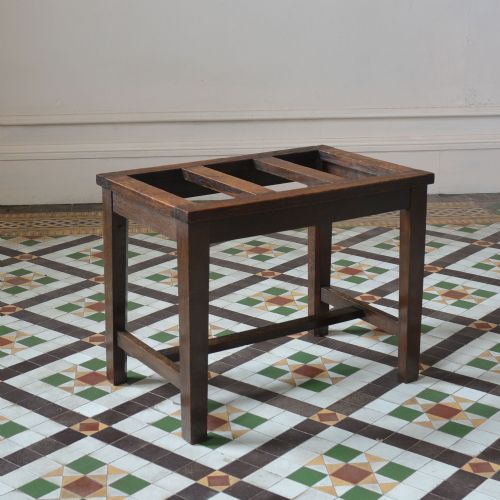
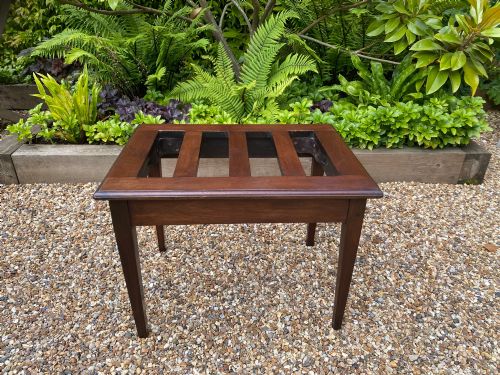


Antique Wood Luggage Stand
An antique wood luggage stand brings disciplined bedroom utility into a modern house, offering a sturdy surface for bags and packing.
Antique Wood Luggage Stand
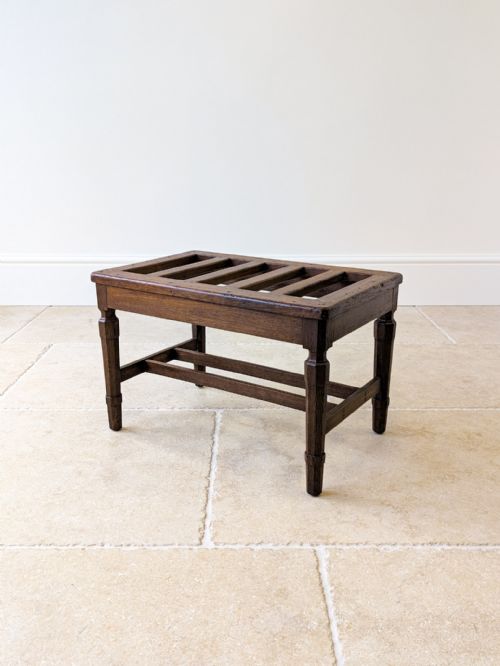
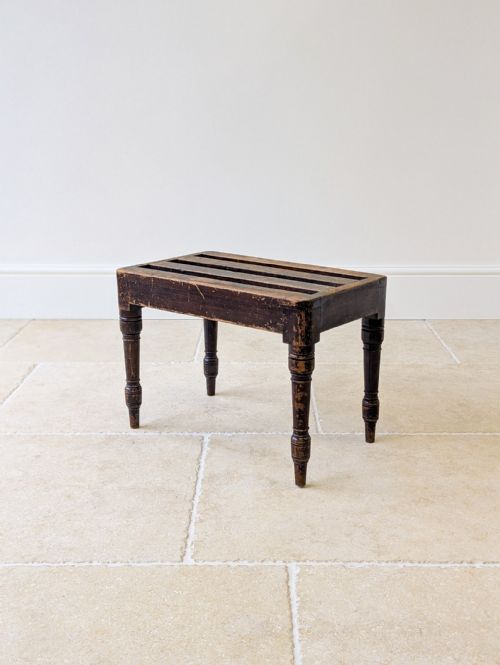
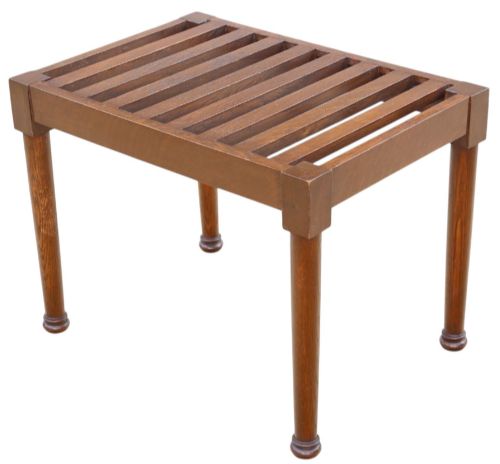
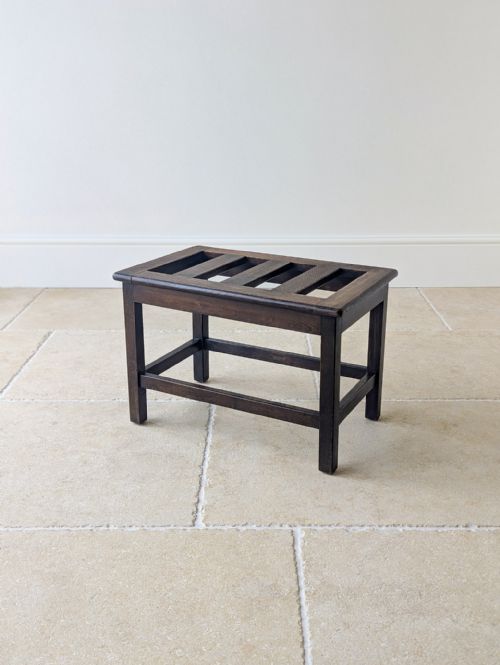
When searching for an antique wood luggage stand, you encounter folding and static racks designed to hold travel bags at a convenient height. These pieces primarily date from the Victorian and Edwardian eras, spanning the nineteenth and early twentieth centuries.
The materials recorded in these listings rely on hardwoods such as mahogany, oak, beech, ash, and yew wood. Alongside traditional luggage stands, related wall-mounted coat racks and portmanteau fixtures occasionally appear under this search.
Materials and construction
Makers utilised dense timbers like mahogany, oak, beech, and ash to build frames capable of supporting heavy travel chests and leather valises. Selected woods were frequently stained to achieve a uniform finish across the folding or fixed legs.
Joinery methods focused on durability, employing sturdy cross-framing and strap supports to withstand the weight of packed luggage. Metal brackets and fittings were integrated into specific wall-mounted French variants to secure brass hooks.
Antique Wood Luggage Stand Retail Price Guide 2026
Typical asking prices for wood luggage stand among the pieces listed under this phrase on Sellingantiques today, from the lower quarter to the upper quarter. They describe what is for sale here now, not the wider market.
Judging quality in luggage stands
Quality rests upon the selection of timber and the rigidity of the frame when extended or assembled. Heavier woods like ash and figured mahogany distinguish superior examples from simpler utilitarian versions.
Maker marks and branded stamps elevate certain pieces, demonstrating workshop provenance rather than anonymous manufacture. The inclusion of uncommon woods such as yew further separates standard production from notable specimens.
Brown & Lamont
The Antique Wood Luggage Stand Glossary
- Luggage stand
- A low folding or static stand designed for holding travel bags off the floor. These pieces are typically found in bedroom or guest room settings.
- Portmanteau
- A fixture or rack designed for hanging coats and garments, sometimes incorporating brass hooks and brackets. French examples often feature decorative metalwork.
- Victorian
- A design period spanning the reign of Queen Victoria during the nineteenth century. Pieces from this era often utilise solid oak, mahogany, or ash.
- Edwardian
- A stylistic period covering the early twentieth century up to the First World War. Furniture from this time tends towards lighter oak constructions.
- Yew wood
- A dense and heavily grained timber prized for its rich colour and decorative pattern. It appears in select nineteenth-century pieces.
Antique Wood Luggage Stand: Frequently Asked Questions
What is a luggage stand used for?
These stands provide an elevated surface for packing and unpacking suitcases without bending down to the floor. They originated as essential bedroom furniture for guests and travellers.
Today, they serve equally well in spare rooms or master bedrooms as functional stands for weekend bags and holdalls.
How do I date an oak luggage stand?
Dating relies on the construction style, timber finish, and period characteristics such as nineteenth-century turnings. Victorian and Edwardian examples show distinct handling of oak and mahogany.
Examining the hardware, screw types, and stretcher joints helps confirm the approximate decade of manufacture.
Are these stands strong enough for modern suitcases?
Period luggage stands were built from dense hardwoods like mahogany, oak, and ash to support heavy leather trunks. Their robust frames handle modern luggage weight with ease.
Checking the stability of the folding cross-braces ensures safe daily use in the home.
Where should I place a luggage stand in my home?
They fit naturally in guest bedrooms, dressing rooms, or master suites at the foot of a bed. Their compact footprint allows them to fold away when not in use.
Certain wall-mounted variants and coat racks find a practical home in hallways and entrance passages.