



Antique Wood Luggage Rack
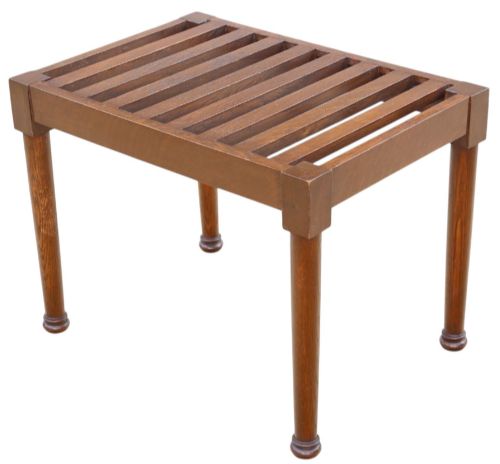
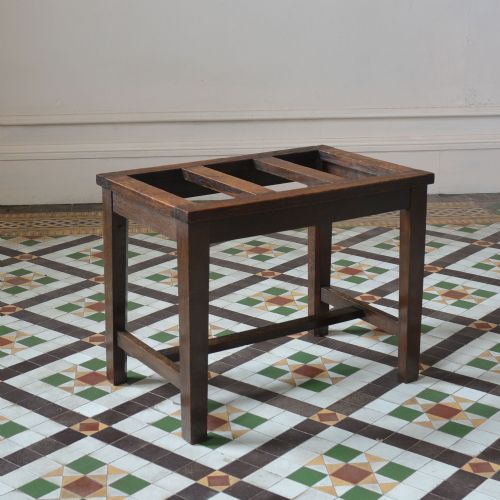
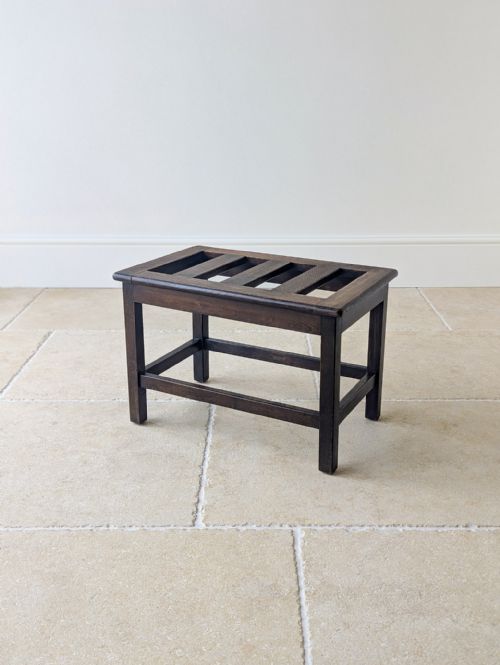
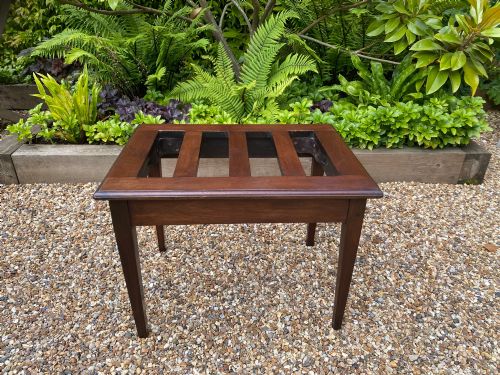
An antique wood luggage rack is a folding or wall-mounted stand designed to hold travellers' bags, bringing practical folding utility and period character to a guest bedroom.
Antique Wood Luggage Rack
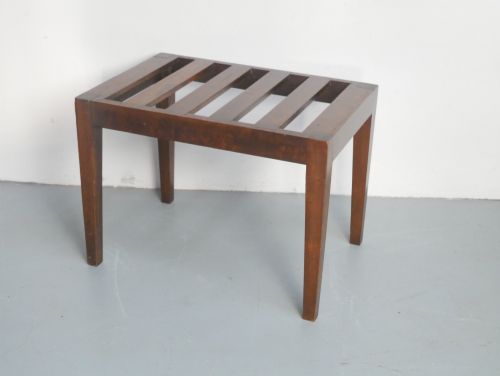
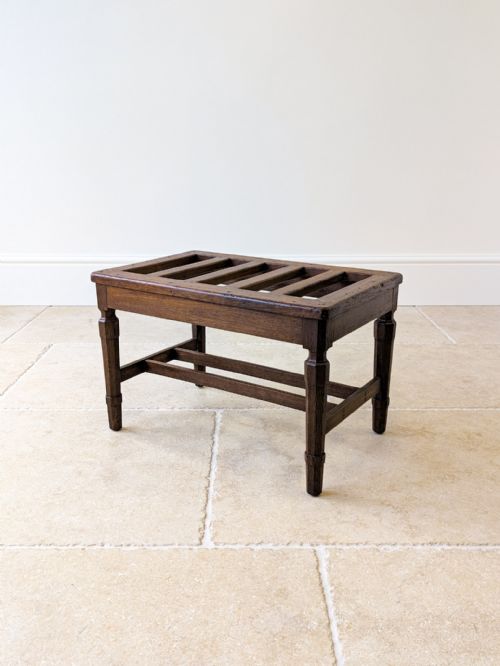
When you search for an antique wood luggage rack, you are looking at utilitarian stands and folding luggage stands primarily from the Victorian and Edwardian eras. These pieces originated to serve guests in large country houses and railway hotels, offering a sturdy surface to keep suitcases off the floor. Most examples on this page date from the nineteenth and early twentieth centuries, appearing in forms such as low folding stands and wall-mounted carriers.
The most common versions encountered here are mahogany and oak folding luggage stands featuring slatted tops and X-frame folding legs. You will also find regional variations including elm railway items and beech stands by specific makers. Alongside traditional floor models, the selection includes French wall-mounted coat and hat racks as well as brass portmanteau brackets.
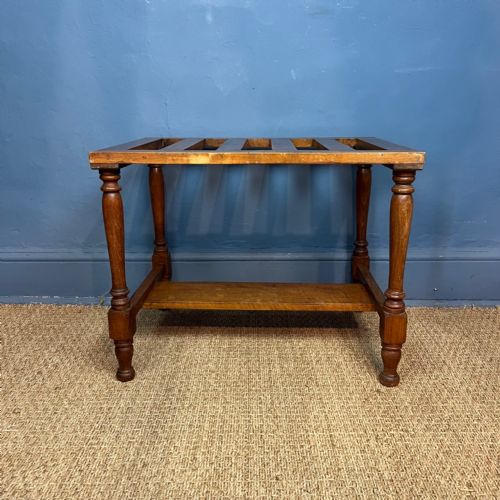
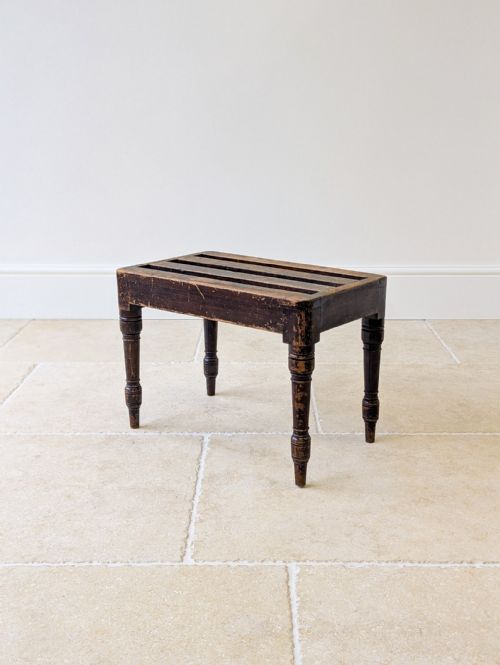
Makers and railway companies utilised durable hardwoods to withstand heavy daily use by travellers. A Victorian example often exhibits turned wooden supports and folding webbing or wooden slats. These functional objects bridge the gap between industrial railway collectables and domestic bedroom furniture.
Materials and construction
Carpenters constructed these luggage racks using dense hardwoods like mahogany, oak, beech, ash, elm, and yew wood. These timbers provided the structural strength required to support heavy leather suitcases and canvas trunks without bowing. Workshops frequently polished the wooden frames to highlight the natural grain of the material.
Folding models rely on hinged X-frame mechanisms that allow the stands to collapse flat when not in use. Many examples incorporate brass hinges, screws, and brackets to reinforce the joints and folding pivot points. Wall-mounted variants utilise sturdy wooden backplates secured with metal brackets and hooks for hanging garments.
Antique Wood Luggage Rack Retail Price Guide 2026
Typical asking prices for wood luggage rack among the pieces listed under this phrase on Sellingantiques today, from the lower quarter to the upper quarter. They describe what is for sale here now, not the wider market.
Listings feature oak, mahogany, beech, ash, elm, and yew wood across Victorian and Edwardian periods.
Factors of quality
The quality of an antique wood luggage rack depends heavily on the selection of timber and the solidity of its joinery. Superior pieces utilise finely figured mahogany or quarter-sawn oak with tight, precise joints that maintain stability when loaded. Lesser examples employ simpler secondary woods with visible wear on the pivot pins and hinges.
Design sophistication also distinguishes finer examples, such as those featuring turned legs, scalloped brass hooks, or stamped railway provenance. The crispness of the turning on the wooden uprights and the weight of the brass fittings indicate the standard of workshop production.
Brown & Lamont
The Antique Wood Luggage Rack Glossary
- Luggage stand
- A low folding or fixed table designed specifically to hold a suitcase at a convenient height for packing or unpacking. These pieces typically feature slatted wooden tops and X-frame folding legs.
- X-frame
- A structural configuration formed by intersecting diagonal members that allow a piece of furniture to fold flat. This mechanism is standard on portable luggage racks for easy storage.
- Portmanteau
- A large leather suitcase or trunk used during the nineteenth century. Wall-mounted portmanteau brackets were designed to hold these heavy bags in railway stations or hotels.
- Railway collectables
- Items originating from the operation of nineteenth and twentieth-century railway networks. Pieces bearing company stamps, such as the Great Northern Railway, carry specific transport provenance.
- Quarter-sawn oak
- Timber cut radially from the log, producing a distinct grain pattern known as medullary rays. This method yields more stable boards less prone to warping.
Antique Wood Luggage Rack: Frequently Asked Questions
What were antique wood luggage racks used for?
These racks served primarily in guest bedrooms and hotel rooms to elevate heavy leather suitcases and trunks off the floor. This made packing and unpacking more comfortable for travellers.
They also found use in railway environments where staff handled passenger luggage and coats during transit.
How do I live with an antique luggage rack?
You can position a folding rack at the foot of a bed or in a guest room to hold spare blankets and towels when not in use for luggage. Their compact footprint makes them easy to fold and store in a wardrobe.
Wall-mounted versions work well in hallways as functional coat and hat storage.
How can I tell a Victorian rack from an Edwardian one?
Victorian pieces often display heavier timbers, darker finishes, and more ornate turned wooden supports reflecting nineteenth-century tastes. Mahogany and heavy oak are prevalent in this period.
Edwardian examples tend to feature lighter proportions, simpler lines, and brighter oak finishes consistent with early twentieth-century domestic interiors.
Are these racks sturdy enough for modern luggage?
Most antique wood luggage racks were built from dense hardwoods like oak and mahogany to support heavy nineteenth-century trunks. This robust construction makes them fully capable of holding modern suitcases.
Checking the stability of the folding X-frame and hinges ensures safe everyday use.