
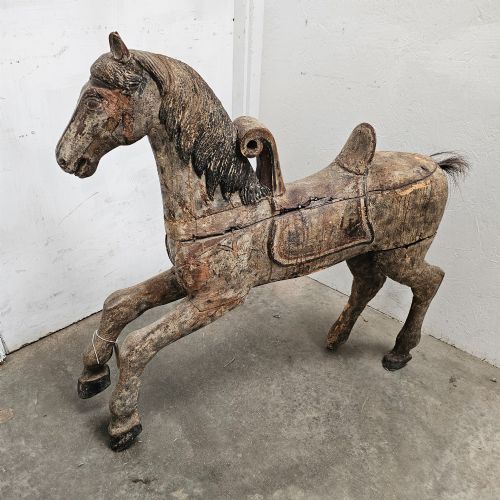
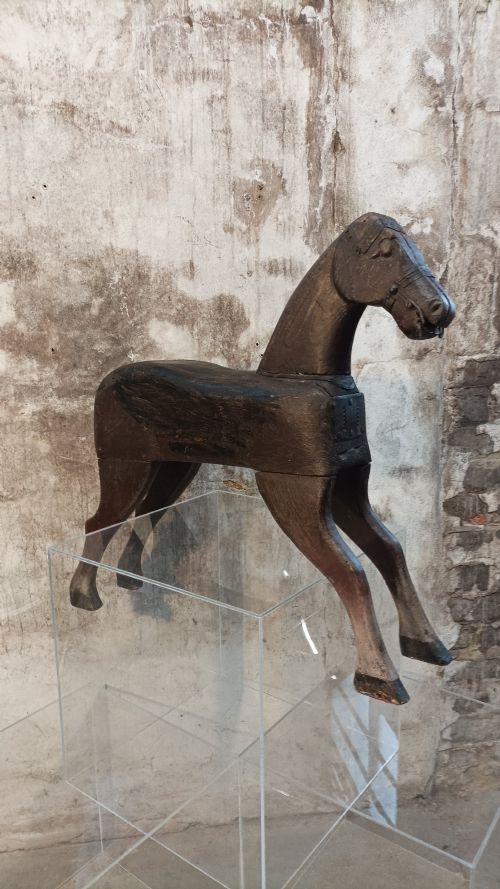
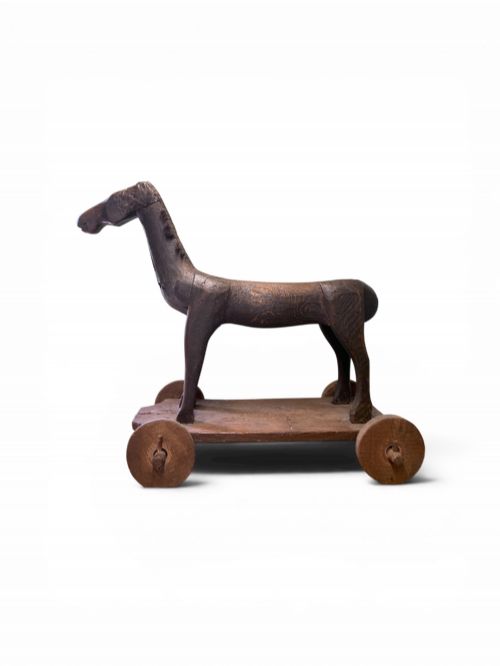


Antique Wood Horse Figure
An antique wood horse figure brings tactile warmth and character to a room, carrying the history of folk art and traditional craftsmanship.
Antique Wood Horse Figure
An antique wood horse figure spans from rustic folk art carvings to carousel pieces and detailed animalier studies. Buyers searching this phrase encounter everything from naive painted toys to large processional models.
The selections on this page draw heavily from nineteenth-century folk traditions, alongside earlier eighteenth-century examples and twentieth-century fairground figures. Regional styles range from French and German works to Indian, Japanese, and Russian pieces.
Forms include standalone sculptures, branch figures, and artist models in timber and hardwood. Each piece reflects the functional or decorative purpose intended by its maker.
Materials and construction methods
Carvers shaped these figures from solid timber and hardwoods, often utilising carved wood supplemented by iron brackets or leather harnesses. Selected pieces retain remnants of original paint surfaces or integrated horsehair details.
Techniques vary from the bold, direct execution seen in naive folk art to the intricate boxwood work of Japanese netsuke. Artisans relied on traditional hand tools to block out forms, add surface texture, and finish the wood.
Geographic origins span across French, Italian, German, Indian, Japanese, and Russian traditions.
Distinctions in quality and execution
Quality rests in the anatomical understanding and sculptural confidence of the carving, distinguishing casual workshop output from accomplished artistry. Expressive posture and proportion elevate a figure far beyond basic utility.
The preservation of original surface treatments, such as historic paint or natural patina, significantly impacts the character of the piece. Untouched patination adds depth that overzealous restoration tends to diminish.
Masayuki
The Antique Wood Horse Figure Glossary
- Folk art
- Objects created within a traditional community culture by self-taught or local makers. These pieces prioritize utility and expressive form over academic training.
- Animalier
- Artworks focused on the realistic or stylized depiction of animals. The term applies broadly to sculptures rendered in various media.
- Netsuke
- A small Japanese toggle carved from materials such as boxwood, used to secure a pouch or basket to a traditional garment sash. They often feature intricate figural subjects.
- Carousel horse
- A carved wooden figure produced for amusement rides, typically finished with bright paint and dynamic poses intended for motion. These pieces frequently display robust proportions.
- Patina
- The surface sheen and coloration developed through age, handling, and exposure to the environment. It provides a visual record of the object's history.
Antique Wood Horse Figure: Frequently Asked Questions
How do I date an antique wood horse figure?
Dating relies on tool marks, timber types, and the composition of any remaining paint layers. Comparing the style to documented regional carvings helps narrow down the period.
Secondary indicators include construction joints and wear patterns appropriate to the purported age of the item.
Were these figures meant as toys or decor?
Some pieces originated as children's pull toys or rocking horses, while others served as carousel decorations, fairground figures, or artists' models. Functional context often dictates the scale and durability of the carving.
Folk art carvings and processional figures served decorative or cultural roles rather than serving as playthings.
How should I care for wooden horse sculptures?
Keep wooden sculptures away from direct heat sources and strong sunlight to prevent timber splitting and paint fading. Stable indoor humidity protects both the wood and historic surface coatings.
Dust gently with a dry, soft cloth and avoid chemical polishes that can damage original patination.
What defines folk art in horse figures?
Folk art figures display a direct, unpretentious approach to form, often produced outside mainstream academic traditions. Makers prioritized bold silhouettes and character over strict anatomical proportion.
Original paint finishes on these sculptures frequently reflect local aesthetic choices rather than standardised commercial palettes.