



Antique Fairground Sculpture
Antique fairground sculpture brings the spirited carving of nineteenth-century rides and organs directly into rooms.
Antique Fairground Sculpture
When you search for antique fairground sculpture, you are looking at carved figures and decorative elements salvaged from nineteenth and early twentieth-century amusement rides and organs. These pieces include carousel horses and pigs, boat ride fragments, organ figures, and decorative panels.
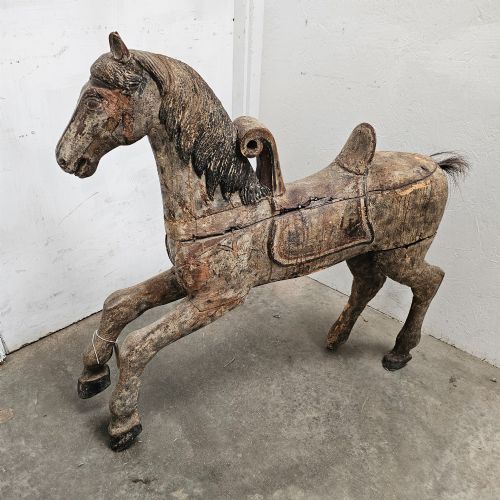
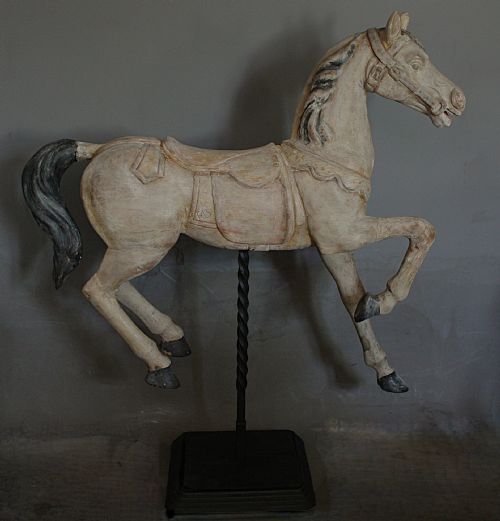
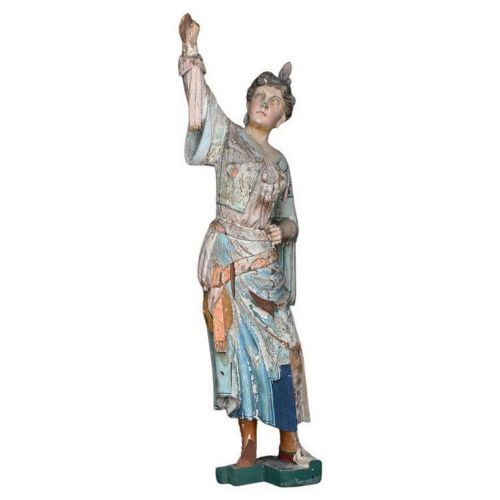
You are most likely to meet carved wood carousel horses and fairground figures on this page, originating from French, continental, and Victorian workshops. They arrive in various states of preservation, often retaining remnants of their original polychrome paint.
The forms range from wall sculptures and decorative objects to large freestanding figures and ride fragments. Each piece bears the distinct marks of working life and public entertainment from eras like the nineteenth century and the early twentieth century.
How they were made
Makers fashioned these sculptures primarily from carved wood, shaping blocks into dynamic animal forms, ride fragments, and organ figures. Craftsmen added functional details using iron, metal, leather, and horsehair to complete manes, reins, and mechanical mountings.
Surfaces received layers of polychrome paint designed to withstand outdoor use and catch the eye of fairgoers spinning past. Years of weathering and subsequent wear leave these painted finishes with rich patinas.
Listings feature items spanning the nineteenth century up to nineteen-twenty, utilising wood, paint, iron, horsehair, and leather.
What varies in quality
The depth and vigour of the hand carving separate simpler production pieces from masterful sculptures. Sculptures attributed to known workshops or makers like Bayol, Gavioli, and Limonaire display superior anatomical understanding and expressive detailing.
The survival of original polychrome paint heavily influences the character of a piece. Surfaces that retain authentic layers of historic colour without excessive modern repainting hold significantly more visual power.
Bayol·Gavioli·Limonaire
The Antique Fairground Sculpture Glossary
- Polychrome paint
- Decoration executed in multiple colours. This surface treatment defined the vibrant appearance of fairground rides.
- Ride fragment
- A surviving portion of a larger amusement structure. These sections often include carved panels and animal figures.
- Organ figure
- A carved sculpture mounted on a mechanical street or fairground organ. These figures often moved or added theatrical presence to the music.
- Folk art
- Utilitarian or decorative objects made by traditional craftsmen rather than academic artists. Much fairground sculpture falls into this expressive category.
Antique Fairground Sculpture: Frequently Asked Questions
How were carousel animals used?
Carousel animals were mounted on rotating platform rides powered first by hand or animal and later by steam engines. Riders sat astride these wooden figures as the ride spun around.
After their working lives ended, many survivors lost their mechanical mounts but kept their carved wooden bodies. They were salvaged from fairgrounds to be preserved as sculptural art.
How should I live with fairground sculpture?
These sculptural pieces work well as freestanding focal points in large rooms or mounted securely as wall sculptures. Their bold forms and painted surfaces contrast effectively against neutral architectural backdrops.
Keep them away from direct heat sources and extreme humidity to protect the historic wood and paint. Gentle dusting with a dry cloth maintains the surface without disturbing the patina.
How do I tell periods apart?
Nineteenth-century pieces often display heavier timbers and traditional Victorian industrial or folk art carving styles. Figures from around nineteen-twenty tend to show early twentieth-century continental styling and different carving techniques.
Examining the underlying construction materials like iron, leather, and horsehair helps date the piece. Paint analysis also reveals whether the polychrome decoration dates to the working life of the ride.