



Antique Wood Dinner Table
An antique wood dinner table gathers people together around a rich mahogany or oak surface shaped by nineteenth-century joinery.
Antique Wood Dinner Table
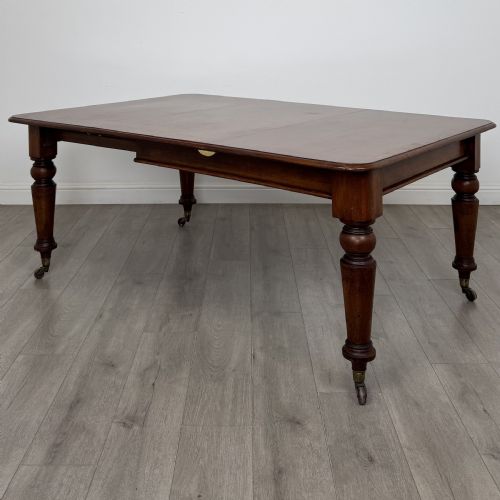
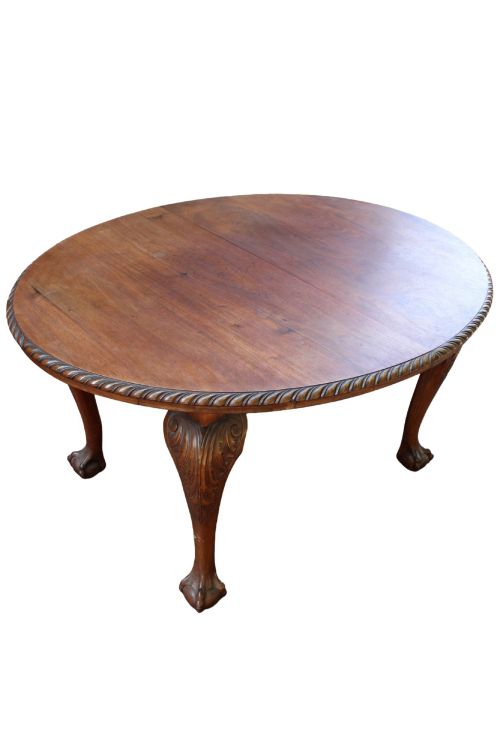
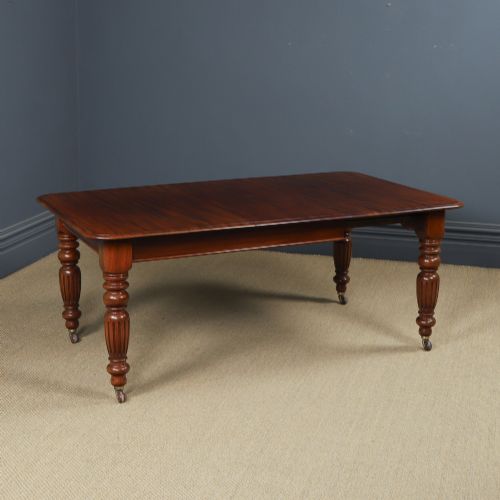
An antique wood dinner table primarily manifests as an extending mahogany dining table dating from the nineteenth century, built to seat anywhere from six to twelve people or more.
Makers of the period utilised solid hardwoods, producing substantial extending tables alongside oak harvest tables and pedestal variants shaped in the Victorian, Edwardian, and William IV styles.
The selection ranges from compact family boards to grand fifteen-foot extending dining tables designed for large country houses and formal dining rooms.
Gradations of Craft
Quality rests in the selection of timber figures, the integrity of the extending action, and the crispness of hand-carved mouldings.
Superior examples maintain smooth operation across multiple leaves and rest upon solid pedestal bases or sturdy legs without structural wobble.
Antique Wood Dinner Table Retail Price Guide 2026
Typical asking prices for wood dinner table among the pieces listed under this phrase on Sellingantiques today, from the lower quarter to the upper quarter. They describe what is for sale here now, not the wider market.
Listings feature nineteenth-century and Edwardian dining tables constructed primarily from mahogany, oak, and walnut.
Gillows of Lancaster and London·Waring and Gillow
The Antique Wood Dinner Table Glossary
- Extending table
- A dining table fitted with a mechanism and removable leaves to alter its overall length. This allows hosts to seat larger dinner parties when required.
- Pedestal table
- A table supported by a central pillar rather than four corner legs. This configuration provides extra legroom for seated guests.
- Leaf
- A separate wooden board inserted into an extending table to lengthen the top. Leaves are stored separately when not in use.
- William IV period
- An architectural and furniture style spanning the 1830s, characterised by heavy proportions and bold mahogany scrollwork. Pieces from this era display strong classical influences.
- Harvest table
- A long, utilitarian wooden table traditionally used in rural settings for seasonal gatherings. These pieces often feature simple oak or elm tops and sturdy legs.
Antique Wood Dinner Table: Frequently Asked Questions
How do I operate an antique extending table?
Most nineteenth-century extending tables use a winding handle or simple wooden runners to pull the frame apart. Once extended, you drop the matching leaves into the central gap and secure the brass latches underneath.
Take care to lift the leaves rather than sliding them across unfinished wooden tracks to preserve the original joinery.
What is the difference between Victorian and Edwardian tables?
Victorian tables typically feature heavier proportions, dark mahogany timbers, and deeply carved pedestal bases or turned legs. Edwardian examples often display lighter oak or mahogany frames influenced by Arts and Crafts simplicity.
Examining the turning styles and wood density helps determine whether a piece belongs to the mid-nineteenth century or the early twentieth century.
How should I care for a mahogany dining surface?
Protect the wood from direct sunlight and extreme temperature shifts to prevent the timber from splitting or warping. Use coasters and heat mats during dinner service to shield the polish from moisture rings.
Regular application of natural beeswax nourishes the grain and maintains the soft lustre developed over generations of use.