

Antique Wood Chiffonier
An antique wood chiffonier offers a compact low storage solution for living spaces, combining a useful surface with enclosed cupboards and shelves.
Antique Wood Chiffonier
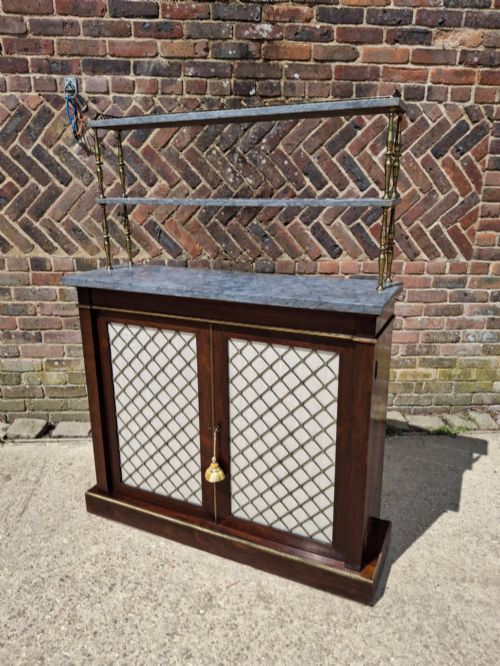
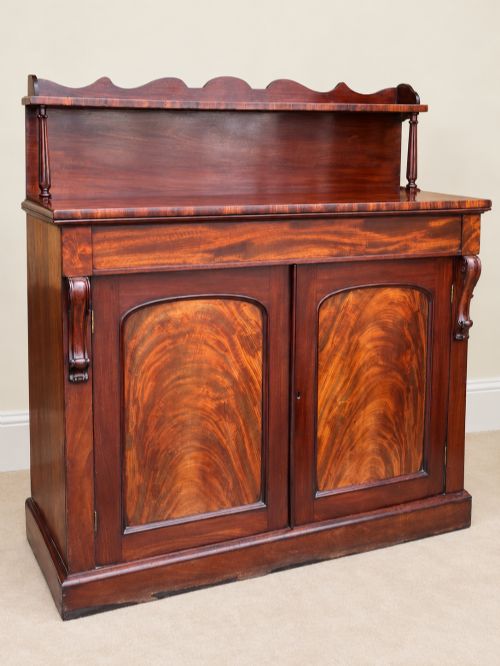
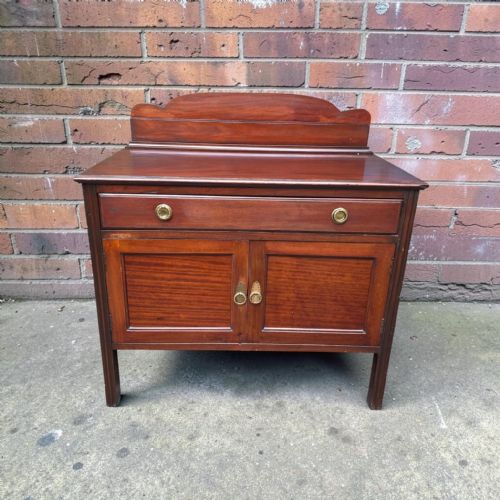
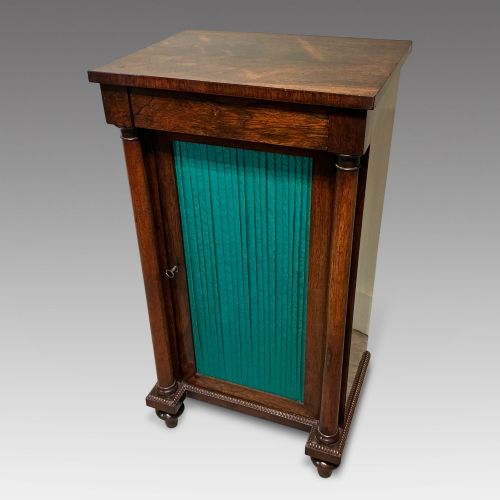
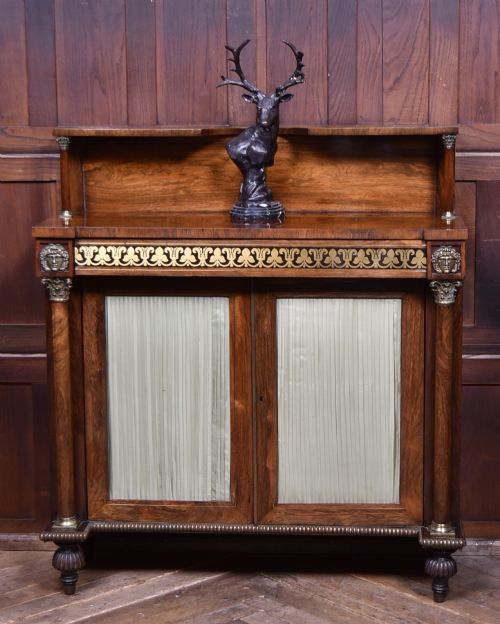
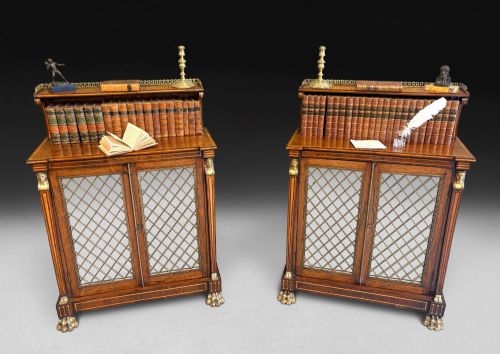
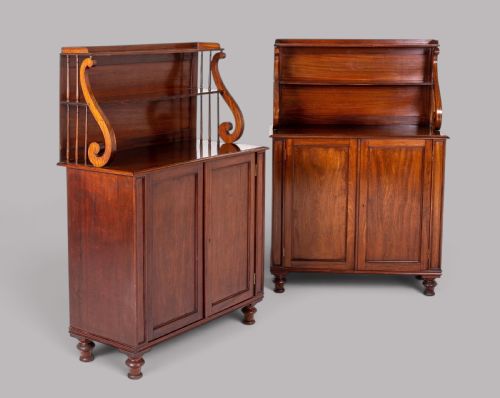
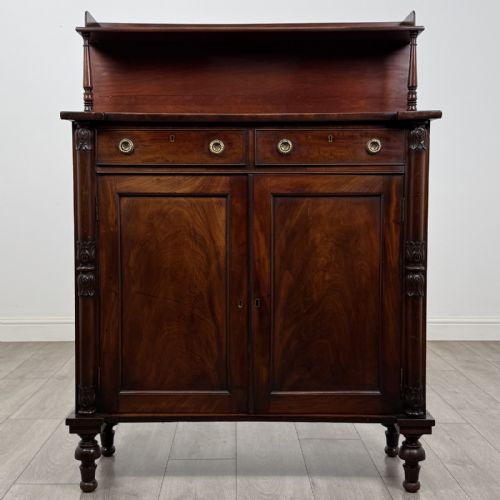
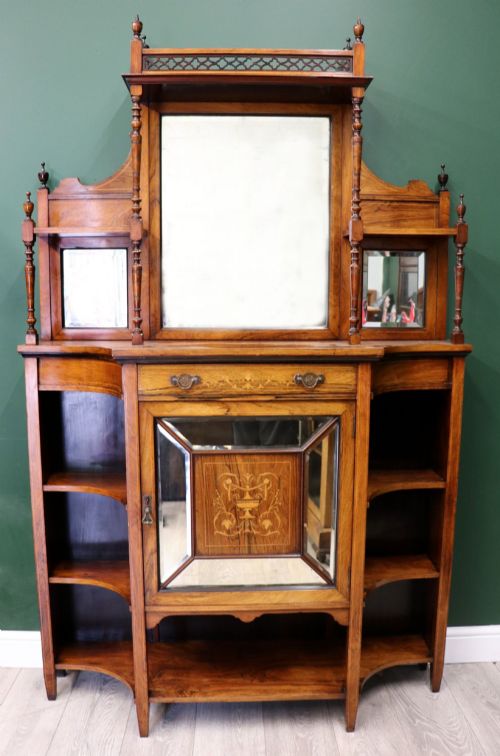
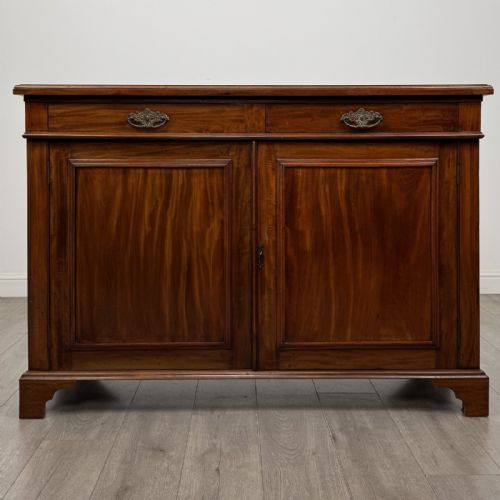
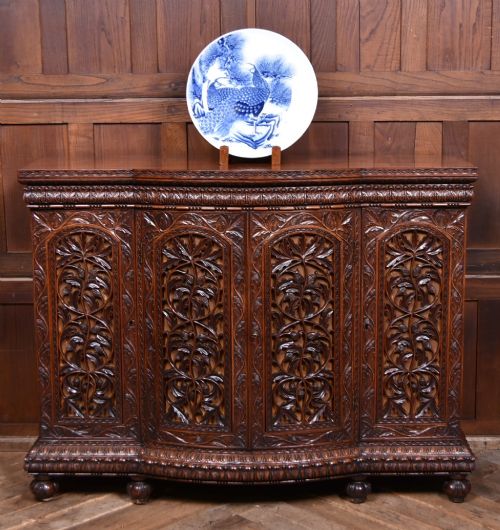
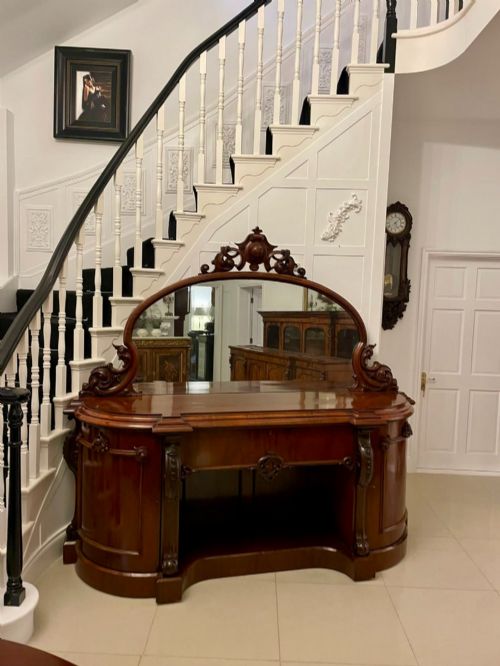
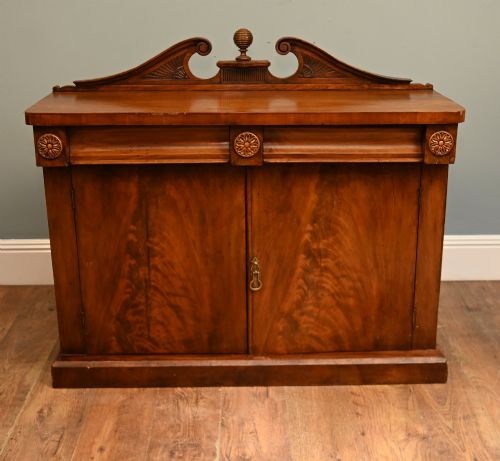
An antique wood chiffonier serves as a low sideboard or small cabinet, typically featuring enclosed lower cupboards and often a raised shelf or mirror back. When exploring this selection, buyers frequently encounter Victorian and Regency examples alongside William IV iterations.
The form developed during the early nineteenth century to hold dining silver, linens, or books in parlours and dining rooms. Most specimens on this page emerge in solid mahogany or rosewood, frequently fitted with panelled doors or glass fronts.
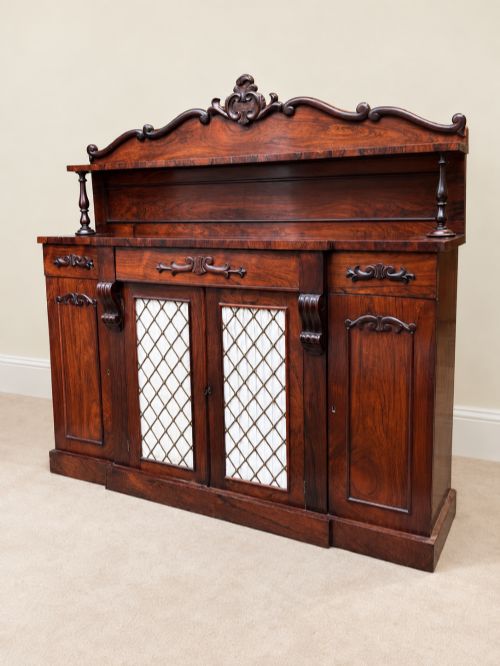
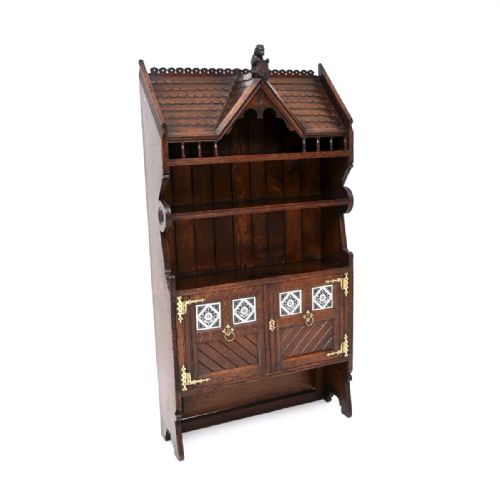
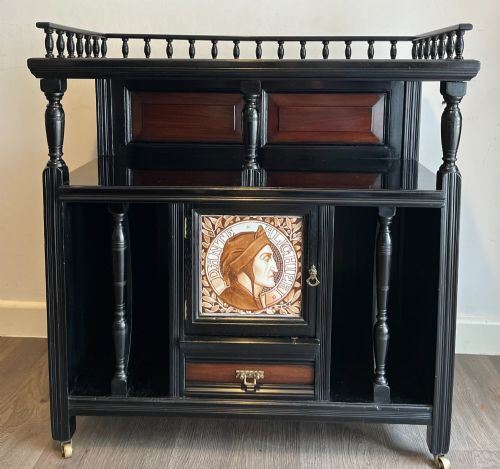
Makers adapted the design across the decades, moving from restrained Regency lines to heavily carved Victorian mirror-back variations and Aesthetic Movement creations. Miniature apprentice pieces and concave side cabinets also appear among the standard full-scale sideboards.
What varies in quality
The selection of timber dictates much of the initial worth, with highly figured flame mahogany veneer or richly grained rosewood marking superior examples. Timber choice reflects the original commission's budget and the cabinetmaker's skill in matching grain patterns across doors and drawers.
Construction details reveal the standard of workshop execution, from the tightness of dovetail joints to the thickness of secondary framing timbers. Superior pieces display crisp hand-carved ornamentation and well-fitted doors that swing true without sagging.
Hardware integrity and finishing differentiate everyday production from masterworks. Original brass grilles, working locks with matching keys, and finely preserved French polish enhance the desirability of a piece.
Antique Wood Chiffonier Retail Price Guide 2026
Typical asking prices for wood chiffonier among the pieces listed under this phrase on Sellingantiques today, from the lower quarter to the upper quarter. They describe what is for sale here now, not the wider market.
Apprentice pieces allowed young woodworkers to prove their skill by building tiny functional sideboards with miniature working locks.
John Moyr Smith
The Antique Wood Chiffonier Glossary
- Chiffonier
- A low sideboard or cabinet featuring lower cupboards, originating in the early nineteenth century. It frequently includes a raised back shelf or mirror.
- Flame mahogany
- A veneer cut from the fork of the mahogany tree, producing a distinctive flickering flame pattern. Cabinetmakers reserved this timber for principal display surfaces.
- Goncalo Alves
- A dense exotic hardwood with striking contrasting dark brown and light golden tones. Regency makers utilised this material for high-status cabinets.
- Swan neck pediment
- A broken-arch top framing element terminating in inward-curving scrolls. This architectural feature appears on taller bookcase variations.
Antique Wood Chiffonier: Frequently Asked Questions
What is an antique wood chiffonier used for?
An antique wood chiffonier provides functional storage and display surface for living rooms or dining areas. The lower cupboards conceal dinnerware or books while upper shelves hold decorative objects.
Historically, these cabinets stored dining silver and linens close to the dining table. Today, they fit well in hallways or parlours as compact alternatives to larger sideboards.
How do I date a Regency chiffonier?
Regency chiffoniers date from approximately 1811 to 1820, displaying classical architectural lines and restrained ornamentation. Rosewood and mahogany serve as the primary timbers during this era.
Look for brass inlay, grille doors, and simulated rosewood paint finishes on pine carcasses. These design elements help distinguish Regency pieces from later Victorian interpretations.
Where should I place a mirror-back sideboard?
A mirror-back sideboard requires a sturdy wall position where the mirror can reflect light and open up the room. Ensure the surrounding floor space accommodates the projection of the lower cupboard doors.
Keep these pieces away from direct sunlight to protect the wood finish and mirror silvering. Placing them in dining rooms or entrance halls maintains their traditional utility.
What distinguishes William IV furniture?
William IV furniture spans the 1830s, bridging the transition between Regency restraint and Victorian exuberance. Pieces from this era often feature robust mahogany construction and bold scroll carvings.
Heavy plinth bases and substantial turned feet frequently appear on William IV side cabinets. The proportions remain generous while retaining architectural clarity.